
Guide for ECE teachers: Oral language development in the early years
About this resource:
This guide gives a brief overview of the evidence-based teaching practices that make the most difference to children’s oral language development in the early years. This guide is designed to be practical resource for ECE teachers who want to improve their practice.
Related Insights
Explore related documents that you might be interested in.
-
 Good practice guide | 10 min read
Guide for ECE leaders: Oral language development in the early years
22 August 2024 -
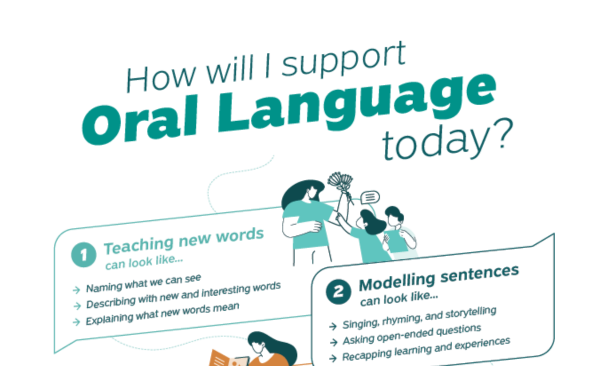 Good practice guide | 1 min read
Poster for teachers: Oral language development in the early years - A3 print
22 August 2024 -
 Good practice report | 30 min read
Good Practice: Oral language development in the early years
22 August 2024 -
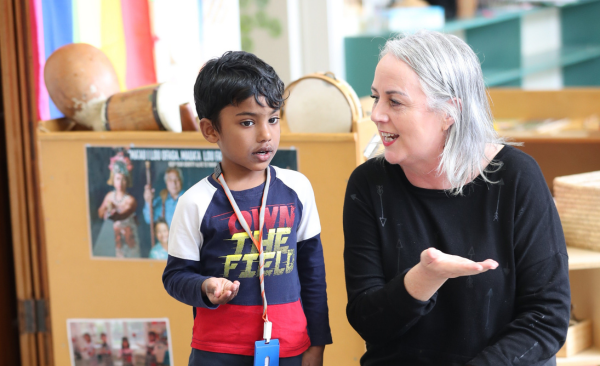 Research summary | 5 min read
Let’s keep talking: Oral language development in the early years - Summary
22 August 2024 -
Research report | 60 min read
Let’s keep talking: Oral language development in the early years
22 August 2024 -
 Sector insights | 5 min read
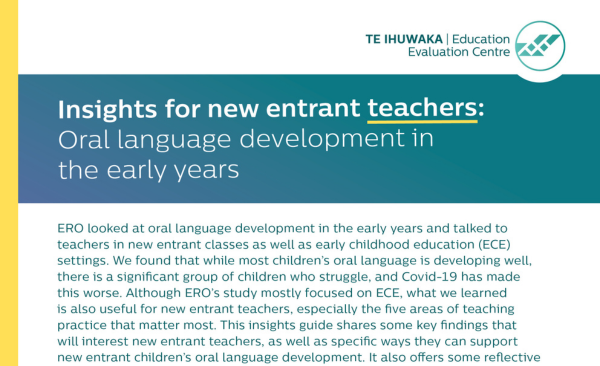
Insights for new entrant teachers: Oral language development in the early years
22 August 2024 -
 Sector insights | 5 min read
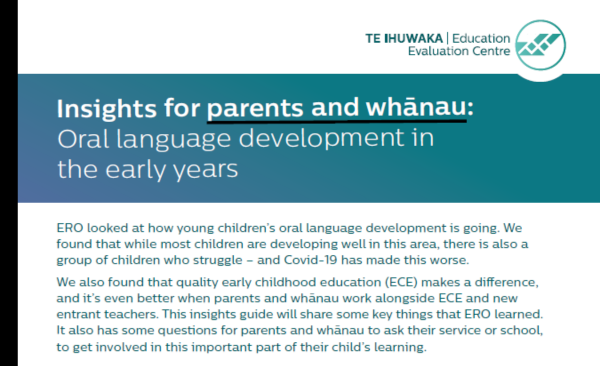
Insights for parents and whānau: Oral language development in the early years
22 August 2024
Read Online
About this guide
ERO looked at oral language development in the early years, in ECE
services and new entrant classes across Aotearoa New Zealand. We
wanted to know what the evidence says about teaching practices that
make the most difference, and what those practices look like in real life.
This guide is designed to be a brief, practical resource for ECE teachers
who want to improve their practice. New entrant teachers may also find
these strategies useful.
How did ERO found out about good practice?
We took a deep dive into the literature about what works, for supporting young children’s oral language development. This covered both the national and international literature base, and then we checked our understandings with Aotearoa New Zealand experts. We found five areas of practice that make the most difference, each of which have some key practices.
We visited a range of ECE services and new entrant classrooms, and asked teachers about the practical ways that they bring evidence-based oral language practices to life. We wanted to know about the particular strategies that have worked well in their experience.
Why is oral language important
Oral language is the foundation of literacy.
Oral language helps children collaborate and problem-solve.
Oral language skills help children communicate their needs and wants.
Oral language helps children succeed at school.
For more about the value of oral language teaching and learning, see ERO’s good practice report - www.evidence.ero.govt.nz.
What do we mean by ‘oral language’ in this guide?
This guide is focused on speaking skills and listening skills.
→ listening (receptive language) skills: the ability to hear, process, and understand information
→ speaking (expressive language) skills: the ability to respond and make meaning with sounds, words, signing, or gestures.
What about bilingual or multilingual children?
Speaking more than one language has many learning advantages for young children, as well as ongoing life benefits. Young children who are learning English as an additional language benefit cognitively from building their skills across multiple languages at the same time; it is a positive and useful process.
The practices and supports highlighted in this report are relevant for teachers of all children, whether they have one, two, or more languages. It’s important for teachers to work in partnership with families and whānau to support children’s home languages, and to be aware that children learning more than one language might take longer than their single-language peers to grow their English word bank, combine words, build sentences, and speak clearly compared to children who have one language. This is normal and expected.
What needs to be in place to support teachers?
This report is mostly focused on effective teaching practices. But to be well set up, teachers need good service leadership and conditions that prioritise oral language teaching. They also need good professional knowledge and assessment understandings themselves, positive partnerships with parents and whānau, and an understanding of how and when to work with specialists around oral language. ECE leaders can read more about their role in supporting good teaching in our companion guide [insert link]
ERO looked at oral language development in the early years, in ECE
services and new entrant classes across Aotearoa New Zealand. We
wanted to know what the evidence says about teaching practices that
make the most difference, and what those practices look like in real life.
This guide is designed to be a brief, practical resource for ECE teachers
who want to improve their practice. New entrant teachers may also find
these strategies useful.
How did ERO found out about good practice?
We took a deep dive into the literature about what works, for supporting young children’s oral language development. This covered both the national and international literature base, and then we checked our understandings with Aotearoa New Zealand experts. We found five areas of practice that make the most difference, each of which have some key practices.
We visited a range of ECE services and new entrant classrooms, and asked teachers about the practical ways that they bring evidence-based oral language practices to life. We wanted to know about the particular strategies that have worked well in their experience.
Why is oral language important
Oral language is the foundation of literacy.
Oral language helps children collaborate and problem-solve.
Oral language skills help children communicate their needs and wants.
Oral language helps children succeed at school.
For more about the value of oral language teaching and learning, see ERO’s good practice report - www.evidence.ero.govt.nz.
What do we mean by ‘oral language’ in this guide?
This guide is focused on speaking skills and listening skills.
→ listening (receptive language) skills: the ability to hear, process, and understand information
→ speaking (expressive language) skills: the ability to respond and make meaning with sounds, words, signing, or gestures.
What about bilingual or multilingual children?
Speaking more than one language has many learning advantages for young children, as well as ongoing life benefits. Young children who are learning English as an additional language benefit cognitively from building their skills across multiple languages at the same time; it is a positive and useful process.
The practices and supports highlighted in this report are relevant for teachers of all children, whether they have one, two, or more languages. It’s important for teachers to work in partnership with families and whānau to support children’s home languages, and to be aware that children learning more than one language might take longer than their single-language peers to grow their English word bank, combine words, build sentences, and speak clearly compared to children who have one language. This is normal and expected.
What needs to be in place to support teachers?
This report is mostly focused on effective teaching practices. But to be well set up, teachers need good service leadership and conditions that prioritise oral language teaching. They also need good professional knowledge and assessment understandings themselves, positive partnerships with parents and whānau, and an understanding of how and when to work with specialists around oral language. ECE leaders can read more about their role in supporting good teaching in our companion guide [insert link]
Practice area 1: Teaching new words and how to use them
1) What is this practice area, and why does it matter?
This practice area is about deliberately teaching and modelling words to children through everyday interactions. This means intentionally using words that build children’s word bank (vocabulary) and encouraging them to use and apply words in the right context.
Adults teaching and modelling different words for children is necessary for children to be able build and use a larger vocabulary themselves. This supports children to be increasingly able to comment on and describe things around them, interpret their world, and use more specific words (rather than general terms).
2) What are the key teacher practices?
a) Naming
This involves supporting children to use the words for objects, people, and ideas in their environment. For example, teachers might:
- use ‘sportscasting’ with infants and non-speaking children, where they narrate activities what is within the child’s view.
- affirm when multilingual children use their home language words to name things, and then explaining what the name is in English, te reo Māori, or relevant Pacific or other languages that are used at the service.
b)Labelling
This involves using words to identify objects, people, and ideas across different mediums – for example, teachers might point to something in the ECE environment that is also being labelled in a story book.
c) Explaining
This involves clarifying and unpacking the meanings of words to help children understand new words and express ideas.
d) Showing
This involves being clear about the mouth and tongue movements used. This can include saying new words extra clearly, loudly, or slowly, or talking with children about what the mouth movements look like or feel like. However, teachers should be cautious about over-exaggerating their mouth movements, as this can distort sounds.
e) Repeating
This involves intentionally repeating key words to help children grow their understanding of the meaning of a word, and how the word is used in context.
“I've actually seen great results… I've got one child in the toddlers’ room that's really keen to speak, and he keeps repeating everything we say. [He’s] really determined to use the language. He would point at his shoes and say, ‘On the shelf, up, up there, up there’. Then from this… I'd give him extra words and a week later he would say, ‘My shoes, they are up there’ – which was incredible.” (ECE teacher)
f) Extending
This key practice involves adding extra words (like adjectives or adverbs), to descriptions (for example, ‘big red ball’). For infants and children who are not yet speaking, ‘serve and return’ interactions which involve teachers responding to gestures, eye contact, etc. with descriptive words, are another useful form of extending.
|
Real-life examples from ECE services: |
|
3) Reflective questions
These questions may be useful to reflect on individually or discuss as a team. Think carefully and critically about your day-to-day practices.
- How often do I repeat words when speaking to children? How about explaining or discuss what they mean?
- How often do I ask children to vocalise what they are doing and their ideas or emotions? Can I add to their word bank, for example by naming objects, or labelling connections to other contexts?
- When working with infants and non-verbal children, how regularly do I maximise interactions with ‘serve and return’ responses to their gestures and non-verbal cues, or use ‘sportscasting’ strategies to describe what is happening around them?
- How do we show children that the language they speak at home is welcomed in our service and that their added vocabulary is a strength?
- When could I say a bit more or add complexity to my language, to increase children’s knowledge of words? (E.g., during care routines, mealtimes, discussing children’s construction creations, etc.)
1) What is this practice area, and why does it matter?
This practice area is about deliberately teaching and modelling words to children through everyday interactions. This means intentionally using words that build children’s word bank (vocabulary) and encouraging them to use and apply words in the right context.
Adults teaching and modelling different words for children is necessary for children to be able build and use a larger vocabulary themselves. This supports children to be increasingly able to comment on and describe things around them, interpret their world, and use more specific words (rather than general terms).
2) What are the key teacher practices?
a) Naming
This involves supporting children to use the words for objects, people, and ideas in their environment. For example, teachers might:
- use ‘sportscasting’ with infants and non-speaking children, where they narrate activities what is within the child’s view.
- affirm when multilingual children use their home language words to name things, and then explaining what the name is in English, te reo Māori, or relevant Pacific or other languages that are used at the service.
b)Labelling
This involves using words to identify objects, people, and ideas across different mediums – for example, teachers might point to something in the ECE environment that is also being labelled in a story book.
c) Explaining
This involves clarifying and unpacking the meanings of words to help children understand new words and express ideas.
d) Showing
This involves being clear about the mouth and tongue movements used. This can include saying new words extra clearly, loudly, or slowly, or talking with children about what the mouth movements look like or feel like. However, teachers should be cautious about over-exaggerating their mouth movements, as this can distort sounds.
e) Repeating
This involves intentionally repeating key words to help children grow their understanding of the meaning of a word, and how the word is used in context.
“I've actually seen great results… I've got one child in the toddlers’ room that's really keen to speak, and he keeps repeating everything we say. [He’s] really determined to use the language. He would point at his shoes and say, ‘On the shelf, up, up there, up there’. Then from this… I'd give him extra words and a week later he would say, ‘My shoes, they are up there’ – which was incredible.” (ECE teacher)
f) Extending
This key practice involves adding extra words (like adjectives or adverbs), to descriptions (for example, ‘big red ball’). For infants and children who are not yet speaking, ‘serve and return’ interactions which involve teachers responding to gestures, eye contact, etc. with descriptive words, are another useful form of extending.
|
Real-life examples from ECE services: |
|
3) Reflective questions
These questions may be useful to reflect on individually or discuss as a team. Think carefully and critically about your day-to-day practices.
- How often do I repeat words when speaking to children? How about explaining or discuss what they mean?
- How often do I ask children to vocalise what they are doing and their ideas or emotions? Can I add to their word bank, for example by naming objects, or labelling connections to other contexts?
- When working with infants and non-verbal children, how regularly do I maximise interactions with ‘serve and return’ responses to their gestures and non-verbal cues, or use ‘sportscasting’ strategies to describe what is happening around them?
- How do we show children that the language they speak at home is welcomed in our service and that their added vocabulary is a strength?
- When could I say a bit more or add complexity to my language, to increase children’s knowledge of words? (E.g., during care routines, mealtimes, discussing children’s construction creations, etc.)
Practice area 2: Modelling how words make sentences
1) What is this practice area, and why does it matter?
This practice area includes intentionally using language to show how words are linked to make sentences (grammar), and providing opportunities for children to practice this in their own speech.
Teaching and modelling how words link together helps children become familiar with the different sounds in words, rhythm, and rhyme, gain an interest in storytelling, and be able to be creative and expressive through describing and telling stories. These learning outcomes and strengths are emphasised in Te Whāriki and are pivotal to children’s ongoing literacy learning. When teachers ask children follow-up questions and recap previous learning, this helps consolidate children’s language.
“We did shift our language a little bit as well, to talk with the children about what do you want to learn about today, not what do you want to do…it changes their thinking and also makes the space a lot safer to get things wrong as well.” (Teacher)
2. What are the key teacher practices?
a) Storytelling
This involves using interesting stories to intentionally model sentence structures. In Pacific language services, teachers might engage in talanoa with children to share stories and build language skills.
b) Singing
This involves using songs to intentionally model different uses and forms of language. For example, the use of rhyming words, rhythm, music, and waiata to teach language patterns and rules.
“We have different songs for different seasons…So it's all linked with the rhythm of the earth.” (Leader)
c) Questioning
This involves asking a range of questions to invite different forms of responses from children. It helps when teachers listen to what children are talking about and the ideas they’re expressing, in order to ask relevant, engaging questions that challenge children to consider more expressive or complex answers.
It’s important to keep in mind that relentless questioning can reduce children’s participation in conversation – so teachers should balance their use of questions with statements and comments, that encourage children to think, respond, and take the lead in conversation too. ‘I wonder about…’ statements can be useful for this.
“They know that they are expected to speak, but we also give them that prep time beforehand … so they have that time to turn and talk… And then you know that they've all had that processing time and then they can share.” (Teacher)
d) Sequencing
This involves using stories to model how language is used to put events and activities into order, and to help children learn the language used for signalling sequences and what to expect in a narrative. For example, words like ‘then’, ‘next’, ‘just before’, or ‘finally’.
“It's the warning, saying, ‘Hey, we're going to be finishing and packing this away soon’.” (Teacher)
e) Recapping
This involves intentionally recapping topics and subjects that children been learning about, to revisit what was covered and help children remember the language that was used.
|
Real-life examples from ECE services: |
|
3) Reflective questions
These questions may be useful to reflect on individually or discuss as a team. Think carefully and critically about your day-to-day practices.
- Am I intentional about supporting children to explore language and construct sentences?
- Do I ask open-ended questions (or comments like ‘I wonder…’) that encourage children to talk and experiment with language? Do I allow them enough time to consider their answers?
- How can I use songs and stories to engage children in different aspects of oral language – like rhyme, rhythm, narrative, etc.?
- What opportunities do children have to reflect and recap on past learning, language, and new words? How could I build this into my everyday practice?
1) What is this practice area, and why does it matter?
This practice area includes intentionally using language to show how words are linked to make sentences (grammar), and providing opportunities for children to practice this in their own speech.
Teaching and modelling how words link together helps children become familiar with the different sounds in words, rhythm, and rhyme, gain an interest in storytelling, and be able to be creative and expressive through describing and telling stories. These learning outcomes and strengths are emphasised in Te Whāriki and are pivotal to children’s ongoing literacy learning. When teachers ask children follow-up questions and recap previous learning, this helps consolidate children’s language.
“We did shift our language a little bit as well, to talk with the children about what do you want to learn about today, not what do you want to do…it changes their thinking and also makes the space a lot safer to get things wrong as well.” (Teacher)
2. What are the key teacher practices?
a) Storytelling
This involves using interesting stories to intentionally model sentence structures. In Pacific language services, teachers might engage in talanoa with children to share stories and build language skills.
b) Singing
This involves using songs to intentionally model different uses and forms of language. For example, the use of rhyming words, rhythm, music, and waiata to teach language patterns and rules.
“We have different songs for different seasons…So it's all linked with the rhythm of the earth.” (Leader)
c) Questioning
This involves asking a range of questions to invite different forms of responses from children. It helps when teachers listen to what children are talking about and the ideas they’re expressing, in order to ask relevant, engaging questions that challenge children to consider more expressive or complex answers.
It’s important to keep in mind that relentless questioning can reduce children’s participation in conversation – so teachers should balance their use of questions with statements and comments, that encourage children to think, respond, and take the lead in conversation too. ‘I wonder about…’ statements can be useful for this.
“They know that they are expected to speak, but we also give them that prep time beforehand … so they have that time to turn and talk… And then you know that they've all had that processing time and then they can share.” (Teacher)
d) Sequencing
This involves using stories to model how language is used to put events and activities into order, and to help children learn the language used for signalling sequences and what to expect in a narrative. For example, words like ‘then’, ‘next’, ‘just before’, or ‘finally’.
“It's the warning, saying, ‘Hey, we're going to be finishing and packing this away soon’.” (Teacher)
e) Recapping
This involves intentionally recapping topics and subjects that children been learning about, to revisit what was covered and help children remember the language that was used.
|
Real-life examples from ECE services: |
|
3) Reflective questions
These questions may be useful to reflect on individually or discuss as a team. Think carefully and critically about your day-to-day practices.
- Am I intentional about supporting children to explore language and construct sentences?
- Do I ask open-ended questions (or comments like ‘I wonder…’) that encourage children to talk and experiment with language? Do I allow them enough time to consider their answers?
- How can I use songs and stories to engage children in different aspects of oral language – like rhyme, rhythm, narrative, etc.?
- What opportunities do children have to reflect and recap on past learning, language, and new words? How could I build this into my everyday practice?
Practice area 3: Reading interactively with children
1) What is this practice area, and why does it matter?
This practice area is about involving children in the process of reading aloud from books, encouraging children to be active participants during teachers’ book-reading.
Reading with children supports children to enjoy poetry, pūrākau, fiction, and non-fiction, and to be more confident storytellers. Teachers can stimulate children’s interest in reading by regularly sharing interesting books with them. Following up by asking questions, explaining in further detail, retelling the story, and reading it again make the process of reading more interactive.
2) What are the key teacher practices?
a) Questioning
This involves asking children questions when reading, to prompt discussion and encourage active engagement. This supports children to answer logically using clues from the book and its context – such as the title of the story – and also to answer creatively and use their imagination.
b) Recalling
This involves helping children to make links between the content that they read and hear in stories, and what they remember from other learning.
c) Expanding
This key practice involves talking in more detail about new words from stories or rhymes, to expand children’s vocabulary.
d) Extending
This involves intentionally using the ideas and themes in books to broaden children’s thinking and support them to talk about concepts from stories.
e) Explaining
This involves using different words to explain ideas from books. Teachers can help children to understand difficult-to-grasp concepts when they are reframed slightly differently.
f) Retelling
This involves encouraging children to retell stories themselves, in a range of ways. teachers might provide physical props and tools, or encourage dance, art, music, or drama performances to retell stories in new ways.
“We…put pictures on the wall in the right sequence, and the children will come and look at the pictures, point at things, and use certain words to retell the story that they are familiar with.” (Teacher)
g) Rereading
This involves being intentional about the selection of stories that children can read and hear again and again, maximising opportunities for learning particular oral language skills.
“Putting less out on the bookshelf but being more intentional about what it is and leaving it there for a longer period of time so that children are able to revisit and have those conversations again and develop those ideas further over time…that was something that sounds so simple, but it was a really big shift.” (Teacher)
|
Real-life examples from ECE services: |
|
3) Reflective questions
These questions may be useful to reflect on individually or discuss as a team. Think carefully and critically about your day-to-day practices.
- Do I actively involve children in reading, by asking them questions, commenting on the story, and allowing opportunities for retelling?
- Are we purposeful about the selection of books and reading material that is accessible to children? What specific areas of oral language learning are we working to promote with this selection?
- Are our books interesting and relevant to our children? For example, do we choose books with characters that look like the children at the service, and reflect the cultural backgrounds of the children at the service?
- How can I use books and stories as a jumping-off point for more oral language learning? For example, by extending on the story in a performance or through a construction activity, or by relating stories to rich discussions about children’s home lives and interests?
Children who are learning in more than one language can benefit from hearing stories that feature more than one of their languages. See the links below for some examples.
→ Pasifika early literacy project resources – are a collection of downloadable dual-language story books in a range of Pacific languages and English. PELP Resources (education.govt.nz)
→ Some favourite bilingual books in te reo Māori and English – is a blog post from the National Library that lists a selection of engaging dual-language story books in te reo Māori and English. Some favourite bilingual books in te reo Māori and English |National Library of New Zealand (natlib.govt.nz)
1) What is this practice area, and why does it matter?
This practice area is about involving children in the process of reading aloud from books, encouraging children to be active participants during teachers’ book-reading.
Reading with children supports children to enjoy poetry, pūrākau, fiction, and non-fiction, and to be more confident storytellers. Teachers can stimulate children’s interest in reading by regularly sharing interesting books with them. Following up by asking questions, explaining in further detail, retelling the story, and reading it again make the process of reading more interactive.
2) What are the key teacher practices?
a) Questioning
This involves asking children questions when reading, to prompt discussion and encourage active engagement. This supports children to answer logically using clues from the book and its context – such as the title of the story – and also to answer creatively and use their imagination.
b) Recalling
This involves helping children to make links between the content that they read and hear in stories, and what they remember from other learning.
c) Expanding
This key practice involves talking in more detail about new words from stories or rhymes, to expand children’s vocabulary.
d) Extending
This involves intentionally using the ideas and themes in books to broaden children’s thinking and support them to talk about concepts from stories.
e) Explaining
This involves using different words to explain ideas from books. Teachers can help children to understand difficult-to-grasp concepts when they are reframed slightly differently.
f) Retelling
This involves encouraging children to retell stories themselves, in a range of ways. teachers might provide physical props and tools, or encourage dance, art, music, or drama performances to retell stories in new ways.
“We…put pictures on the wall in the right sequence, and the children will come and look at the pictures, point at things, and use certain words to retell the story that they are familiar with.” (Teacher)
g) Rereading
This involves being intentional about the selection of stories that children can read and hear again and again, maximising opportunities for learning particular oral language skills.
“Putting less out on the bookshelf but being more intentional about what it is and leaving it there for a longer period of time so that children are able to revisit and have those conversations again and develop those ideas further over time…that was something that sounds so simple, but it was a really big shift.” (Teacher)
|
Real-life examples from ECE services: |
|
3) Reflective questions
These questions may be useful to reflect on individually or discuss as a team. Think carefully and critically about your day-to-day practices.
- Do I actively involve children in reading, by asking them questions, commenting on the story, and allowing opportunities for retelling?
- Are we purposeful about the selection of books and reading material that is accessible to children? What specific areas of oral language learning are we working to promote with this selection?
- Are our books interesting and relevant to our children? For example, do we choose books with characters that look like the children at the service, and reflect the cultural backgrounds of the children at the service?
- How can I use books and stories as a jumping-off point for more oral language learning? For example, by extending on the story in a performance or through a construction activity, or by relating stories to rich discussions about children’s home lives and interests?
Children who are learning in more than one language can benefit from hearing stories that feature more than one of their languages. See the links below for some examples.
→ Pasifika early literacy project resources – are a collection of downloadable dual-language story books in a range of Pacific languages and English. PELP Resources (education.govt.nz)
→ Some favourite bilingual books in te reo Māori and English – is a blog post from the National Library that lists a selection of engaging dual-language story books in te reo Māori and English. Some favourite bilingual books in te reo Māori and English |National Library of New Zealand (natlib.govt.nz)
Practice area 4: Using conversations to extend language
1) What is this practice area, and why does it matter?
This practice area is about teaching through purposeful discussions. This means intentionally using language to engage children in challenging activities and conversations that involve learning about and sharing complex ideas, and reasoning with others.
Teaching through discussions encourages children to stretch their language abilities, to talk about complex information and ideas, and engage in problem-solving and debate with others. Talking together helps children make connections between different concepts, make evaluative judgements, and test out their ideas about how the world works. These skills are foundational to their ongoing learning.
2) What are the key teacher practices?
a) Making links
This involves talking with children about connections between ideas, experiences, and events. For example, intentionally starting conversations about new topics and ideas that relate directly to children’s home experiences.
b) Evaluating
This involves supporting children to evaluate their own learning by talking about why they think or do things in a certain way. More complex ideas – like metacognition (thinking about your own thinking) – can require more nuanced language, and teachers have a key role in equipping children with that language.
“If they don't have an idea they say, ‘I don't have an idea’. … That's been a huge learning curve, actually a huge shift to the ‘It's okay if you don't know’ – that we all don't know something. And that's the biggest shift I think we've seen.” (Teacher)
c) Testing working theories
This involves engaging with children’s play to identify the learning taking place and then encouraging children to test their own and each other’s thinking through talk. Teachers can make the most of opportunities within interactions to support children to talk through their theories about the world.
|
Real-life examples from ECE services: |
|
3) Reflective questions
These questions may be useful to reflect on individually or discuss as a team. Think carefully and critically about your day-to-day practices.
- How can I enhance the learning environment or daily schedule to maximise small group activities and peer interactions?
- Do I take time to listen carefully to children’s ideas, and encourage them to do the same and listen to others? Are all children, including quieter or non-speaking children, invited to contribute?
- How often do I support children to talk about the links between their experiences and ideas, and others’ experiences and ideas? How about making links back to past learning?
- How can I prompt children to evaluate their own learning and progress through talk? How can I ensure that these conversations are safe, fun, and challenging?
1) What is this practice area, and why does it matter?
This practice area is about teaching through purposeful discussions. This means intentionally using language to engage children in challenging activities and conversations that involve learning about and sharing complex ideas, and reasoning with others.
Teaching through discussions encourages children to stretch their language abilities, to talk about complex information and ideas, and engage in problem-solving and debate with others. Talking together helps children make connections between different concepts, make evaluative judgements, and test out their ideas about how the world works. These skills are foundational to their ongoing learning.
2) What are the key teacher practices?
a) Making links
This involves talking with children about connections between ideas, experiences, and events. For example, intentionally starting conversations about new topics and ideas that relate directly to children’s home experiences.
b) Evaluating
This involves supporting children to evaluate their own learning by talking about why they think or do things in a certain way. More complex ideas – like metacognition (thinking about your own thinking) – can require more nuanced language, and teachers have a key role in equipping children with that language.
“If they don't have an idea they say, ‘I don't have an idea’. … That's been a huge learning curve, actually a huge shift to the ‘It's okay if you don't know’ – that we all don't know something. And that's the biggest shift I think we've seen.” (Teacher)
c) Testing working theories
This involves engaging with children’s play to identify the learning taking place and then encouraging children to test their own and each other’s thinking through talk. Teachers can make the most of opportunities within interactions to support children to talk through their theories about the world.
|
Real-life examples from ECE services: |
|
3) Reflective questions
These questions may be useful to reflect on individually or discuss as a team. Think carefully and critically about your day-to-day practices.
- How can I enhance the learning environment or daily schedule to maximise small group activities and peer interactions?
- Do I take time to listen carefully to children’s ideas, and encourage them to do the same and listen to others? Are all children, including quieter or non-speaking children, invited to contribute?
- How often do I support children to talk about the links between their experiences and ideas, and others’ experiences and ideas? How about making links back to past learning?
- How can I prompt children to evaluate their own learning and progress through talk? How can I ensure that these conversations are safe, fun, and challenging?
1) What is this practice area, and why does it matter?
This practice area is about helping children learn the social ‘norms’ and rules of communication - the ways we tend to talk with each other in social situations. This includes building skills like changing the words we use in different contexts, how quietly or loudly we speak, and how we position ourselves when talking and listening to others.
Social communication is an important skillset, and the key to success in a range of life and learning areas. Social communication norms vary between cultures. A lot of social communication is picked up through interactions, but deliberate and purposeful teaching and modelling is needed too.
“You can't separate oral language and social competencies. They all kind of come together…and they complement each other.” (Teacher)
2) What are the key teacher practices?
a) Practising the social rules of communication
This involves making it clear what the social norms (expectations) are for play and communication with children at the service, and making sure they have plenty of opportunities to practise and be affirmed for positive social communication. Teachers might talk about the service’s expectations for how to talk kindly to others, expectations for listening to others, or how to reply when someone greets you.
“They understand what a good listener is, what a good speaker is. It's being modelled all the time. It's being encouraged.” (Teacher)
“They know in all circumstances that their voice is heard and valued… It's okay to disagree… but it's disagreeing respectfully.” (Teacher)
b) Waiting
This involves teachers consistently giving children time to respond after asking a question, to model respectful waiting. Teachers can also discuss the reasons for this with children – for example, that often people need to think about what they’re going to say before they are ready to speak out loud. In Pacific services, teachers model and discuss the warmth and respect that are a key part of unhurried conversations that include waiting (for example, mafana ofa fakaaloalo).
“[You’re] teaching them the words like ‘wait’, but you’ve actually got to show them what ‘wait’ means.” (Teacher)
c) Body positioning
This involves modelling positive social body language – for example, maintaining open, welcoming postures and gestures, meeting children at their level, maintaining eye contact while listening, and not having arms crossed. This practice also includes talking about body positioning and supporting children to practice positive positioning themselves. For some neurodivergent children, looking towards the speaker, rather than direct eye contact, can be a more appropriate marker for listening. (Teachers can check in with the child’s family, whānau, or with a specialist.)
d) Mirroring
This key practice involves mirroring children’s words and body language, to model what active listening looks like. For example, matching eye-contact, sitting facing them at a similar level, or repeating back what children have said to check you understand correctly.
e) Gesturing
This key practice involves modelling the use of gestures to support and complement oral communication. For example, nodding along while listening, or using hand motions during a story or while giving instructions.
“That eye contact and gesture…speaking with our hands is really big with our three-year-olds.” (Leader)
f) Reminding
This key practice involves using social language to reinforce established social expectations and support children to communicate positively. For example, gentle reminders for children about the social rules of behaviour like asking for a turn and waiting for a response.
|
Real-life examples from ECE services: |
|
3) Reflective questions
These questions may be useful to reflect on individually or discuss as a team. Think carefully and critically about your day-to-day practices.
→ Do I use non-verbal communication, like gestures and body positioning, to complement my spoken communication with children and support their understanding?
→ Do the children at my service know why our social expectations and rules about communication are important? Would it be useful to be clearer and more explicit about how and why we communicate in particular ways in this place?
→ How well do I model being a respectful conversational partner?
→ What communication ‘rules’ or norms are valued by parents, whānau, and community?
1) What is this practice area, and why does it matter?
This practice area is about helping children learn the social ‘norms’ and rules of communication - the ways we tend to talk with each other in social situations. This includes building skills like changing the words we use in different contexts, how quietly or loudly we speak, and how we position ourselves when talking and listening to others.
Social communication is an important skillset, and the key to success in a range of life and learning areas. Social communication norms vary between cultures. A lot of social communication is picked up through interactions, but deliberate and purposeful teaching and modelling is needed too.
“You can't separate oral language and social competencies. They all kind of come together…and they complement each other.” (Teacher)
2) What are the key teacher practices?
a) Practising the social rules of communication
This involves making it clear what the social norms (expectations) are for play and communication with children at the service, and making sure they have plenty of opportunities to practise and be affirmed for positive social communication. Teachers might talk about the service’s expectations for how to talk kindly to others, expectations for listening to others, or how to reply when someone greets you.
“They understand what a good listener is, what a good speaker is. It's being modelled all the time. It's being encouraged.” (Teacher)
“They know in all circumstances that their voice is heard and valued… It's okay to disagree… but it's disagreeing respectfully.” (Teacher)
b) Waiting
This involves teachers consistently giving children time to respond after asking a question, to model respectful waiting. Teachers can also discuss the reasons for this with children – for example, that often people need to think about what they’re going to say before they are ready to speak out loud. In Pacific services, teachers model and discuss the warmth and respect that are a key part of unhurried conversations that include waiting (for example, mafana ofa fakaaloalo).
“[You’re] teaching them the words like ‘wait’, but you’ve actually got to show them what ‘wait’ means.” (Teacher)
c) Body positioning
This involves modelling positive social body language – for example, maintaining open, welcoming postures and gestures, meeting children at their level, maintaining eye contact while listening, and not having arms crossed. This practice also includes talking about body positioning and supporting children to practice positive positioning themselves. For some neurodivergent children, looking towards the speaker, rather than direct eye contact, can be a more appropriate marker for listening. (Teachers can check in with the child’s family, whānau, or with a specialist.)
d) Mirroring
This key practice involves mirroring children’s words and body language, to model what active listening looks like. For example, matching eye-contact, sitting facing them at a similar level, or repeating back what children have said to check you understand correctly.
e) Gesturing
This key practice involves modelling the use of gestures to support and complement oral communication. For example, nodding along while listening, or using hand motions during a story or while giving instructions.
“That eye contact and gesture…speaking with our hands is really big with our three-year-olds.” (Leader)
f) Reminding
This key practice involves using social language to reinforce established social expectations and support children to communicate positively. For example, gentle reminders for children about the social rules of behaviour like asking for a turn and waiting for a response.
|
Real-life examples from ECE services: |
|
3) Reflective questions
These questions may be useful to reflect on individually or discuss as a team. Think carefully and critically about your day-to-day practices.
→ Do I use non-verbal communication, like gestures and body positioning, to complement my spoken communication with children and support their understanding?
→ Do the children at my service know why our social expectations and rules about communication are important? Would it be useful to be clearer and more explicit about how and why we communicate in particular ways in this place?
→ How well do I model being a respectful conversational partner?
→ What communication ‘rules’ or norms are valued by parents, whānau, and community?
Useful resources
This guide is part of a suite of resources about oral language in the early years, available for download on www.evidence.ero.govt.nz. Available resources include:
- A guide for ECE leaders, about what needs to be in place to support teachers to do their best work: https://www.evidence.ero.govt.nz/documents/guide-for-ece-leaders-oral-language-development-in-the-early-years
- Poster for early childhood services: https://www.evidence.ero.govt.nz/documents/poster-for-teachers-oral-language-development-in-the-early-years
- Insights for parents and whānau: https://www.evidence.ero.govt.nz/documents/insights-for-parents-and-whanau-oral-language-development-in-the-early-years
- Insights for new entrant teachers:
https://www.evidence.ero.govt.nz/documents/insights-for-new-entrant-teachers-oral-language-development-in-the-early-years
- A good practice report, which extends on this guide with more detail: https://www.evidence.ero.govt.nz/documents/good-practice-oral-language-development-in-the-early-years
- An evaluation report, which sets out the findings from ERO’s evaluation: https://www.evidence.ero.govt.nz/documents/lets-keep-talking-oral-language-development-in-the-early-years
Other useful resources include:
- Kōwhiti whakapae – The ‘Oral Language and Literacy’ section - Kōwhiti Whakapae (education.govt.nz)
- Te kōrerorero: Talking together – A suite of resources from the Ministry of Education. Te Kōrerorero - Talking together (education.govt.nz)
- Much more than words – a short booklet that provides ideas for supporting children’s growing capability as communicators. It’s also useful for parents and whānau. Much More Than Words | Learning from home
- Responding to diverse cultures: Good practice in home-based early childhood services - Examples are drawn from home-based services but will be useful for centre-based teachers too. Responding-to-diverse-cultures-good-practice-in-home-based-early-childhood-services-report.pdf (ero.govt.nz)
- Supporting children to become bilingual in Aotearoa New Zealand – A webinar from Associate Professor Mere Skerrett and the Education Hub. Supporting children to become bilingual in Aotearoa New Zealand - THE EDUCATION HUB
This guide is part of a suite of resources about oral language in the early years, available for download on www.evidence.ero.govt.nz. Available resources include:
- A guide for ECE leaders, about what needs to be in place to support teachers to do their best work: https://www.evidence.ero.govt.nz/documents/guide-for-ece-leaders-oral-language-development-in-the-early-years
- Poster for early childhood services: https://www.evidence.ero.govt.nz/documents/poster-for-teachers-oral-language-development-in-the-early-years
- Insights for parents and whānau: https://www.evidence.ero.govt.nz/documents/insights-for-parents-and-whanau-oral-language-development-in-the-early-years
- Insights for new entrant teachers:
https://www.evidence.ero.govt.nz/documents/insights-for-new-entrant-teachers-oral-language-development-in-the-early-years
- A good practice report, which extends on this guide with more detail: https://www.evidence.ero.govt.nz/documents/good-practice-oral-language-development-in-the-early-years
- An evaluation report, which sets out the findings from ERO’s evaluation: https://www.evidence.ero.govt.nz/documents/lets-keep-talking-oral-language-development-in-the-early-years
Other useful resources include:
- Kōwhiti whakapae – The ‘Oral Language and Literacy’ section - Kōwhiti Whakapae (education.govt.nz)
- Te kōrerorero: Talking together – A suite of resources from the Ministry of Education. Te Kōrerorero - Talking together (education.govt.nz)
- Much more than words – a short booklet that provides ideas for supporting children’s growing capability as communicators. It’s also useful for parents and whānau. Much More Than Words | Learning from home
- Responding to diverse cultures: Good practice in home-based early childhood services - Examples are drawn from home-based services but will be useful for centre-based teachers too. Responding-to-diverse-cultures-good-practice-in-home-based-early-childhood-services-report.pdf (ero.govt.nz)
- Supporting children to become bilingual in Aotearoa New Zealand – A webinar from Associate Professor Mere Skerrett and the Education Hub. Supporting children to become bilingual in Aotearoa New Zealand - THE EDUCATION HUB