
Insights for new entrant teachers: Oral language development in the early years
About this resource:
ERO looked at oral language development in the early years and talked to teachers in new entrant classes as well as early childhood education (ECE) settings. We found that while most children’s oral language is developing well, there is a significant group of children who struggle, and Covid-19 has made this worse. Although ERO’s study mostly focused on ECE, what we learned is also useful for new entrant teachers, especially the five areas of teaching practice that matter most. This insights guide shares some key findings that will interest new entrant teachers, as well as specific ways they can support new entrant children’s oral language development. It also offers some reflective questions for new entrant teachers to support their practice.
Related Insights
Explore related documents that you might be interested in.
-
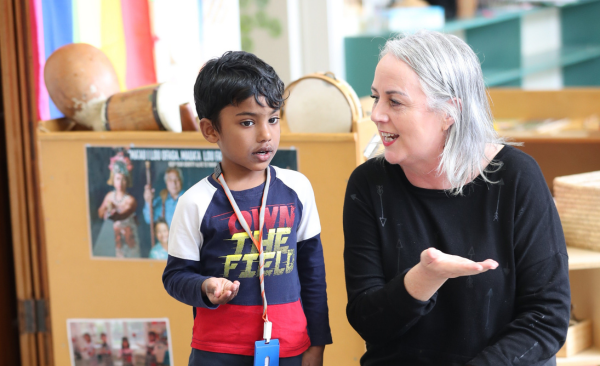 Research summary | 5 min read
Let’s keep talking: Oral language development in the early years - Summary
22 August 2024 -
Research report | 60 min read
Let’s keep talking: Oral language development in the early years
22 August 2024 -
 Good practice report | 30 min read
Good Practice: Oral language development in the early years
22 August 2024 -
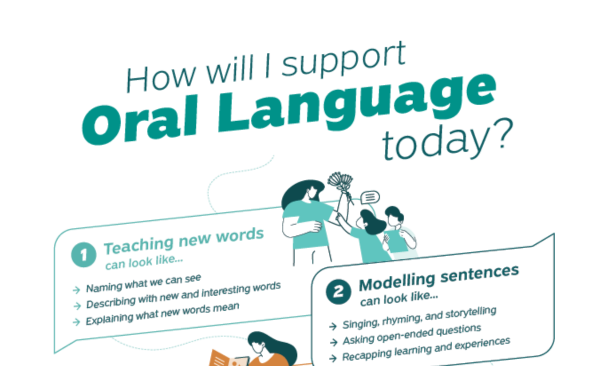 Good practice guide | 1 min read
Poster for teachers: Oral language development in the early years - A3 print
22 August 2024 -
 Good practice guide | 10 min read
Guide for ECE teachers: Oral language development in the early years
22 August 2024 -
 Good practice guide | 10 min read
Guide for ECE leaders: Oral language development in the early years
22 August 2024 -
 Sector insights | 5 min read
Insights for parents and whānau: Oral language development in the early years
22 August 2024
Read Online
ERO looked at oral language development in the early years
Language is the foundation for children’s learning and success. Children use oral language to become good thinkers and communicators, and to develop the reading and writing skills they need to achieve well in school and beyond. ERO wanted to know about how oral language is developing for children in the early years, what teachers are doing, and how teachers are being supported.
We looked at national and international research about what works. Then we talked to ECE services, schools (especially new entrant teachers), experts, and parents and whānau, to understand what support for children’s oral language development looks like.
Language is the foundation for children’s learning and success. Children use oral language to become good thinkers and communicators, and to develop the reading and writing skills they need to achieve well in school and beyond. ERO wanted to know about how oral language is developing for children in the early years, what teachers are doing, and how teachers are being supported.
We looked at national and international research about what works. Then we talked to ECE services, schools (especially new entrant teachers), experts, and parents and whānau, to understand what support for children’s oral language development looks like.
What did we find out?
Most children’s oral language is developing well, but there is a significant group of children who struggle, and Covid-19 has made this worse.
A large Aotearoa New Zealand study found 80 percent of children at age five are doing well, but 20 percent are struggling with oral language. In ERO’s study, teachers also told us that a group of children are struggling, and half of parents and whānau reported that their child has some difficulty with oral language in the early years. Covid-19 has had a big impact on language development – international studies find this too. Nearly two-thirds of new entrant teachers (65 percent) told us that Covid-19 has impacted children’s language development, especially the language skills needed for social communication.
“The majority of students missed ECE and were often at home on devices with very little input from whānau. I do wonder if they were spoken to, as many from this cohort have extremely poor oral language.” (New entrant teacher)
"A lot of children are not able to communicate their needs. They are difficult to understand when they speak. They are not used to having conversations." (Teacher)
Children from low socio-economic communities and boys are struggling the most.
New entrant teachers we surveyed in schools in low socio-economic communities were nine times more likely to report children being below expected levels of oral language.
Parents and whānau we surveyed reported 70 percent of boys are not at the expected development level, compared with 56 percent of girls. Girls tend to develop their language skills earlier than boys – it’s normal and expected for girls to have similar oral language ability to boys that are a few months older than them. However, teachers should also keep in mind that boys are twice as likely to have language impairments and difficulties. Teachers have a key role in recognising the difference between expected variations, and language difficulties that get in the way of children learning and progressing in their oral language and literacy.
“Many are attending ECE, but not being referred early enough once the delay in oral language is noticed. Then when trying to get intervention, the wait times are too long and the support is inconsistent.” (New entrant teacher)
There are five key teaching practices that matter.
International and Aotearoa New Zealand evidence is clear about the teaching practices that best support the development of children’s oral language skills. The five key practice areas are outlined in the boxes below, and described in more detail in ERO’s good practice resources (links are later in this guide). Within each of the practice areas, there are several key practices and strategies.
“You know that you are using this strategy that is researched and proven to work.” (Teacher)
We asked new entrant teachers about their use of the five practice areas, and found that they are happening very regularly in most new entrant classrooms. This is great news. New entrant teachers that we surveyed reported they most frequently: read interactively with children (99 percent), teach new words and how to use them (96 percent), and model how words make sentences (95 percent). New entrant teachers reported to us they develop social communication skills least frequently (94 percent).
|
Practice Area 1: Teaching new words and how to use them |
|
This practice area is about teaching and modelling a wide range of words and their meanings to children. When this is going well, teachers use a range of strategies to build children’s vocabulary, including naming, labelling, explaining, showing, repetition, and extending. |
|
Practice Area 2: Modelling how words make sentences |
|
This practice area is about teachers being deliberate about how they model the way that words are linked together. When this is going well, teachers use a range of strategies to show children how words are put together, including storytelling, using songs, questioning, sequencing, and recapping. |
|
Practice Area 3: Reading interactively with children |
|
This practice area is about engaging children in interactive reading activities. When this is going well, teachers use a range of strategies to prompt active interaction from children during book-reading, including using questioning, recalling, expanding, extending, explaining, retelling, and rereading. |
|
Practice Area 4: Using conversations to extend language |
|
This practice area is about having conversations with children as a deliberate teaching strategy. This is sometimes called ‘collaborative talk’. When this is going well, teachers use a range of strategies to engage children in activities where they can practice sharing their ideas out loud with others, including making links, evaluating, and testing working theories. |
|
Practice Area 5: Developing positive social communication |
|
This practice area is about teaching and modelling positive and inclusive social communication skills. When this is going well, teachers use a range of strategies to deliberately teach children spoken and non-spoken social communication skills, including waiting, body positioning, mirroring, gesturing, and reminding. |
Most children’s oral language is developing well, but there is a significant group of children who struggle, and Covid-19 has made this worse.
A large Aotearoa New Zealand study found 80 percent of children at age five are doing well, but 20 percent are struggling with oral language. In ERO’s study, teachers also told us that a group of children are struggling, and half of parents and whānau reported that their child has some difficulty with oral language in the early years. Covid-19 has had a big impact on language development – international studies find this too. Nearly two-thirds of new entrant teachers (65 percent) told us that Covid-19 has impacted children’s language development, especially the language skills needed for social communication.
“The majority of students missed ECE and were often at home on devices with very little input from whānau. I do wonder if they were spoken to, as many from this cohort have extremely poor oral language.” (New entrant teacher)
"A lot of children are not able to communicate their needs. They are difficult to understand when they speak. They are not used to having conversations." (Teacher)
Children from low socio-economic communities and boys are struggling the most.
New entrant teachers we surveyed in schools in low socio-economic communities were nine times more likely to report children being below expected levels of oral language.
Parents and whānau we surveyed reported 70 percent of boys are not at the expected development level, compared with 56 percent of girls. Girls tend to develop their language skills earlier than boys – it’s normal and expected for girls to have similar oral language ability to boys that are a few months older than them. However, teachers should also keep in mind that boys are twice as likely to have language impairments and difficulties. Teachers have a key role in recognising the difference between expected variations, and language difficulties that get in the way of children learning and progressing in their oral language and literacy.
“Many are attending ECE, but not being referred early enough once the delay in oral language is noticed. Then when trying to get intervention, the wait times are too long and the support is inconsistent.” (New entrant teacher)
There are five key teaching practices that matter.
International and Aotearoa New Zealand evidence is clear about the teaching practices that best support the development of children’s oral language skills. The five key practice areas are outlined in the boxes below, and described in more detail in ERO’s good practice resources (links are later in this guide). Within each of the practice areas, there are several key practices and strategies.
“You know that you are using this strategy that is researched and proven to work.” (Teacher)
We asked new entrant teachers about their use of the five practice areas, and found that they are happening very regularly in most new entrant classrooms. This is great news. New entrant teachers that we surveyed reported they most frequently: read interactively with children (99 percent), teach new words and how to use them (96 percent), and model how words make sentences (95 percent). New entrant teachers reported to us they develop social communication skills least frequently (94 percent).
|
Practice Area 1: Teaching new words and how to use them |
|
This practice area is about teaching and modelling a wide range of words and their meanings to children. When this is going well, teachers use a range of strategies to build children’s vocabulary, including naming, labelling, explaining, showing, repetition, and extending. |
|
Practice Area 2: Modelling how words make sentences |
|
This practice area is about teachers being deliberate about how they model the way that words are linked together. When this is going well, teachers use a range of strategies to show children how words are put together, including storytelling, using songs, questioning, sequencing, and recapping. |
|
Practice Area 3: Reading interactively with children |
|
This practice area is about engaging children in interactive reading activities. When this is going well, teachers use a range of strategies to prompt active interaction from children during book-reading, including using questioning, recalling, expanding, extending, explaining, retelling, and rereading. |
|
Practice Area 4: Using conversations to extend language |
|
This practice area is about having conversations with children as a deliberate teaching strategy. This is sometimes called ‘collaborative talk’. When this is going well, teachers use a range of strategies to engage children in activities where they can practice sharing their ideas out loud with others, including making links, evaluating, and testing working theories. |
|
Practice Area 5: Developing positive social communication |
|
This practice area is about teaching and modelling positive and inclusive social communication skills. When this is going well, teachers use a range of strategies to deliberately teach children spoken and non-spoken social communication skills, including waiting, body positioning, mirroring, gesturing, and reminding. |
How can you support your new entrants' oral language development?
New entrant teachers can make a big difference to the oral language development of children in their classes, which impacts their literacy learning too. This includes regularly using the key teaching practices in the boxes above, and having clear understandings of how the children in your class are going with their oral language.
New entrant teachers can make a big difference to the oral language development of children in their classes, which impacts their literacy learning too. This includes regularly using the key teaching practices in the boxes above, and having clear understandings of how the children in your class are going with their oral language.
Reflective questions for new entrant teachers
These questions could be useful to guide your own reflection, or to discuss with other teachers and leaders at your school.
- ERO found that professional knowledge makes a big difference. Have I engaged with useful professional learning and development about oral language? Do I need to seek some out?
- Assessing oral language skills, and identifying where further support is needed, is key to setting children up for literacy success. Do I know where to go to access tools to track progress and identify potential language difficulties in children’s language development?
- The evidence is clear about the practices that matter for language development, and most teachers report using them frequently. Do I make use of everyday learning activities and interactions to have conversations. Do I listen carefully to children’s ideas?
- Teachers’ practices to develop social communication are weaker. How well do I model being a respectful conversational partner? How about modelling ‘wait time’, or body positioning?
- Teachers and parents often do not know how well their children are going with oral language. What opportunities and platforms are there to keep parents and whānau regularly updated on their child’s oral language progress – and to gather information from them, for example about how they are going with language(s) used at home?
These questions could be useful to guide your own reflection, or to discuss with other teachers and leaders at your school.
- ERO found that professional knowledge makes a big difference. Have I engaged with useful professional learning and development about oral language? Do I need to seek some out?
- Assessing oral language skills, and identifying where further support is needed, is key to setting children up for literacy success. Do I know where to go to access tools to track progress and identify potential language difficulties in children’s language development?
- The evidence is clear about the practices that matter for language development, and most teachers report using them frequently. Do I make use of everyday learning activities and interactions to have conversations. Do I listen carefully to children’s ideas?
- Teachers’ practices to develop social communication are weaker. How well do I model being a respectful conversational partner? How about modelling ‘wait time’, or body positioning?
- Teachers and parents often do not know how well their children are going with oral language. What opportunities and platforms are there to keep parents and whānau regularly updated on their child’s oral language progress – and to gather information from them, for example about how they are going with language(s) used at home?
Want some good practice resources?
Guide for ECE teachers: Oral language in the early years is a quick summary of the five key practice areas with examples of what they look like – it’s designed for ECE teachers but will also be useful for new entrants: https://www.evidence.ero.govt.nz/documents/guide-for-ece-teachers-oral-language-development-in-the-early-years
Good practice: Oral language in the early years is the full report, with lots more detail about the 5 key practices as well as the 4 supports that need to be in place to set up teachers well: https://www.evidence.ero.govt.nz/documents/good-practice-oral-language-development-in-the-early-years
Insights for parents and whānau: Oral language in the early years encourages them to work in partnership with teachers on oral language: https://www.evidence.ero.govt.nz/documents/insights-for-parents-and-whanau-oral-language-development-in-the-early-years
Guide for ECE teachers: Oral language in the early years is a quick summary of the five key practice areas with examples of what they look like – it’s designed for ECE teachers but will also be useful for new entrants: https://www.evidence.ero.govt.nz/documents/guide-for-ece-teachers-oral-language-development-in-the-early-years
Good practice: Oral language in the early years is the full report, with lots more detail about the 5 key practices as well as the 4 supports that need to be in place to set up teachers well: https://www.evidence.ero.govt.nz/documents/good-practice-oral-language-development-in-the-early-years
Insights for parents and whānau: Oral language in the early years encourages them to work in partnership with teachers on oral language: https://www.evidence.ero.govt.nz/documents/insights-for-parents-and-whanau-oral-language-development-in-the-early-years