
Guide for ECE leaders: Oral language development in the early years
About this resource:
This guide gives a brief overview of the evidence-based supports that make the most difference to children’s oral language development in the early years. This guide is designed to be a practical resource for ECE leaders to support great oral language teaching in their service.
Related Insights
Explore related documents that you might be interested in.
-
 Good practice guide | 10 min read
Guide for ECE teachers: Oral language development in the early years
22 August 2024 -
 Good practice report | 30 min read
Good Practice: Oral language development in the early years
22 August 2024 -
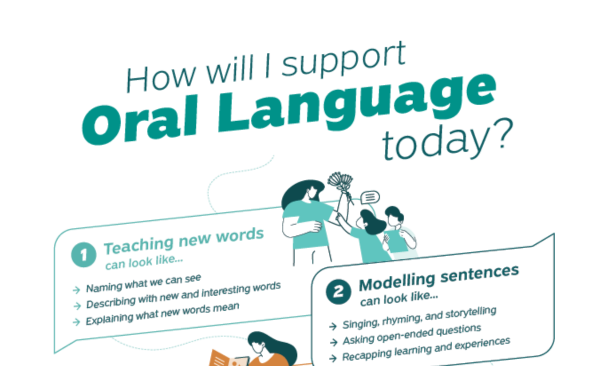 Good practice guide | 1 min read
Poster for teachers: Oral language development in the early years - A3 print
22 August 2024 -
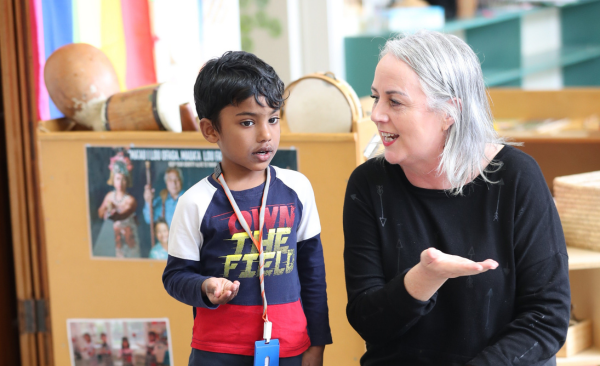 Research summary | 5 min read
Let’s keep talking: Oral language development in the early years - Summary
22 August 2024 -
Research report | 60 min read
Let’s keep talking: Oral language development in the early years
22 August 2024 -
 Sector insights | 5 min read
Insights for new entrant teachers: Oral language development in the early years
22 August 2024 -
 Sector insights | 5 min read
Insights for parents and whānau: Oral language development in the early years
22 August 2024
Read Online
About this guide
ERO looked at oral language development in the early years, across Aotearoa New Zealand. We wanted to know what the evidence says about teaching practices and supports that make the most difference, and how teachers1 and leaders can implement good practices in their own service.
This guide is designed to be a brief, practical resource for ECE leaders to support great oral language teaching in their service.
How did ERO found out about good practice?
We took a deep dive into the literature about what works, for supporting young children’s oral language development. This covered both the national and international literature base, and then we checked our understandings with Aotearoa New Zealand experts. We found five areas of practice that make the most difference, and four supports that need to be in place to set teachers up well.
We visited a range of ECE services and new entrant classrooms, and asked teachers and service leaders about the practical ways that they bring evidence-based oral language practices to life. We wanted to know about the particular strategies that have worked well in their experience, and what helps teachers to do their best work.
What do we mean by ‘oral language’ in this guide?
- listening (receptive language) skills: the ability to hear, process, and understand information
- speaking (expressive language) skills: the ability to respond and make meaning with sounds, words, signing, or gestures.
What about bilingual or multilingual children?
Speaking more than one language has many learning advantages for young children, as well as ongoing life benefits. The practices and supports highlighted in this report are relevant for teachers of all children, whether they have one, two, or more languages.
It’s important for leaders and teachers to work in partnership with families and whānau to support children’s home languages, and to be aware that children learning more than one language might take longer than their single-language peers to grow their English word bank, combine words, build sentences, and speak clearly compared to children who have one language. This is normal and expected.
ERO found five practices, and four supports, that make a difference.
There are five areas of practice that evidence shows make the most difference. You can read more about these practices in our companion guide for teachers: Guide for ECE Teachers
|
Practice area 1 |
Teaching new words and how to use them This practice area includes intentionally using words to build a child’s understanding of words (their receptive vocabulary) and encouraging them to use and apply words in the right context (expressive vocabulary). |
|
Practice area 2 |
Modelling how words make sentences This practice area includes intentionally using language to show how words are put together to make sentences (grammar) and providing opportunities for children to use this in their own speech. |
|
Practice area 3 |
Reading interactively with children This practice area includes encouraging children to be active participants during book-reading. Teachers use prompts to encourage interactions between children and the person reading the book. |
|
Practice area 4 |
Using conversations to extend language This practice area includes intentionally using language to engage children in activities that are challenging for them. It encourages them to hear and use language to understand and share ideas, as well as reason with others. |
|
Practice area 5 |
Developing positive social communication This practice area includes providing opportunities for children to learn social norms and rules of communication – both verbal and non-verbal – so they can change the words they use, how quietly/loudly they speak, and how they position themselves when they listen and communicate with others. |
This guide focusses on the four supports that need to be in place, for teachers to do their best work using the practices above. Each of the four supports has a dedicated section in this guide, with a focus on practical ways that ECE leadership can bring these to life at their service.
ERO looked at oral language development in the early years, across Aotearoa New Zealand. We wanted to know what the evidence says about teaching practices and supports that make the most difference, and how teachers1 and leaders can implement good practices in their own service.
This guide is designed to be a brief, practical resource for ECE leaders to support great oral language teaching in their service.
How did ERO found out about good practice?
We took a deep dive into the literature about what works, for supporting young children’s oral language development. This covered both the national and international literature base, and then we checked our understandings with Aotearoa New Zealand experts. We found five areas of practice that make the most difference, and four supports that need to be in place to set teachers up well.
We visited a range of ECE services and new entrant classrooms, and asked teachers and service leaders about the practical ways that they bring evidence-based oral language practices to life. We wanted to know about the particular strategies that have worked well in their experience, and what helps teachers to do their best work.
What do we mean by ‘oral language’ in this guide?
- listening (receptive language) skills: the ability to hear, process, and understand information
- speaking (expressive language) skills: the ability to respond and make meaning with sounds, words, signing, or gestures.
What about bilingual or multilingual children?
Speaking more than one language has many learning advantages for young children, as well as ongoing life benefits. The practices and supports highlighted in this report are relevant for teachers of all children, whether they have one, two, or more languages.
It’s important for leaders and teachers to work in partnership with families and whānau to support children’s home languages, and to be aware that children learning more than one language might take longer than their single-language peers to grow their English word bank, combine words, build sentences, and speak clearly compared to children who have one language. This is normal and expected.
ERO found five practices, and four supports, that make a difference.
There are five areas of practice that evidence shows make the most difference. You can read more about these practices in our companion guide for teachers: Guide for ECE Teachers
|
Practice area 1 |
Teaching new words and how to use them This practice area includes intentionally using words to build a child’s understanding of words (their receptive vocabulary) and encouraging them to use and apply words in the right context (expressive vocabulary). |
|
Practice area 2 |
Modelling how words make sentences This practice area includes intentionally using language to show how words are put together to make sentences (grammar) and providing opportunities for children to use this in their own speech. |
|
Practice area 3 |
Reading interactively with children This practice area includes encouraging children to be active participants during book-reading. Teachers use prompts to encourage interactions between children and the person reading the book. |
|
Practice area 4 |
Using conversations to extend language This practice area includes intentionally using language to engage children in activities that are challenging for them. It encourages them to hear and use language to understand and share ideas, as well as reason with others. |
|
Practice area 5 |
Developing positive social communication This practice area includes providing opportunities for children to learn social norms and rules of communication – both verbal and non-verbal – so they can change the words they use, how quietly/loudly they speak, and how they position themselves when they listen and communicate with others. |
This guide focusses on the four supports that need to be in place, for teachers to do their best work using the practices above. Each of the four supports has a dedicated section in this guide, with a focus on practical ways that ECE leadership can bring these to life at their service.
Support 1: Early childhood service leadership and priorities
1. What is this support, and why does it matter?
This support is about prioritising oral language teaching and learning, and making sure that teachers are set up with what they need. For service leaders, this means thinking about oral language when:
- setting clear expectations for teachers
- making decisions about tools and resources
- arranging staff
- providing professional learning opportunities.
Service leadership and priorities have a powerful influence on the overall quality of early childhood services and the oral language support that happens there. Professional learning and access to useful tools and assessments equip teachers to make informed, evidence-based teaching decisions. Appropriate staffing allows teachers to focus on oral language within quality interactions, rather than managing the environment.
2. What does this support look like in real life?
a) Service leaders set clear expectations for teaching and learning
Clear and consistent expectations for oral language teaching and learning supports shared good practice, across the whole team. Sharing expectations in a structured way reduces the chance of misunderstandings. A key consideration for leaders is making sure teachers understand the importance of oral language - that it is critical to children’s ongoing learning success, and teachers have a key role to play.
Service leaders’ expectations should aim to reduce barriers to education for all children, particularly for Māori children, Pacific children, disabled children, and those with learning support needs. When service leaders clarify for teachers how their service intentionally reduces barriers to education through strong oral language support, this empowers teachers to join in helping to make this happen.
b) Service leaders ensure teachers have the right tools and resources
Assessment tools can help teachers notice and recognise when children are having difficulty with particular skills or aspects of oral language. The right tools and resources help teachers to tailor their practice to the needs of individual children, and to find out how effective their teaching has been. It’s important that teachers are provided with training to understand the ‘how and why’ of tools and resources.
c) Service leaders provide appropriate staffing
There are a range of evidence-based ways that service leaders can make strategic staffing decisions to foster oral language learning. When leaders arrange staffing according to legal frameworks, regulations, and funding protocols, they should also consider how they can maximise benefits for children through the range and arrangement of teaching staff.
Evidence shows that unhurried interactions between teachers and a small number of children, which are sustained for more than just a few minutes, are highly effective for supporting children’s oral language development. Service leaders can support teachers to do this through rostering and arranging staff to enable some smaller, slower-paced interactions alongside larger group activities.
“Part of our curriculum that allows them to have…that time in the centre where they're in a small group of children with a shared interest or a shared learning experience happening… and the teacher is dedicated to those children at that time… that teacher is really there to give their full attention to those children – and I think that's quite important in a busy space.” (Leader)
Employing diverse staff, with diverse cultural backgrounds and linguistic capabilities, can foster multicultural and language-rich learning spaces for all children. Service leaders can support diverse staff to enrich the learning environment through encouraging the use and visibility of multiple languages and cultures, particularly those that reflect the languages of enrolled children and their families.
d) Service leaders provide opportunities for staff to learn
Professional knowledge makes a big difference. ERO found that ECE teachers who are extremely confident in their professional knowledge of how children’s language develops were up to seven times more likely to use effective teaching practices frequently.
Promoting and supporting the ongoing learning and development of teachers is a key responsibility of educational leaders. This can include:
- offering professional learning about oral language to all staff – or where a particular staff member has received professional learning, making sure they can share their learnings with other staff to build capability and consistency across the team.
- seeking professional knowledge to respond to trends they are seeing across children’s oral language at the service (e.g. through internal evaluation processes)
- sharing useful resources and readings (like our guide for teachers: https://www.evidence.ero.govt.nz/documents/guide-for-ece-teachers-oral-language-development-in-the-early-years and the Ministry’s Kōwhiti Whakapae site)
- offering opportunities to model or observe good oral language practice
- working with local speech-language therapists.
"Throughout that (professional learning) workshop, I guess it helped overcome these sorts of barriers, because you know that you are using this strategy that is researched and proven to work” (Teacher)
|
Real-life examples from ECE services: |
|
3. Reflective questions for service leaders
These questions be useful to reflect on individually or to discuss as a team.
- Do teachers have regular opportunities for discussion about all children’s oral language, where leaders can support them to develop their skills? Is this prioritised?
- Do leaders and teachers work together to make sure learning environments and staffing arrangements are set up to facilitate oral language development? How could we improve these arrangements?
- Do our staffing arrangements allow for quality one-on-one and small group teacher-child interactions and authentic situations for facilitating language development?
- What assessment and/or teaching tools might staff need for their professional toolkit? How will they build their confidence to use those tools?
- Are there particular areas of oral language development where teachers would benefit from professional learning? How can we ensure professional learning is shared among all staff for consistent practice?
1. What is this support, and why does it matter?
This support is about prioritising oral language teaching and learning, and making sure that teachers are set up with what they need. For service leaders, this means thinking about oral language when:
- setting clear expectations for teachers
- making decisions about tools and resources
- arranging staff
- providing professional learning opportunities.
Service leadership and priorities have a powerful influence on the overall quality of early childhood services and the oral language support that happens there. Professional learning and access to useful tools and assessments equip teachers to make informed, evidence-based teaching decisions. Appropriate staffing allows teachers to focus on oral language within quality interactions, rather than managing the environment.
2. What does this support look like in real life?
a) Service leaders set clear expectations for teaching and learning
Clear and consistent expectations for oral language teaching and learning supports shared good practice, across the whole team. Sharing expectations in a structured way reduces the chance of misunderstandings. A key consideration for leaders is making sure teachers understand the importance of oral language - that it is critical to children’s ongoing learning success, and teachers have a key role to play.
Service leaders’ expectations should aim to reduce barriers to education for all children, particularly for Māori children, Pacific children, disabled children, and those with learning support needs. When service leaders clarify for teachers how their service intentionally reduces barriers to education through strong oral language support, this empowers teachers to join in helping to make this happen.
b) Service leaders ensure teachers have the right tools and resources
Assessment tools can help teachers notice and recognise when children are having difficulty with particular skills or aspects of oral language. The right tools and resources help teachers to tailor their practice to the needs of individual children, and to find out how effective their teaching has been. It’s important that teachers are provided with training to understand the ‘how and why’ of tools and resources.
c) Service leaders provide appropriate staffing
There are a range of evidence-based ways that service leaders can make strategic staffing decisions to foster oral language learning. When leaders arrange staffing according to legal frameworks, regulations, and funding protocols, they should also consider how they can maximise benefits for children through the range and arrangement of teaching staff.
Evidence shows that unhurried interactions between teachers and a small number of children, which are sustained for more than just a few minutes, are highly effective for supporting children’s oral language development. Service leaders can support teachers to do this through rostering and arranging staff to enable some smaller, slower-paced interactions alongside larger group activities.
“Part of our curriculum that allows them to have…that time in the centre where they're in a small group of children with a shared interest or a shared learning experience happening… and the teacher is dedicated to those children at that time… that teacher is really there to give their full attention to those children – and I think that's quite important in a busy space.” (Leader)
Employing diverse staff, with diverse cultural backgrounds and linguistic capabilities, can foster multicultural and language-rich learning spaces for all children. Service leaders can support diverse staff to enrich the learning environment through encouraging the use and visibility of multiple languages and cultures, particularly those that reflect the languages of enrolled children and their families.
d) Service leaders provide opportunities for staff to learn
Professional knowledge makes a big difference. ERO found that ECE teachers who are extremely confident in their professional knowledge of how children’s language develops were up to seven times more likely to use effective teaching practices frequently.
Promoting and supporting the ongoing learning and development of teachers is a key responsibility of educational leaders. This can include:
- offering professional learning about oral language to all staff – or where a particular staff member has received professional learning, making sure they can share their learnings with other staff to build capability and consistency across the team.
- seeking professional knowledge to respond to trends they are seeing across children’s oral language at the service (e.g. through internal evaluation processes)
- sharing useful resources and readings (like our guide for teachers: https://www.evidence.ero.govt.nz/documents/guide-for-ece-teachers-oral-language-development-in-the-early-years and the Ministry’s Kōwhiti Whakapae site)
- offering opportunities to model or observe good oral language practice
- working with local speech-language therapists.
"Throughout that (professional learning) workshop, I guess it helped overcome these sorts of barriers, because you know that you are using this strategy that is researched and proven to work” (Teacher)
|
Real-life examples from ECE services: |
|
3. Reflective questions for service leaders
These questions be useful to reflect on individually or to discuss as a team.
- Do teachers have regular opportunities for discussion about all children’s oral language, where leaders can support them to develop their skills? Is this prioritised?
- Do leaders and teachers work together to make sure learning environments and staffing arrangements are set up to facilitate oral language development? How could we improve these arrangements?
- Do our staffing arrangements allow for quality one-on-one and small group teacher-child interactions and authentic situations for facilitating language development?
- What assessment and/or teaching tools might staff need for their professional toolkit? How will they build their confidence to use those tools?
- Are there particular areas of oral language development where teachers would benefit from professional learning? How can we ensure professional learning is shared among all staff for consistent practice?
Support 2: Teacher knowledge and assessment
1. What is this support, and why does it matter?
This is about teachers having sufficient knowledge about the development of children’s oral language, to help them observe, monitor, and support children’s progress across different aspects of oral language development. Initial teacher education and ongoing professional learning plays an important role in this area of support.
Good teacher knowledge is strongly linked to teacher capability. Teachers need specific knowledge, skills, and supports to be able to foster oral language successfully and this learning needs to be developed deliberately over time.
When teachers have a good evidence-based understanding of oral language progress, this helps them to recognise evidence of progress within interactions and to adapt their strategies in response. When this knowledge is combined with knowledge about how to spot possible speech and language difficulties, and where to go to request additional specialist support as needed, teachers are better equipped to quickly source extra help.
2. What does this support look like in real life?
a) Teachers understand how children’s language develops
Teachers need a good foundation of knowledge about language development across the eight key aspects of oral language (see the table below). This knowledge sets them up to recognise what progress looks like, and then to tailor their practice in response. This can include taking a structured approach to teaching oral language skills and supporting children’s use of their home languages. Leaders can help by providing, revisiting, and embedding professional learning in this area.
“We’re noticing - and particularly encouraging - our 3-year-olds to be really creative, imaginative, and playful with their language. We know that that’s an important developmental step.” (Teacher)
Aspects of oral language development
|
Gestures |
Using and adding gestures as part of communication |
|
Words |
Learning, understanding, and using a range of words |
|
Sounds |
Adding, using, and understanding sounds |
|
Social communication |
Changing their language, using words to express needs |
|
Syntax |
Combining words to form sentences |
|
Stories |
Enjoy listening to, being read to, and telling stories |
|
Grammar |
Constructing nearly correct sentences and asking questions |
|
Rhyming |
Making rhymes |
b) Teachers know the indicators of progress
There is some variation in how quickly individual children will develop their oral language skills. However, evidence-based progress indicators that apply to broad age ranges can help parents and whānau, teachers, and speech and language experts to recognise progress and know what to look for next. Oral language progress indicators are flexible, evidence-based markers which help teachers to understand children’s skills and development, tailor their teaching to support their ongoing progress, as well as to notice and respond to any areas of possible difficulty. Teachers should consider markers of both receptive (listening skills) and expressive (speaking skills) progress.
Leaders can support teachers by facilitating discussion around resources that include progress indicators - such as the Talking Together, Te Kōrerorero stepping stones in oral language.
“[During professional learning] there were some groundbreaking things she said to us like, ‘Think about a particular child you're working with and really take the time to analyse their current language level.’” (Leader)
c) Teachers assess children’s progress
It’s important that teachers are confident to use relevant assessments to understand children’s learning progress - through evidence. Progress assessment not only helps teachers gain a better picture of where individual children are with their oral language skills, but it can also give a useful picture of children’s progress as a group – both of which can inform specific teaching activities and strategies. We heard that it is useful for leaders and guiding documents to clarify why assessments are used.
With any assessment tool, it is crucial for teachers to be trained in how and when to use them, to avoid inappropriate use of tools or inaccurate data analysis. Leaders can also consider providing dedicated time for teachers to analyse and discuss assessment data as a team.
d) Teachers know how to identify and address language difficulties
Being confident about progress markers and assessments helps teachers know how to identify possible difficulties, seek support, and work collaboratively with experts. This means less waiting time for children’s specific oral language needs to be met. It can be useful to have a clear process for when to talk to a specialist, and clear actions such as a flowchart that shows what teachers should do when they notice oral language difficulties (e.g., how and when to involve experts).
It helps to create a culture where teachers feel free to share and discuss what they notice with their team. It is not useful for teachers to be overly hesitant about bringing up concerns, particularly with colleagues. Leaders can set the scene for better practice by encouraging and affirming open team discussions.
Boys’ oral language - what’s different?
Parents and whānau we surveyed reported 70 percent of boys are not at the expected development level, compared with 56 percent of girls. Girls tend to develop their language skills earlier than boys - it’s normal and expected for girls to have similar oral language ability to boys that are a few months older than them. However, teachers should also keep in mind that boys are twice as likely to have language impairments and difficulties. Teachers have a key role in recognising the difference between expected variations, and language difficulties that get in the way of children learning.
e) Teachers know strategies for supporting children’s oral language
Teachers need support to be confident and comfortable using evidence-based strategies (like those outlined in our companion guide for ECE teachers) in a flexible way with children. Leaders can provide tailored and specific professional learning, discussion opportunities, and dedicated resources about oral language teaching that include the evidence that sits behind the strategies, as well as practical examples of how to enact strategies with children.
“We got [provider] to come in and talk to us about the science, and the brain, and the neuroscience behind basically play-based learning.” (Teacher)
|
Real-life examples from ECE services: |
|
3) Reflective questions for service leaders
These questions may be useful to reflect on individually or to discuss as a team.
- How do we track and monitor oral language development across all our children? Do teachers need support to understand how and why targeted assessment matters?
- Do our processes encourage teaching staff to critically reflect on how their teaching practice is impacting on children’s oral language development?
- Are we clear about what indicators of progress look like – and what it looks like when oral language is not progressing well?
- Do our teachers feel safe and confident to raise concerns about children’s oral language progress? Can we think of examples of times where teachers have discussed this openly?
1. What is this support, and why does it matter?
This is about teachers having sufficient knowledge about the development of children’s oral language, to help them observe, monitor, and support children’s progress across different aspects of oral language development. Initial teacher education and ongoing professional learning plays an important role in this area of support.
Good teacher knowledge is strongly linked to teacher capability. Teachers need specific knowledge, skills, and supports to be able to foster oral language successfully and this learning needs to be developed deliberately over time.
When teachers have a good evidence-based understanding of oral language progress, this helps them to recognise evidence of progress within interactions and to adapt their strategies in response. When this knowledge is combined with knowledge about how to spot possible speech and language difficulties, and where to go to request additional specialist support as needed, teachers are better equipped to quickly source extra help.
2. What does this support look like in real life?
a) Teachers understand how children’s language develops
Teachers need a good foundation of knowledge about language development across the eight key aspects of oral language (see the table below). This knowledge sets them up to recognise what progress looks like, and then to tailor their practice in response. This can include taking a structured approach to teaching oral language skills and supporting children’s use of their home languages. Leaders can help by providing, revisiting, and embedding professional learning in this area.
“We’re noticing - and particularly encouraging - our 3-year-olds to be really creative, imaginative, and playful with their language. We know that that’s an important developmental step.” (Teacher)
Aspects of oral language development
|
Gestures |
Using and adding gestures as part of communication |
|
Words |
Learning, understanding, and using a range of words |
|
Sounds |
Adding, using, and understanding sounds |
|
Social communication |
Changing their language, using words to express needs |
|
Syntax |
Combining words to form sentences |
|
Stories |
Enjoy listening to, being read to, and telling stories |
|
Grammar |
Constructing nearly correct sentences and asking questions |
|
Rhyming |
Making rhymes |
b) Teachers know the indicators of progress
There is some variation in how quickly individual children will develop their oral language skills. However, evidence-based progress indicators that apply to broad age ranges can help parents and whānau, teachers, and speech and language experts to recognise progress and know what to look for next. Oral language progress indicators are flexible, evidence-based markers which help teachers to understand children’s skills and development, tailor their teaching to support their ongoing progress, as well as to notice and respond to any areas of possible difficulty. Teachers should consider markers of both receptive (listening skills) and expressive (speaking skills) progress.
Leaders can support teachers by facilitating discussion around resources that include progress indicators - such as the Talking Together, Te Kōrerorero stepping stones in oral language.
“[During professional learning] there were some groundbreaking things she said to us like, ‘Think about a particular child you're working with and really take the time to analyse their current language level.’” (Leader)
c) Teachers assess children’s progress
It’s important that teachers are confident to use relevant assessments to understand children’s learning progress - through evidence. Progress assessment not only helps teachers gain a better picture of where individual children are with their oral language skills, but it can also give a useful picture of children’s progress as a group – both of which can inform specific teaching activities and strategies. We heard that it is useful for leaders and guiding documents to clarify why assessments are used.
With any assessment tool, it is crucial for teachers to be trained in how and when to use them, to avoid inappropriate use of tools or inaccurate data analysis. Leaders can also consider providing dedicated time for teachers to analyse and discuss assessment data as a team.
d) Teachers know how to identify and address language difficulties
Being confident about progress markers and assessments helps teachers know how to identify possible difficulties, seek support, and work collaboratively with experts. This means less waiting time for children’s specific oral language needs to be met. It can be useful to have a clear process for when to talk to a specialist, and clear actions such as a flowchart that shows what teachers should do when they notice oral language difficulties (e.g., how and when to involve experts).
It helps to create a culture where teachers feel free to share and discuss what they notice with their team. It is not useful for teachers to be overly hesitant about bringing up concerns, particularly with colleagues. Leaders can set the scene for better practice by encouraging and affirming open team discussions.
Boys’ oral language - what’s different?
Parents and whānau we surveyed reported 70 percent of boys are not at the expected development level, compared with 56 percent of girls. Girls tend to develop their language skills earlier than boys - it’s normal and expected for girls to have similar oral language ability to boys that are a few months older than them. However, teachers should also keep in mind that boys are twice as likely to have language impairments and difficulties. Teachers have a key role in recognising the difference between expected variations, and language difficulties that get in the way of children learning.
e) Teachers know strategies for supporting children’s oral language
Teachers need support to be confident and comfortable using evidence-based strategies (like those outlined in our companion guide for ECE teachers) in a flexible way with children. Leaders can provide tailored and specific professional learning, discussion opportunities, and dedicated resources about oral language teaching that include the evidence that sits behind the strategies, as well as practical examples of how to enact strategies with children.
“We got [provider] to come in and talk to us about the science, and the brain, and the neuroscience behind basically play-based learning.” (Teacher)
|
Real-life examples from ECE services: |
|
3) Reflective questions for service leaders
These questions may be useful to reflect on individually or to discuss as a team.
- How do we track and monitor oral language development across all our children? Do teachers need support to understand how and why targeted assessment matters?
- Do our processes encourage teaching staff to critically reflect on how their teaching practice is impacting on children’s oral language development?
- Are we clear about what indicators of progress look like – and what it looks like when oral language is not progressing well?
- Do our teachers feel safe and confident to raise concerns about children’s oral language progress? Can we think of examples of times where teachers have discussed this openly?
Support 3: Partnership with parents and whānau
1) What is this support, and why does it matter?
This is about leaders and teachers talking with parents and whānau about children’s progress, and sharing resources, observations, and knowledge. This includes sharing information about the importance of quality spoken interactions between parents and whānau and their children.
Partnering closely with parents and whānau:
- adds value to their children’s assessment and planning processes
- promotes consistent speaking and listening practices between home and the service
- helps identify and reduce barriers to children’s oral language development
- helps identify and maximise opportunities to draw on family knowledge, for example information about languages spoken at home.
2) What does this support look like in real life?
a) Teachers talk with parents and whānau about children’s progress – at home and at the early childhood service
Talking to parents and whānau about their children’s oral language progress helps boost their engagement by celebrating successes and collaborating on decisions about areas for more support. Teachers and parents and whānau can share ideas and discuss how they use key, simple strategies, like open questions and descriptive language.
Some services find it useful to invest in an app or communication platform that is accessible for their community. This can allow for an informal way of reporting and keeping parents and whānau up to date, and vice versa, to complement in-person discussions and more formalised documentation. Other services use portfolio files or notebooks. Leaders can support teachers to make it clear when information is about oral language progress, and what the key messages are about how children are going – it is not useful to leave parents guessing about what assessments are telling them.
Half of parents (53 percent) that ERO surveys told us that they do not get information from their service about their child's oral language progress.
Sharing information about oral language is particularly important for children with multiple languages – to support teachers to understand the fuller picture of children’s oral language development journey.
“The other thing we check is whether that speech problem is there in their first language, or whether it's only just there in the second language.” (Leader)
b) Teachers share resources, so parents and whānau can support children’s learning at home
When teachers share resources, parents and whānau are equipped to understand and reinforce the oral language strategies happening at the service. It is useful for teachers or leaders to go through resources together with parents and whānau, to help them understand the reasoning behind strategies (the ‘how and why’).
Leaders can help teachers identify trends or common misunderstandings about oral language across the parent community, and prepare resources that support parent and whānau understanding. For example, services might share articles that explain why it is beneficial for multilingual children to speak their home language with their families at home, or the value of talking with children during home routines.
Ideas for resources to share with parents and whānau.
→ ERO’s Insights for Parent and whānau about this research
→ Five short videos from Te kōrerorero site, showing simple and effective strategies to use at home: Talking together - Learning in the home (education.govt.nz)
→ The Much more than words booklet, with information and ideas for supporting your child’s oral language: More Than Words | Learning from home
“We have learnt a number of talking tips (from PLD) and shared these with whānau. I believe children are using screens far too much and do not have interactions with adults in the home as much, in this day and age. Talking to our tamariki makes them feel important and respected- listening and giving them time to respond is very important too” (Teacher)
|
Real-life examples from ECE services: |
|
|
Tips from the sector: Talking to parents and whānau about oral language |
|
“Talk to your children. Find that five minutes a day to have a two-way conversation around a picture book, and it’s… a conversation – it's a back and forth.” (Leader) “The importance of speaking in your first language, that's huge as well…You can have these conversations, but you don't need to have them in English. It's still building skills no matter what language they're speaking.” (Teacher) |
3) Reflective questions for service leaders
These questions may be useful to reflect on individually or to discuss as a team.
- Do we know what oral language goals and inspiration parents and whānau have for their child? How could teachers work with parents and whānau together on these aspirations?
- How can we share oral language development information, so parents and whānau can understand and use strategies with their child at home?
- How can we gather important information about the oral language context and learning happening at home, so that teaching practice is based on information about the full picture?
- Are parents and whānau of multilingual children actively involved in the planning and
assessment of their children’s oral language development? Do they need reassurance and evidence that speaking their home language is beneficial to that development? (see the ‘Useful Resources’ at the end of this report for some helpful information on this)
1) What is this support, and why does it matter?
This is about leaders and teachers talking with parents and whānau about children’s progress, and sharing resources, observations, and knowledge. This includes sharing information about the importance of quality spoken interactions between parents and whānau and their children.
Partnering closely with parents and whānau:
- adds value to their children’s assessment and planning processes
- promotes consistent speaking and listening practices between home and the service
- helps identify and reduce barriers to children’s oral language development
- helps identify and maximise opportunities to draw on family knowledge, for example information about languages spoken at home.
2) What does this support look like in real life?
a) Teachers talk with parents and whānau about children’s progress – at home and at the early childhood service
Talking to parents and whānau about their children’s oral language progress helps boost their engagement by celebrating successes and collaborating on decisions about areas for more support. Teachers and parents and whānau can share ideas and discuss how they use key, simple strategies, like open questions and descriptive language.
Some services find it useful to invest in an app or communication platform that is accessible for their community. This can allow for an informal way of reporting and keeping parents and whānau up to date, and vice versa, to complement in-person discussions and more formalised documentation. Other services use portfolio files or notebooks. Leaders can support teachers to make it clear when information is about oral language progress, and what the key messages are about how children are going – it is not useful to leave parents guessing about what assessments are telling them.
Half of parents (53 percent) that ERO surveys told us that they do not get information from their service about their child's oral language progress.
Sharing information about oral language is particularly important for children with multiple languages – to support teachers to understand the fuller picture of children’s oral language development journey.
“The other thing we check is whether that speech problem is there in their first language, or whether it's only just there in the second language.” (Leader)
b) Teachers share resources, so parents and whānau can support children’s learning at home
When teachers share resources, parents and whānau are equipped to understand and reinforce the oral language strategies happening at the service. It is useful for teachers or leaders to go through resources together with parents and whānau, to help them understand the reasoning behind strategies (the ‘how and why’).
Leaders can help teachers identify trends or common misunderstandings about oral language across the parent community, and prepare resources that support parent and whānau understanding. For example, services might share articles that explain why it is beneficial for multilingual children to speak their home language with their families at home, or the value of talking with children during home routines.
Ideas for resources to share with parents and whānau.
→ ERO’s Insights for Parent and whānau about this research
→ Five short videos from Te kōrerorero site, showing simple and effective strategies to use at home: Talking together - Learning in the home (education.govt.nz)
→ The Much more than words booklet, with information and ideas for supporting your child’s oral language: More Than Words | Learning from home
“We have learnt a number of talking tips (from PLD) and shared these with whānau. I believe children are using screens far too much and do not have interactions with adults in the home as much, in this day and age. Talking to our tamariki makes them feel important and respected- listening and giving them time to respond is very important too” (Teacher)
|
Real-life examples from ECE services: |
|
|
Tips from the sector: Talking to parents and whānau about oral language |
|
“Talk to your children. Find that five minutes a day to have a two-way conversation around a picture book, and it’s… a conversation – it's a back and forth.” (Leader) “The importance of speaking in your first language, that's huge as well…You can have these conversations, but you don't need to have them in English. It's still building skills no matter what language they're speaking.” (Teacher) |
3) Reflective questions for service leaders
These questions may be useful to reflect on individually or to discuss as a team.
- Do we know what oral language goals and inspiration parents and whānau have for their child? How could teachers work with parents and whānau together on these aspirations?
- How can we share oral language development information, so parents and whānau can understand and use strategies with their child at home?
- How can we gather important information about the oral language context and learning happening at home, so that teaching practice is based on information about the full picture?
- Are parents and whānau of multilingual children actively involved in the planning and
assessment of their children’s oral language development? Do they need reassurance and evidence that speaking their home language is beneficial to that development? (see the ‘Useful Resources’ at the end of this report for some helpful information on this)
Support 4: Working with specialists
1) What is this practice area, and why does it matter?
This is about leaders and teachers knowing who their local specialists are, knowing when to contact them, and being committed and confident to adapt their practice according to specialist advice. There are different levels of support that specialists can provide, from one-off advice and guidance to intensive and ongoing support.
When teachers seek timely support, children benefit from having the expertise and knowledge of their teachers supplemented with expert advice and guidance that is tailored to their speech and language needs. This means they get the support they need, when they need it. Timely support prevents further difficulties that will have ongoing impacts in school and beyond.
2) What does this support look like in real life?
a) Teachers know when to request support from specialists
Service leadership has a key role in supporting teachers to know the difference between the expected range of progress (using clear progress indicators), and development that requires extra help and expertise. This should include ensuring that teachers understand how multilingual children’s rates of progress can differ from single-language children.
Leaders can provide clear guidance for teachers about the processes for identifying potential language difficulties and contacting specialists. This might be in the form of a flow chart or written guidance, that includes key steps like observations, gathering assessment data, talking to leaders, and talking to parents and whānau.
b) Teachers work effectively with specialists
Working closely and effectively with specialists means teachers will need to tailor their teaching according to expert advice to have the best impact for children. Leaders can help by setting clear expectations and observing teaching to ensure that specialist advice is being embedded into everyday practice across the team. Deliberate modelling, written reminders (e.g. in a staff room), and opportunities for team reflection can help too.
Leaders or particular teachers can build up strong working relationship with speech-language therapists in the area, and work with them to provide professional learning for teachers. It is useful to involve parents and whānau in specialist conversations and learning where possible.
“The specialists will work with the families on site, and then the families will share with us what strategies we should use in the classroom. So, the families are kind of holding the knowledge – the power.” (Leader)
|
Real-life examples from ECE services: |
|
3) Reflective questions for service leaders
These questions may be useful to reflect on individually or to discuss as a team.
- Do staff know enough about indicators or progress and expected progress markers to be able to recognise when children have possible language difficulties?
- Do staff know who to go to, and how to access external supports? Would they feel hesitant about raising concerns – and if so, how can we make sure they know this is important?
- Are staff provided with relevant, targeted professional learning about how to support children? How is specialist advice communicated across the teaching team, to promote shared and consistent practice?
- How do we know that specialist advice and strategies are understood and enacted by the teaching team? As leaders, how can we set clear expectations and provide the support that is needed so that teaching doesn’t drift back to familiar practices?
1) What is this practice area, and why does it matter?
This is about leaders and teachers knowing who their local specialists are, knowing when to contact them, and being committed and confident to adapt their practice according to specialist advice. There are different levels of support that specialists can provide, from one-off advice and guidance to intensive and ongoing support.
When teachers seek timely support, children benefit from having the expertise and knowledge of their teachers supplemented with expert advice and guidance that is tailored to their speech and language needs. This means they get the support they need, when they need it. Timely support prevents further difficulties that will have ongoing impacts in school and beyond.
2) What does this support look like in real life?
a) Teachers know when to request support from specialists
Service leadership has a key role in supporting teachers to know the difference between the expected range of progress (using clear progress indicators), and development that requires extra help and expertise. This should include ensuring that teachers understand how multilingual children’s rates of progress can differ from single-language children.
Leaders can provide clear guidance for teachers about the processes for identifying potential language difficulties and contacting specialists. This might be in the form of a flow chart or written guidance, that includes key steps like observations, gathering assessment data, talking to leaders, and talking to parents and whānau.
b) Teachers work effectively with specialists
Working closely and effectively with specialists means teachers will need to tailor their teaching according to expert advice to have the best impact for children. Leaders can help by setting clear expectations and observing teaching to ensure that specialist advice is being embedded into everyday practice across the team. Deliberate modelling, written reminders (e.g. in a staff room), and opportunities for team reflection can help too.
Leaders or particular teachers can build up strong working relationship with speech-language therapists in the area, and work with them to provide professional learning for teachers. It is useful to involve parents and whānau in specialist conversations and learning where possible.
“The specialists will work with the families on site, and then the families will share with us what strategies we should use in the classroom. So, the families are kind of holding the knowledge – the power.” (Leader)
|
Real-life examples from ECE services: |
|
3) Reflective questions for service leaders
These questions may be useful to reflect on individually or to discuss as a team.
- Do staff know enough about indicators or progress and expected progress markers to be able to recognise when children have possible language difficulties?
- Do staff know who to go to, and how to access external supports? Would they feel hesitant about raising concerns – and if so, how can we make sure they know this is important?
- Are staff provided with relevant, targeted professional learning about how to support children? How is specialist advice communicated across the teaching team, to promote shared and consistent practice?
- How do we know that specialist advice and strategies are understood and enacted by the teaching team? As leaders, how can we set clear expectations and provide the support that is needed so that teaching doesn’t drift back to familiar practices?
Useful resources
Oral language is foundational for children’s ongoing literacy learning and has a big impact on their learning, in the early years and beyond. Teacher practices can make a real difference to children’s oral language development.
The evidence shows that clear and consistent service-wide supports make a real difference for teachers and children. This guide is focused on the supports ECE leaders can provide for teachers, drawing on robust evidence to clarify ‘what good looks like’. It’s intended to help inform positive shifts to practice – setting children up for better oral language and literacy outcomes going forward.
This guide is part of a suite of resources about oral language in the early years, available for download on www.evidence.ero.govt.nz. Available resources include:
- A guide for ECE teachers, about the teaching practices that make the most difference for children’s oral language development:
- Poster for early childhood services:
- Insights for parents and whānau:
- A good practice report, which extends on this guide with more detail.
- An evaluation report, which sets out the findings from ERO’s evaluation:
Other useful resources include:
- Kōwhiti whakapae – The ‘Oral Language and Literacy’ section will be launched in the second half of 2024. Supporting teachers to assess and share children's early learning progress - Kōwhiti Whakapae (education.govt.nz)
- Te kōrerorero: Talking together – A suite of resources from the Ministry of Education. Te Kōrerorero - Talking together (education.govt.nz)
- Much more than words – a short booklet that provides ideas for supporting children’s growing capability as communicators. It’s also useful for parents and whānau. Much More Than Words | Learning from home
- Responding to diverse cultures: Good practice in home-based early childhood services - This 2021 ERO report includes practical guidance around working with children with diverse languages. Examples are drawn from home-based services but will be useful for centre-based teachers too. Responding-to-diverse-cultures-good-practice-in-home-based-early-childhood-services-report.pdf (ero.govt.nz)
- Supporting children to become bilingual in Aotearoa New Zealand – A webinar from Associate Professor Mere Skerrett and the Education Hub. This sets out some key issues and opportunities around te reo Māori-English bilingualism and offers clear and useful explanations of the benefits of bilingualism in general. Supporting children to become bilingual in Aotearoa New Zealand - THE EDUCATION HUB
Oral language is foundational for children’s ongoing literacy learning and has a big impact on their learning, in the early years and beyond. Teacher practices can make a real difference to children’s oral language development.
The evidence shows that clear and consistent service-wide supports make a real difference for teachers and children. This guide is focused on the supports ECE leaders can provide for teachers, drawing on robust evidence to clarify ‘what good looks like’. It’s intended to help inform positive shifts to practice – setting children up for better oral language and literacy outcomes going forward.
This guide is part of a suite of resources about oral language in the early years, available for download on www.evidence.ero.govt.nz. Available resources include:
- A guide for ECE teachers, about the teaching practices that make the most difference for children’s oral language development:
- Poster for early childhood services:
- Insights for parents and whānau:
- A good practice report, which extends on this guide with more detail.
- An evaluation report, which sets out the findings from ERO’s evaluation:
Other useful resources include:
- Kōwhiti whakapae – The ‘Oral Language and Literacy’ section will be launched in the second half of 2024. Supporting teachers to assess and share children's early learning progress - Kōwhiti Whakapae (education.govt.nz)
- Te kōrerorero: Talking together – A suite of resources from the Ministry of Education. Te Kōrerorero - Talking together (education.govt.nz)
- Much more than words – a short booklet that provides ideas for supporting children’s growing capability as communicators. It’s also useful for parents and whānau. Much More Than Words | Learning from home
- Responding to diverse cultures: Good practice in home-based early childhood services - This 2021 ERO report includes practical guidance around working with children with diverse languages. Examples are drawn from home-based services but will be useful for centre-based teachers too. Responding-to-diverse-cultures-good-practice-in-home-based-early-childhood-services-report.pdf (ero.govt.nz)
- Supporting children to become bilingual in Aotearoa New Zealand – A webinar from Associate Professor Mere Skerrett and the Education Hub. This sets out some key issues and opportunities around te reo Māori-English bilingualism and offers clear and useful explanations of the benefits of bilingualism in general. Supporting children to become bilingual in Aotearoa New Zealand - THE EDUCATION HUB