
Students talk about learning in residential care
About this resource:
ERO looked at the quality of education for students in Oranga Tamariki Care and Protection and Youth Justice residences. During this, ERO talked to students about their learning in residential care. This short and easy to read guide is aimed at students in residential care and contains information on what students like them told us about their learning.
Related insights
Explore related documents that you might be interested in.
-
 Research report | 55 min read
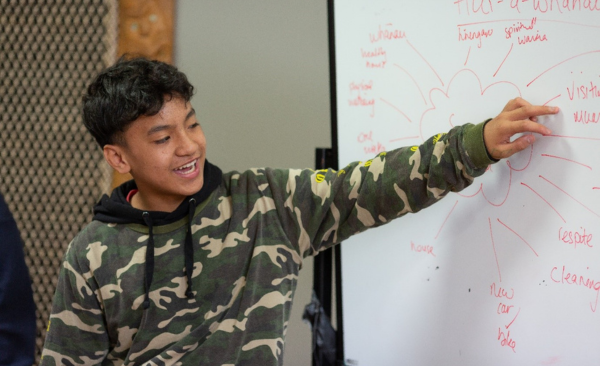
Learning in residential care: They knew I wanted to learn
01 July 2021 -
 Research summary | 4 min read
Learning in Oranga Tamariki Residential Care - Summary
01 July 2021 -
 Good practice guide | 4 min read
Learning in residential care: A guide for leaders and teachers
01 July 2021 -
 Good practice guide | 4 min read
Learning in residential care: A guide for social workers
01 July 2021 -
 Good practice guide | 4 min read
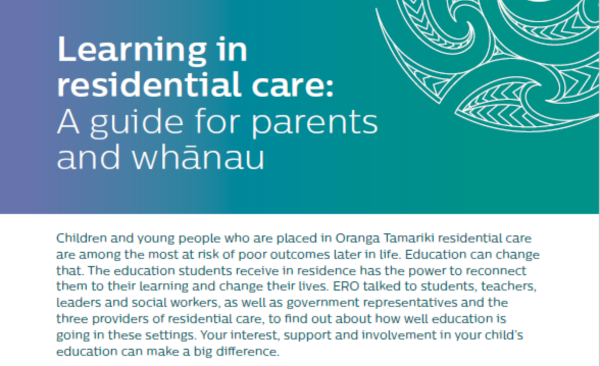
Learning in residential care: A guide for parents and whānau
01 July 2021
Read Online
Who we are
The Education Review Office works for the government. Our job is to look at how things are going for students in schools, all over Aotearoa New Zealand. We talked to some students and adults at Youth Justice and Care and Protection residences about their learning in residential care.
The Education Review Office works for the government. Our job is to look at how things are going for students in schools, all over Aotearoa New Zealand. We talked to some students and adults at Youth Justice and Care and Protection residences about their learning in residential care.
What we did (our research)
We talked to some students and adults at Youth Justice and Care and Protection residences. We wanted to find out if the students:
- have good teachers
- have safe and happy classrooms
- learn things that are important to them
- learn things that will help them have a good future.
Thank you to everyone who did this research with us.
The things you told us were really helpful. This booklet shows:
- the most important things that students told us
- things that will make learning in residences better.
We talked to some students and adults at Youth Justice and Care and Protection residences. We wanted to find out if the students:
- have good teachers
- have safe and happy classrooms
- learn things that are important to them
- learn things that will help them have a good future.
Thank you to everyone who did this research with us.
The things you told us were really helpful. This booklet shows:
- the most important things that students told us
- things that will make learning in residences better.
What students told us they liked about learning in residences
Students liked the learning environment
A lot of students told us that:
- the learning environment is positive and caring
- they liked their relationships with the adults that work with them
- they were helped to feel good about their learning and who they are.
That’s great news!
“When I walk into the classroom, I feel supported”
“They knew I wanted to learn… I felt welcome and I felt safe”
“I have been to a lot of schools, and I find… teachers and staff are the best I have come across in a long time.”
Students liked the teachers in residences
Most of the time, students liked their relationships with teachers.
“The teachers understand how people are feeling, helping us to understand the things that we obviously not been taught and help us with our confidence.”
"Teachers let you be yourself and have a voice about the work I do"
“My teachers care about me and they care about my learning.”
“Teachers make this school more better and easier each day”
Students liked the courses they do in residences
Heaps of students felt really good about the things they were learning while they’re in residence. Students liked learning things that will be useful, like first aid and cooking and growing food. They were very proud of their hard work and the NCEA credits and qualifications they got.
“[I got] a lot of certificates … very proud of them. Before I came here, I didn’t know what credits were.”
“[This residence] got me back to year levels where I need to be.”
The Education Review Office also found out that when students do credits in residences, they have high pass rates.
Students like connection with their culture
Some students told us that they felt connected to their culture. They told us about mihi whakatau, cultural weeks and going to marae. They said that the residence helped them to feel proud about being Māori and feel like they belong.
“I feel I have enough opportunities to learn about my culture. I would like to be able to understand more te reo Māori.”
“Being Māori here … [I] feel proud … now know about 100 times more about my culture.”
Students liked the learning environment
A lot of students told us that:
- the learning environment is positive and caring
- they liked their relationships with the adults that work with them
- they were helped to feel good about their learning and who they are.
That’s great news!
“When I walk into the classroom, I feel supported”
“They knew I wanted to learn… I felt welcome and I felt safe”
“I have been to a lot of schools, and I find… teachers and staff are the best I have come across in a long time.”
Students liked the teachers in residences
Most of the time, students liked their relationships with teachers.
“The teachers understand how people are feeling, helping us to understand the things that we obviously not been taught and help us with our confidence.”
"Teachers let you be yourself and have a voice about the work I do"
“My teachers care about me and they care about my learning.”
“Teachers make this school more better and easier each day”
Students liked the courses they do in residences
Heaps of students felt really good about the things they were learning while they’re in residence. Students liked learning things that will be useful, like first aid and cooking and growing food. They were very proud of their hard work and the NCEA credits and qualifications they got.
“[I got] a lot of certificates … very proud of them. Before I came here, I didn’t know what credits were.”
“[This residence] got me back to year levels where I need to be.”
The Education Review Office also found out that when students do credits in residences, they have high pass rates.
Students like connection with their culture
Some students told us that they felt connected to their culture. They told us about mihi whakatau, cultural weeks and going to marae. They said that the residence helped them to feel proud about being Māori and feel like they belong.
“I feel I have enough opportunities to learn about my culture. I would like to be able to understand more te reo Māori.”
“Being Māori here … [I] feel proud … now know about 100 times more about my culture.”
What students wanted to change
Things some students didn’t like
- Trying to learn around some of the other kids.
- Not being allowed to do some things.
"Sometimes we don't get choice about what we learn but most of the time we can choose what we want to learn or do"
Students told us things work best when they have a say in what they learn, and how they learn it.
Talking more to whānau
Some students thought that teachers should talk to their families more.
“[There] was no discussion about what my family wanted for me or their skills or valued activities when came here.”
“My family is not big on education.”
“I think our family should receive a report of how we are achieving. I want to make my mum proud. Isn’t it every family’s main priority to see how their kid is doing?”
Things some students didn’t like
- Trying to learn around some of the other kids.
- Not being allowed to do some things.
"Sometimes we don't get choice about what we learn but most of the time we can choose what we want to learn or do"
Students told us things work best when they have a say in what they learn, and how they learn it.
Talking more to whānau
Some students thought that teachers should talk to their families more.
“[There] was no discussion about what my family wanted for me or their skills or valued activities when came here.”
“My family is not big on education.”
“I think our family should receive a report of how we are achieving. I want to make my mum proud. Isn’t it every family’s main priority to see how their kid is doing?”
Different groups of students told us different things
In general, students told us they feel positive and hopeful about leaving the residence. They have learned some things that will be useful for them later.
“I am ‘training my brain’ – Follow up by making good choices for my future.”
“[I] really liked how everyone pushed me to become the best person I could become.”
BUT …
- Māori students don’t feel as good about how their learning, as students who aren’t Māori.
- Younger students don’t feel as good about their learning as older students.
In general, students told us they feel positive and hopeful about leaving the residence. They have learned some things that will be useful for them later.
“I am ‘training my brain’ – Follow up by making good choices for my future.”
“[I] really liked how everyone pushed me to become the best person I could become.”
BUT …
- Māori students don’t feel as good about how their learning, as students who aren’t Māori.
- Younger students don’t feel as good about their learning as older students.
The Education Review Office wants all students in all schools and residences to feel good about their learning.
Talking to students helped them to find out:
Things that don’t help
- Moving around a lot. Moving between residences and schools can make it harder to learn.
- The courses students do in residences might not be offered in other places. Students might not get credits for their work.
- Whānau and caregivers don’t get enough chances to talk to teachers about students’ learning.
- The adults in residences all work in different ways. Sometimes this makes it harder to help students learn.
Ideas that might help
- When students first arrive in a residence, teachers need to give whānau and students more help in thinking about what type of learning they want to do when they leave.
- Teachers need to talk to whānau more about how students’ learning is going – what is going well, and what helps them learn.
- Residences need to talk to students’ old schools more about students’ learning – what is going well and what helps them learn.
- Teachers need to get extra training about different ways to help students learn.
- The adults who work with students need to get better at working together. They need lots of chances to talk together to work out the best ways to help students.
- The adults that work in residences need to keep getting better at ngā tikanga me te reo Māori.
Talking to students helped them to find out:
Things that don’t help
- Moving around a lot. Moving between residences and schools can make it harder to learn.
- The courses students do in residences might not be offered in other places. Students might not get credits for their work.
- Whānau and caregivers don’t get enough chances to talk to teachers about students’ learning.
- The adults in residences all work in different ways. Sometimes this makes it harder to help students learn.
Ideas that might help
- When students first arrive in a residence, teachers need to give whānau and students more help in thinking about what type of learning they want to do when they leave.
- Teachers need to talk to whānau more about how students’ learning is going – what is going well, and what helps them learn.
- Residences need to talk to students’ old schools more about students’ learning – what is going well and what helps them learn.
- Teachers need to get extra training about different ways to help students learn.
- The adults who work with students need to get better at working together. They need lots of chances to talk together to work out the best ways to help students.
- The adults that work in residences need to keep getting better at ngā tikanga me te reo Māori.
The Education Review Office is telling the government
- The Ministry of Education need to help teachers in residences do a really good job.
- Teachers need to be able to talk to each other more, and share good ideas
- There needs more help for you to find the best places to learn after you leave residence.
You can see the reports on learning in residential care on the Education Review Office’s website www.ero.govt.nz.
- The Ministry of Education need to help teachers in residences do a really good job.
- Teachers need to be able to talk to each other more, and share good ideas
- There needs more help for you to find the best places to learn after you leave residence.
You can see the reports on learning in residential care on the Education Review Office’s website www.ero.govt.nz.