
Science in the Early Years: Early Childhood and Years 1-4
About this resource:
We wanted to understand more about what was happening for children’s learning in science from early childhood up to Year 4. From the literature, and ERO’s previous reviews, we identified three key components to focus on in this evaluation: leadership, intentional teaching and responsive curriculum.
Related insights
Explore related documents that you might be interested in.
-
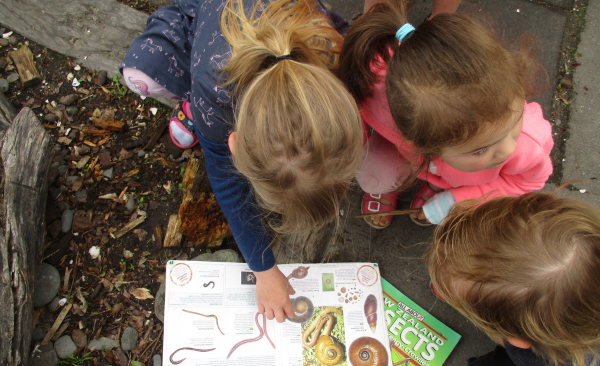 Research report | 30 min read
Shining a Light on Science: Good Practice in Early Childhood Services
14 April 2021 -
 Research summary | 4 min read
Science in New Zealand schools and early childhood services - series summary
12 April 2021 -
 Sector insights | 4 min read
A guide for kaiako and leaders on supporting science in early childhood
12 April 2021 -
 Sector insights | 4 min read
A guide for parents and whānau on supporting science in early childhood
12 April 2021 -
 Sector insights | 4 min read
Science in primary schools: a guide for teachers
19 April 2021 -
 Sector insights | 4 min read
Science in primary schools: a guide for leaders
20 April 2021 -
 Sector insights | 4 min read
A guide for parents and whānau on supporting science in primary school
12 April 2021 -
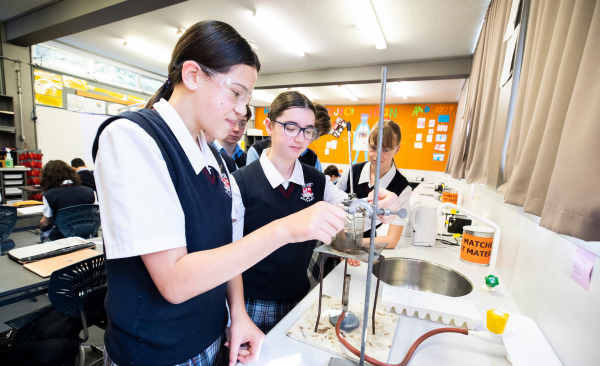 Research report | 45 min read
Growing Curiosity Teaching Strategies to Engage Years 5 to 11 Students in Science
12 April 2021
Read Online
Executive summary
Children are naturally curious and want to make sense of the world around them. Science education supports this desire. In New Zealand, both Te Whāriki: He whāriki mātauranga mō ngā mokopuna o Aotearoa (the early childhood curriculum) and The New Zealand Curriculum (the school curriculum) expect kaiako and teachers to provide for children’s learning in science.
While the National Monitoring Survey of Student Achievement shows children in Year 4 achieve well in science, we have little information about their learning before then. Previous ERO evaluations of science identified aspects for improvement to strengthen learning opportunities for children.
We wanted to understand more about what was happening for children’s learning in science from early childhood up to Year 4. From the literature, and ERO’s previous reviews, we identified three key components to focus on in this evaluation:
- leadership
- intentional teaching
- responsive curriculum.
We explored these three areas in 147 early childhood services and 78 primary schools and made a judgment as to how well they were doing in each area.
We found elements of good practice in each area for both services and schools. The good practice included having a leader for science, providing interesting contexts for children’s learning, and recognising children’s prior knowledge.
Examples of this good practice are shared in this report, and a companion report – Shining a Light on Science: Good Practice in Early Childhood Services.
We also found areas that could be strengthened to further improve children’s opportunities for learning in science:
- Kaiako/teachers could plan for children’s learning and progress in science, rather than for discrete science activities.
- Many kaiako/teachers could make better use of assessment to describe and understand children’s learning and inform next steps for their learning.
- Service and school leaders could also consider how well science learning programmes support children to progress in science.
Each section of this report provides leaders, kaiako, and teachers with reflective questions to consider, which could support improvements. We also identified opportunities for improvement at both the individual service or school level, and for the system.
It is exciting to see the curiosity and enthusiasm shared by so many children, kaiako, and teachers. This forms a foundation for developing children’s learning and enjoyment of science. As a system, we can work together to further improve the experiences for children.
Children are naturally curious and want to make sense of the world around them. Science education supports this desire. In New Zealand, both Te Whāriki: He whāriki mātauranga mō ngā mokopuna o Aotearoa (the early childhood curriculum) and The New Zealand Curriculum (the school curriculum) expect kaiako and teachers to provide for children’s learning in science.
While the National Monitoring Survey of Student Achievement shows children in Year 4 achieve well in science, we have little information about their learning before then. Previous ERO evaluations of science identified aspects for improvement to strengthen learning opportunities for children.
We wanted to understand more about what was happening for children’s learning in science from early childhood up to Year 4. From the literature, and ERO’s previous reviews, we identified three key components to focus on in this evaluation:
- leadership
- intentional teaching
- responsive curriculum.
We explored these three areas in 147 early childhood services and 78 primary schools and made a judgment as to how well they were doing in each area.
We found elements of good practice in each area for both services and schools. The good practice included having a leader for science, providing interesting contexts for children’s learning, and recognising children’s prior knowledge.
Examples of this good practice are shared in this report, and a companion report – Shining a Light on Science: Good Practice in Early Childhood Services.
We also found areas that could be strengthened to further improve children’s opportunities for learning in science:
- Kaiako/teachers could plan for children’s learning and progress in science, rather than for discrete science activities.
- Many kaiako/teachers could make better use of assessment to describe and understand children’s learning and inform next steps for their learning.
- Service and school leaders could also consider how well science learning programmes support children to progress in science.
Each section of this report provides leaders, kaiako, and teachers with reflective questions to consider, which could support improvements. We also identified opportunities for improvement at both the individual service or school level, and for the system.
It is exciting to see the curiosity and enthusiasm shared by so many children, kaiako, and teachers. This forms a foundation for developing children’s learning and enjoyment of science. As a system, we can work together to further improve the experiences for children.
1. Background
1a. The importance of science education
Science is a way of making sense of the world, and the universe beyond it. Science involves systematically making and testing ideas, collecting evidence through a variety of methods, problem-solving, and creating new knowledge. Scientific knowledge and ways of thinking help to inform technological innovations and creative solutions to problems.
Children are naturally curious and want to make sense of what is around them. Science education supports this curiosity and introduces them to scientific thinking.
The central aim of primary science education should be to nurture children’s interest and curiosity in the world around them and to develop positive attitudes towards science.1
We use science and scientific thinking in almost every aspect of modern society:
Whether it’s dealing with a changing environment, confronting health challenges, improving our communities or producing high‑value products and services, New Zealand needs people who can ask questions. And in an increasingly complex world, with increasingly complex problems, the answers to many of these questions will come from an understanding and application of science.2
Science education develops children’s ability to confidently contribute to society, an aspiration described in both Te Whāriki: He Whāriki mātauranga mō ngā mokopuna o Aotearoa (Te Whāriki)3 and The New Zealand Curriculum.4
It is important that we support children and young people to continue to be curious and develop their critical thinking and science literacy. This will help them understand how the world around them works and set them up to contribute positively to the future.
1b. Science education for young children
Early years’ teachers have a valuable role in developing children’s interest in science and the world around them. Rich, early experiences influence children’s science learning as they get older.5 Early learning in science also influences children’s attitudes to science as they grow,6 which may lead to further study and achievement in science. For example, young girls who show science-related interests tend to have higher achievement in science when older.7 Supporting young children to have early and ongoing positive experiences in science may help them develop scientific literacy as they progress through education.8 It is therefore important that teachers provide children with a variety of experiences that support their curiosity and interest, and set them up for their future learning in science.9
Kaiako
Te Whāriki uses the term ‘kaiako’ to refer to all teachers, educators and other adults who have a responsibility for the care and education of children in an ECE setting.10 In this report, we use ‘kaiako’ to refer to these adults in an early childhood setting, and ‘teacher’ to refer to educators in schools.
Services
This report uses the term ‘services’ to encompass all English-Medium early childhood services, regardless of the type of service. In this report, that means Education and Care Services, Kindergartens, Homebased Networks, Hospital‑Based services and Playcentres.
Working theories
are the constantly evolving ideas we hold about the world, formed through our experiences. As children’s experiences of the world increase, their working theories become more sophisticated and informed.10
Learning dispositions
are tendencies to respond to situations in particular ways. They are the result of knowledge, skills and attitudes combining, and children develop them over time.10
Te Whāriki (the early childhood curriculum) is a bicultural curriculum for all children. It is a holistic curriculum that describes children’s learning across five strands:
- Wellbeing | Mana Atua
- Belonging | Mana Whenua
- Contribution | Mana Tangata
- Communication| Mana Reo
- Exploration | Mana Aotūroa.
There are 20 learning outcomes that sit across these five strands. These learning outcomes include the knowledge, skills, and attitudes that join to form children’s dispositions and working theories.10
Kaiako are expected to work with children, their parents, and whānau to unpack the strands, goals, and learning outcomes in Te Whāriki in a way that is meaningful in their context. They should:
… prioritise the development of children’s learning dispositions and working theories because these enable learning across the whole curriculum.11
Te Whāriki states kaiako that should integrate domain knowledge, such as science, into the curriculum.12
To help kaiako consider children’s continuity of learning as they transition to school, Te Whāriki outlines the links between some of the Te Whāriki learning outcomes (particularly those in the Belonging | Mana Whenua and Exploration | Mana Aotūroa strands), and the Science Learning Area of The New Zealand Curriculum (p. 53).13
Science is a compulsory learning area in The New Zealand Curriculum (2007)
The New Zealand Curriculum (The NZC; the school curriculum) describes science across five strands; four of these provide context for learning in science (e.g. the Physical World, the Material World), and the fifth is the overarching Nature of Science strand, which weaves in and through the other strands.
The Nature of Science emphasises the importance of scientific processes in helping students understand the way scientific knowledge is developed and how science relates to their lives and the everyday context of wider society.
The Key Competencies of The NZC are also closely tied to science, particularly the Thinking competency. Thinking, like working theories, focuses on creating knowledge, the role of inquiry, and development of thinking capabilities.14
The Science Capabilities bring the key competencies and knowledge together
The Science Capabilities15 were developed to help teachers implement the science achievement aims, particularly the overall goal of students becoming ‘responsible citizens in a society in which science plays a significant role.’16 The Science Capabilities describe the skills children need to participate and achieve in science.
Recent support for science education in New Zealand
The Office of the Prime Minister’s Chief Science Advisor, along with the Ministry of Education (the Ministry) and the Ministry of Business, Innovation and Employment (MBIE), recognised the importance of science and technology for New Zealand’s future. They developed a 10-year strategic plan called A Nation of Curious Minds, which was launched in 2014. This plan has three action areas, one of which is Enhancing the role of education.17
This action area is aimed at supporting:
… all young New Zealanders to be resilient learners with future-proofed skills to understand, assess, and apply rapidly changing science and technology knowledge to their everyday lives.18
The Ministry of Education noted the importance of science education by selecting science as one of several priority areas for centrally-funded professional learning and development (PLD) from 2016 to the end of Term 2, 2020.19
1c. Previous reviews of science in the early years
ERO reported on an evaluation of science in The NZC in primary schools in 2012. We found wide variability of practices, and less than one-third of the schools had generally or highly effective science programmes.20
In a 2015 evaluation of how well teachers in early childhood support children’s learning in relation to the Communication and Exploration strands of Te Whāriki, ERO found just over half the services had a responsive curriculum that supported infants and toddlers learning in these strands.
In the best services, kaiako provided a high-quality curriculum based on children’s interests and parents’ aspirations. Kaiako encouraged children to lead their learning, try new things, and express their ideas. Assessment showed children’s learning and progress over time, and informed future planning. In many services, children’s learning and progress in relation to the communication strand was made visible, but learning related to exploration was less visible.21
Note: In 2015, when ERO did this evaluation, services were working with an earlier version of Te Whāriki. The updated Te Whāriki (2017) reflects the changes in theory, practice, and early learning contexts that have occurred. Specifically, it strengthens the focus on: bicultural practice, the inclusion of all children, “what matters here” when designing services’ local curriculum, and the links to The NZC and Te Marautanga o Aotearoa.
ERO recommended schools review the priority given to science teaching and learning in the curriculum, and the quality of the science teaching and learning in their schools. (ERO, 2012).
ERO recommended early childhood services specifically focus on exploration for infants and toddlers when reviewing planning, assessment, appraisal goals and evaluation processes. (ERO, 2015)
1d. Progress in science
There are a variety of tools that can be used to assess children’s science learning in the early years.
Kei Tua o Te Pae | Assessment for Learning: Early Childhood Exemplars22 provides guidance to kaiako for assessing children’s learning in early childhood. Assessment for Exploration – Aromatawai mō te Mana Aotūroa contains examples of assessment and analysis of children’s learning.
The Assessment Resource Banks (ARBs)23 provide a variety of assessment resources to support teachers to assess students’ science learning at Levels 1 to 5 of The NZC. The ARBs provide examples of assessments, instructions on how to use the assessment, links to the curriculum, and information on how to work with students to support their learning for that assessment.
The only national measure of children’s early learning in science is at Year 4. The National Monitoring Study of Student Achievement (NMSSA)24 assesses a representative sample of New Zealand students at Years 4 and 8, to gain a broad understanding of achievement for primary school students. Students’ achievement in science was assessed in 2012 and 2017.
The most recent testing by NMSSA found almost all students (94 percent)25 in Year 4 achieved at or above curriculum expectations. This was consistent with students’ achievement five years earlier, where 85 percent of students achieved at or above the expected curriculum level.26 While there was not a statistically significant difference in average achievement scores between 2012 and 2017,27 the overall rate achieving at or above the curriculum standard is encouraging.
Almost all Year 4 children achieved at or above the expected curriculum level
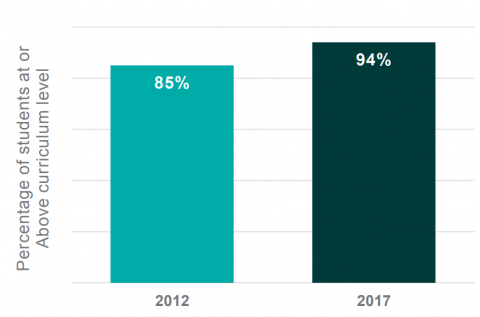
This was Created with data from Education Assessment Research Unit and New Zealand Council for Educational Research (2017). National Monitoring Study of Student Achievement: Science 2017- Key Findings. Retrieved from https://nmssa.otago.ac.nz/reports/2017/2017_NMSSA_SCIENCE.pdf and
Darr, C. (2017). The National Monitoring Study of Student Achievement | Wānangatia te putanga tauira. Set, 2. pp. 57-60. Retrieved from https://www.nzcer.org.nz/system/files/journals/set/downloads/set2017_2_057.pdf
1a. The importance of science education
Science is a way of making sense of the world, and the universe beyond it. Science involves systematically making and testing ideas, collecting evidence through a variety of methods, problem-solving, and creating new knowledge. Scientific knowledge and ways of thinking help to inform technological innovations and creative solutions to problems.
Children are naturally curious and want to make sense of what is around them. Science education supports this curiosity and introduces them to scientific thinking.
The central aim of primary science education should be to nurture children’s interest and curiosity in the world around them and to develop positive attitudes towards science.1
We use science and scientific thinking in almost every aspect of modern society:
Whether it’s dealing with a changing environment, confronting health challenges, improving our communities or producing high‑value products and services, New Zealand needs people who can ask questions. And in an increasingly complex world, with increasingly complex problems, the answers to many of these questions will come from an understanding and application of science.2
Science education develops children’s ability to confidently contribute to society, an aspiration described in both Te Whāriki: He Whāriki mātauranga mō ngā mokopuna o Aotearoa (Te Whāriki)3 and The New Zealand Curriculum.4
It is important that we support children and young people to continue to be curious and develop their critical thinking and science literacy. This will help them understand how the world around them works and set them up to contribute positively to the future.
1b. Science education for young children
Early years’ teachers have a valuable role in developing children’s interest in science and the world around them. Rich, early experiences influence children’s science learning as they get older.5 Early learning in science also influences children’s attitudes to science as they grow,6 which may lead to further study and achievement in science. For example, young girls who show science-related interests tend to have higher achievement in science when older.7 Supporting young children to have early and ongoing positive experiences in science may help them develop scientific literacy as they progress through education.8 It is therefore important that teachers provide children with a variety of experiences that support their curiosity and interest, and set them up for their future learning in science.9
Kaiako
Te Whāriki uses the term ‘kaiako’ to refer to all teachers, educators and other adults who have a responsibility for the care and education of children in an ECE setting.10 In this report, we use ‘kaiako’ to refer to these adults in an early childhood setting, and ‘teacher’ to refer to educators in schools.
Services
This report uses the term ‘services’ to encompass all English-Medium early childhood services, regardless of the type of service. In this report, that means Education and Care Services, Kindergartens, Homebased Networks, Hospital‑Based services and Playcentres.
Working theories
are the constantly evolving ideas we hold about the world, formed through our experiences. As children’s experiences of the world increase, their working theories become more sophisticated and informed.10
Learning dispositions
are tendencies to respond to situations in particular ways. They are the result of knowledge, skills and attitudes combining, and children develop them over time.10
Te Whāriki (the early childhood curriculum) is a bicultural curriculum for all children. It is a holistic curriculum that describes children’s learning across five strands:
- Wellbeing | Mana Atua
- Belonging | Mana Whenua
- Contribution | Mana Tangata
- Communication| Mana Reo
- Exploration | Mana Aotūroa.
There are 20 learning outcomes that sit across these five strands. These learning outcomes include the knowledge, skills, and attitudes that join to form children’s dispositions and working theories.10
Kaiako are expected to work with children, their parents, and whānau to unpack the strands, goals, and learning outcomes in Te Whāriki in a way that is meaningful in their context. They should:
… prioritise the development of children’s learning dispositions and working theories because these enable learning across the whole curriculum.11
Te Whāriki states kaiako that should integrate domain knowledge, such as science, into the curriculum.12
To help kaiako consider children’s continuity of learning as they transition to school, Te Whāriki outlines the links between some of the Te Whāriki learning outcomes (particularly those in the Belonging | Mana Whenua and Exploration | Mana Aotūroa strands), and the Science Learning Area of The New Zealand Curriculum (p. 53).13
Science is a compulsory learning area in The New Zealand Curriculum (2007)
The New Zealand Curriculum (The NZC; the school curriculum) describes science across five strands; four of these provide context for learning in science (e.g. the Physical World, the Material World), and the fifth is the overarching Nature of Science strand, which weaves in and through the other strands.
The Nature of Science emphasises the importance of scientific processes in helping students understand the way scientific knowledge is developed and how science relates to their lives and the everyday context of wider society.
The Key Competencies of The NZC are also closely tied to science, particularly the Thinking competency. Thinking, like working theories, focuses on creating knowledge, the role of inquiry, and development of thinking capabilities.14
The Science Capabilities bring the key competencies and knowledge together
The Science Capabilities15 were developed to help teachers implement the science achievement aims, particularly the overall goal of students becoming ‘responsible citizens in a society in which science plays a significant role.’16 The Science Capabilities describe the skills children need to participate and achieve in science.
Recent support for science education in New Zealand
The Office of the Prime Minister’s Chief Science Advisor, along with the Ministry of Education (the Ministry) and the Ministry of Business, Innovation and Employment (MBIE), recognised the importance of science and technology for New Zealand’s future. They developed a 10-year strategic plan called A Nation of Curious Minds, which was launched in 2014. This plan has three action areas, one of which is Enhancing the role of education.17
This action area is aimed at supporting:
… all young New Zealanders to be resilient learners with future-proofed skills to understand, assess, and apply rapidly changing science and technology knowledge to their everyday lives.18
The Ministry of Education noted the importance of science education by selecting science as one of several priority areas for centrally-funded professional learning and development (PLD) from 2016 to the end of Term 2, 2020.19
1c. Previous reviews of science in the early years
ERO reported on an evaluation of science in The NZC in primary schools in 2012. We found wide variability of practices, and less than one-third of the schools had generally or highly effective science programmes.20
In a 2015 evaluation of how well teachers in early childhood support children’s learning in relation to the Communication and Exploration strands of Te Whāriki, ERO found just over half the services had a responsive curriculum that supported infants and toddlers learning in these strands.
In the best services, kaiako provided a high-quality curriculum based on children’s interests and parents’ aspirations. Kaiako encouraged children to lead their learning, try new things, and express their ideas. Assessment showed children’s learning and progress over time, and informed future planning. In many services, children’s learning and progress in relation to the communication strand was made visible, but learning related to exploration was less visible.21
Note: In 2015, when ERO did this evaluation, services were working with an earlier version of Te Whāriki. The updated Te Whāriki (2017) reflects the changes in theory, practice, and early learning contexts that have occurred. Specifically, it strengthens the focus on: bicultural practice, the inclusion of all children, “what matters here” when designing services’ local curriculum, and the links to The NZC and Te Marautanga o Aotearoa.
ERO recommended schools review the priority given to science teaching and learning in the curriculum, and the quality of the science teaching and learning in their schools. (ERO, 2012).
ERO recommended early childhood services specifically focus on exploration for infants and toddlers when reviewing planning, assessment, appraisal goals and evaluation processes. (ERO, 2015)
1d. Progress in science
There are a variety of tools that can be used to assess children’s science learning in the early years.
Kei Tua o Te Pae | Assessment for Learning: Early Childhood Exemplars22 provides guidance to kaiako for assessing children’s learning in early childhood. Assessment for Exploration – Aromatawai mō te Mana Aotūroa contains examples of assessment and analysis of children’s learning.
The Assessment Resource Banks (ARBs)23 provide a variety of assessment resources to support teachers to assess students’ science learning at Levels 1 to 5 of The NZC. The ARBs provide examples of assessments, instructions on how to use the assessment, links to the curriculum, and information on how to work with students to support their learning for that assessment.
The only national measure of children’s early learning in science is at Year 4. The National Monitoring Study of Student Achievement (NMSSA)24 assesses a representative sample of New Zealand students at Years 4 and 8, to gain a broad understanding of achievement for primary school students. Students’ achievement in science was assessed in 2012 and 2017.
The most recent testing by NMSSA found almost all students (94 percent)25 in Year 4 achieved at or above curriculum expectations. This was consistent with students’ achievement five years earlier, where 85 percent of students achieved at or above the expected curriculum level.26 While there was not a statistically significant difference in average achievement scores between 2012 and 2017,27 the overall rate achieving at or above the curriculum standard is encouraging.
Almost all Year 4 children achieved at or above the expected curriculum level
This was Created with data from Education Assessment Research Unit and New Zealand Council for Educational Research (2017). National Monitoring Study of Student Achievement: Science 2017- Key Findings. Retrieved from https://nmssa.otago.ac.nz/reports/2017/2017_NMSSA_SCIENCE.pdf and
Darr, C. (2017). The National Monitoring Study of Student Achievement | Wānangatia te putanga tauira. Set, 2. pp. 57-60. Retrieved from https://www.nzcer.org.nz/system/files/journals/set/downloads/set2017_2_057.pdf
2. Key components of science teaching and learning in the early years
Building on previous studies, and our understanding of what makes for successful science teaching and learning, ERO focused on three key components in this evaluation: leadership; intentional teaching; and responsive curriculum. We considered each of these three components to understand how to strengthen science in the early years.
2a. Leadership
Previous ERO evaluations have found that leadership is a key factor influencing the quality of learning opportunities for children. There is considerable evidence to show that effective professional leadership in schools is linked to outcomes for students.28 Effective leaders:
- set the goals and expectations in their school and monitor progress towards the goals
- allocate resources, including staffing, to work towards those goals
- design, coordinate, and evaluate the curriculum
- use assessment information when evaluating the quality of curriculum in individual learning areas
- promote professional learning.29
In early childhood education (ECE), professional leaders are responsible for coordinating and overseeing services’ curriculum, teaching, professional learning, and internal evaluation.30 Key features of professional leadership in ECE include:
- maintaining a vision and focus on learning
- managing structures to support teaching and learning
- developing relational trust
- supporting teachers’ opportunities for leadership.31
2b. Intentional teaching
Both Te Whāriki and The NZC state an expectation for science to be included as a deliberate part of the curriculum. The rich physical environments provided for children in early childhood create opportunities for children’s knowledge and thinking skills to develop.32 While it is true that ‘science is everywhere’, it is important that kaiako take a deliberate, scientific lens to the learning opportunities available. This will support children with the opportunities to develop the knowledge, skills, dispositions, and working theories that serve as the foundation for ongoing learning in science, and for developing scientific literacy. Kaiako also have a key role in promoting children’s enjoyment of science.
Kaiako need to extend children’s thinking through science in the curriculum. Children use their existing working theories as a basis for making sense of new experiences.33 Making sense of new experiences may involve refining existing theories, or discarding less useful ones, and developing new working theories. Kaiako need a deep understanding of the concept of working theories, so they can recognise children’s theories and work to challenge and extend them.34
Kaiako in early childhood need to skilfully weave science (and other) experiences through children’s learning in play-based contexts. They need to promote children’s curiosity and inquiry, as a key aspect of science teaching and learning.35 Teachers who are confident in their subject content knowledge are more likely to identify science learning opportunities in children’s play, and extend on these as part of children’s incidental learning.36
When teachers introduce scientific concepts, using the correct terminology for those concepts, they promote children’s scientific thinking and knowledge.37 This helps children share their thinking and explore ideas. It helps move their thinking from ‘everyday’ concepts to ‘scientific’ concepts. Using scientific terms is likely to help children understand that they are “doing science”.
2c. Responsive curriculum
Children notice how teachers respond to their questions and their attitude towards scientific inquiry can be affected by the enthusiasm and confidence that teachers model.38
Kaiako and teachers should consider what children already know, and the future direction of their learning journey in science. They should look to develop children’s working theories and dispositions, alongside their content knowledge, as part of a coherent pathway of learning. As children continue on their pathway of learning in science, kaiako and teachers should consider how to deepen children’s understanding of scientific concepts, through adding complexity or exploring the same concept in a variety of ways.39
In addition to the expectation that kaiako/teachers provide learning programmes responsive to children’s languages and cultures, Te Whāriki is a bicultural curriculum for all children.39 A bicultural curriculum for science might include exploring ngā pūrākau (legends) as part of building an understanding of phenomena. Kaiako/teachers could include Māori values and practices, such as kaitiakitanga (guardianship), when considering human relationships to the world around us.41
Teachers should use their knowledge of science, and of children’s interests and developing capabilities, to guide their decisions about the environments and resources they provide for children, and the questions and prompts they use to guide children into deeper and more scientific thinking while they explore.42 It is not enough for teachers to provide children with equipment and resources; teachers need to guide children so they develop scientific thinking, a scientific understanding of the equipment, and how it can be used.43
In addition to strong leadership and curriculum planning, teachers need to use appropriate strategies to promote children’s scientific inquiry and develop their conceptual knowledge.44 This means, in addition to knowing about science, teachers need to know how to help children know about science through appropriate strategies. When teachers lack knowledge, they are more likely to plan limited programmes, reflective of their knowledge, rather than promoting learning that is responsive to children’s knowledge and interests.45
Building on previous studies, and our understanding of what makes for successful science teaching and learning, ERO focused on three key components in this evaluation: leadership; intentional teaching; and responsive curriculum. We considered each of these three components to understand how to strengthen science in the early years.
2a. Leadership
Previous ERO evaluations have found that leadership is a key factor influencing the quality of learning opportunities for children. There is considerable evidence to show that effective professional leadership in schools is linked to outcomes for students.28 Effective leaders:
- set the goals and expectations in their school and monitor progress towards the goals
- allocate resources, including staffing, to work towards those goals
- design, coordinate, and evaluate the curriculum
- use assessment information when evaluating the quality of curriculum in individual learning areas
- promote professional learning.29
In early childhood education (ECE), professional leaders are responsible for coordinating and overseeing services’ curriculum, teaching, professional learning, and internal evaluation.30 Key features of professional leadership in ECE include:
- maintaining a vision and focus on learning
- managing structures to support teaching and learning
- developing relational trust
- supporting teachers’ opportunities for leadership.31
2b. Intentional teaching
Both Te Whāriki and The NZC state an expectation for science to be included as a deliberate part of the curriculum. The rich physical environments provided for children in early childhood create opportunities for children’s knowledge and thinking skills to develop.32 While it is true that ‘science is everywhere’, it is important that kaiako take a deliberate, scientific lens to the learning opportunities available. This will support children with the opportunities to develop the knowledge, skills, dispositions, and working theories that serve as the foundation for ongoing learning in science, and for developing scientific literacy. Kaiako also have a key role in promoting children’s enjoyment of science.
Kaiako need to extend children’s thinking through science in the curriculum. Children use their existing working theories as a basis for making sense of new experiences.33 Making sense of new experiences may involve refining existing theories, or discarding less useful ones, and developing new working theories. Kaiako need a deep understanding of the concept of working theories, so they can recognise children’s theories and work to challenge and extend them.34
Kaiako in early childhood need to skilfully weave science (and other) experiences through children’s learning in play-based contexts. They need to promote children’s curiosity and inquiry, as a key aspect of science teaching and learning.35 Teachers who are confident in their subject content knowledge are more likely to identify science learning opportunities in children’s play, and extend on these as part of children’s incidental learning.36
When teachers introduce scientific concepts, using the correct terminology for those concepts, they promote children’s scientific thinking and knowledge.37 This helps children share their thinking and explore ideas. It helps move their thinking from ‘everyday’ concepts to ‘scientific’ concepts. Using scientific terms is likely to help children understand that they are “doing science”.
2c. Responsive curriculum
Children notice how teachers respond to their questions and their attitude towards scientific inquiry can be affected by the enthusiasm and confidence that teachers model.38
Kaiako and teachers should consider what children already know, and the future direction of their learning journey in science. They should look to develop children’s working theories and dispositions, alongside their content knowledge, as part of a coherent pathway of learning. As children continue on their pathway of learning in science, kaiako and teachers should consider how to deepen children’s understanding of scientific concepts, through adding complexity or exploring the same concept in a variety of ways.39
In addition to the expectation that kaiako/teachers provide learning programmes responsive to children’s languages and cultures, Te Whāriki is a bicultural curriculum for all children.39 A bicultural curriculum for science might include exploring ngā pūrākau (legends) as part of building an understanding of phenomena. Kaiako/teachers could include Māori values and practices, such as kaitiakitanga (guardianship), when considering human relationships to the world around us.41
Teachers should use their knowledge of science, and of children’s interests and developing capabilities, to guide their decisions about the environments and resources they provide for children, and the questions and prompts they use to guide children into deeper and more scientific thinking while they explore.42 It is not enough for teachers to provide children with equipment and resources; teachers need to guide children so they develop scientific thinking, a scientific understanding of the equipment, and how it can be used.43
In addition to strong leadership and curriculum planning, teachers need to use appropriate strategies to promote children’s scientific inquiry and develop their conceptual knowledge.44 This means, in addition to knowing about science, teachers need to know how to help children know about science through appropriate strategies. When teachers lack knowledge, they are more likely to plan limited programmes, reflective of their knowledge, rather than promoting learning that is responsive to children’s knowledge and interests.45
3. Methodology
This report builds on our previous evaluations and explores how to strengthen science teaching and learning for children in ECE through to Year 4.
We considered three key components that influence children’s science experiences:
- Leadership: How well is science led in services and schools?
- Intentional teaching: How well is science woven through the curriculum?
- Responsive curriculum: How well do kaiako/teachers include science in a responsive curriculum?
To answer these questions, we looked at science teaching and learning in 147 early childhood services and 78 primary schools. The services and schools were in a variety of urban and rural areas and a mix of sizes and types. They were representative of the national spread of schools, but there were more kindergartens and fewer education and care services than expected if the sample was representative of the national spread of early childhood services. ERO included English-Medium services and schools that had their regular review in Term 3, 2019. More information about the services and schools in this evaluation can be found in Appendix 1.
We analysed documentation and spoke with leaders, kaiako/teachers and, where possible, children, to understand how children were being prepared to develop as ongoing science learners.
Review Officers made a judgment about how well each service or school was doing in relation to the three components. These judgments were moderated to ensure consistency.
Further detail about our methodology, including the prompts we considered with the questions, and the rubrics we used to support the judgments as to how well services and schools were doing, can be found in Appendix 2.
We found examples of good practice in schools and services for each of the three components we considered. Appendix 3 gives examples of good practice in Years 1 to 4 and links to the early childhood examples in our companion report – Shining a Light on Science: Good practice in Early Childhood Services.
This report builds on our previous evaluations and explores how to strengthen science teaching and learning for children in ECE through to Year 4.
We considered three key components that influence children’s science experiences:
- Leadership: How well is science led in services and schools?
- Intentional teaching: How well is science woven through the curriculum?
- Responsive curriculum: How well do kaiako/teachers include science in a responsive curriculum?
To answer these questions, we looked at science teaching and learning in 147 early childhood services and 78 primary schools. The services and schools were in a variety of urban and rural areas and a mix of sizes and types. They were representative of the national spread of schools, but there were more kindergartens and fewer education and care services than expected if the sample was representative of the national spread of early childhood services. ERO included English-Medium services and schools that had their regular review in Term 3, 2019. More information about the services and schools in this evaluation can be found in Appendix 1.
We analysed documentation and spoke with leaders, kaiako/teachers and, where possible, children, to understand how children were being prepared to develop as ongoing science learners.
Review Officers made a judgment about how well each service or school was doing in relation to the three components. These judgments were moderated to ensure consistency.
Further detail about our methodology, including the prompts we considered with the questions, and the rubrics we used to support the judgments as to how well services and schools were doing, can be found in Appendix 2.
We found examples of good practice in schools and services for each of the three components we considered. Appendix 3 gives examples of good practice in Years 1 to 4 and links to the early childhood examples in our companion report – Shining a Light on Science: Good practice in Early Childhood Services.
4. Findings
4a. How well was science led in the early years?
When evaluating leadership for science teaching and learning, we used the following rubric:
How well is science led in the service/school?
Very well (almost all) and Well (mixed, but more from this column)
- There is a knowledgeable, passionate leader of science, who drives and supports ongoing improvements in science.
- Documentation shows that science is valued in the service/school.
- Leaders and kaiako use the experts, interest groups, and resources in their community to support children’s learning in science.
- Kaiako/teachers have PLD opportunities that build their knowledge and confidence to add complexity to children’s learning in science.
- Kaiako/teachers are able to implement changes based on their learning.
- Internal evaluation has usefully identified the strengths and areas of opportunity in the service/school’s provision of science.
Somewhat well (mixed, but more from this column) and Not at all well (almost all)
- There is nobody responsible for leading science teaching and learning, or they have no influence on teaching and learning.
- Science does not feature in the service/school’s documentation.
- The service/school does not consider children’s, whānau or community aspirations when determining priorities for children’s science learning.
- The service/school is unaware of the community/experts’ strengths to support science learning.
- Kaiako/teachers have not had the opportunity to build their knowledge around science or implement changes based on their learning.
- Internal evaluation has not considered science teaching and learning, or links to science (e.g. the Exploration strand in Te Whāriki).
Summary
Forty-three percent of services and 56 percent of schools we visited were judged as leading science ‘well’ or ‘very well’.
Schools were more likely to demonstrate deliberate leadership for science teaching and learning than services. Teachers in schools had better access to internal and external PLD opportunities than their colleagues in early childhood. Schools were also more likely to have considered science, or science-related concepts, in their documentation and internal evaluation.
Schools tended to demonstrate more deliberate leadership for science teaching and learning than services
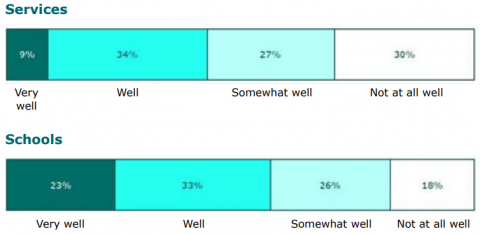
The difference between schools and services was tested using a Chi-Square test (p<0.05) and the difference was statistically significant.
The next section provides further detail of our findings across four aspects of leadership:
- documentation showing the value of science
- knowledgeable and enthusiastic science leaders
- PLD opportunities
- internal evaluation.
Documentation showing the value of science
Most services and schools in our sample, did not refer to science in documents such as their annual or strategic plans, philosophy, or statement of valued outcomes. Where they did, science was most commonly referred to in curriculum documents, and this was only sometimes unpacked in a way that usefully guided teachers’ decision making. Services were more likely to refer to science-related dispositions such as curiosity, than science explicitly.
For the system, this indicates the importance of science (and in schools, the requirement to provide for learning in science) may not be sufficiently explicit, and kaiako and teachers may not understand what is expected in relation to science in their service or school.
Knowledgeable and enthusiastic science leaders
The majority of services and schools in our sample had someone who took an interest in science in their service or school. For some, this was a shared or informal leadership role. The science leader might be the service or school leader, a curriculum leader or age-group leader, or a separate informal role. In the services or schools where the role was formalised, the leader or leaders tended to have a qualification or specific interest in science. Science leaders were usually responsible for budgeting, resourcing, and developing curriculum materials or guidance for science teaching and learning. A few schools used their science leaders to support internal PLD - they shared information, modelled lessons and mentored less confident teachers. Science leaders were not always given a role to drive improvement.
For the system, this suggests the majority of services and schools have someone to draw on who could support them with science teaching and learning. They could strengthen their provision by supporting the science leader to drive improvement.
PLD opportunities
In our sample, we found kaiako and teachers in most services and schools had limited opportunities to increase their knowledge and confidence to add complexity to children’s learning in science. Teachers in schools had more opportunities to develop their knowledge and confidence than kaiako in services.
Both schools and services identified barriers to accessing science-related PLD. School leaders told us the barrier to accessing science PLD was generally because they were accessing PLD through their Community of Learning | Kāhui Ako where science was not a priority. In services, leaders reported the barriers were financial constraints and a lack of availability of science‑focused PLD. Very few schools and services who accessed science-related PLD identified the impacts of that PLD. ERO did not evaluate the PLD programmes, or kaiako/teachers’ implementation of what they learned.
For the system, this suggests there is an opportunity to improve science teaching and learning through supporting kaiako and teachers’ access to PLD. A scan of the PLD advertised in New Zealand, and feedback from leaders and kaiako/teachers, indicates much of the PLD and resources to support science teaching is focused at teachers of older learners than those considered in this report.
Internal evaluation
Internal evaluation in this context means reviewing practice, and how well it meets learner needs, and identifying areas for improvement. In our sample, it was rare for service/school leaders to formally evaluate their provision of science. When they did, they considered things such as the coverage of different areas of science in their curriculum; teachers’ confidence and knowledge in science; and learners’ engagement and enjoyment of science learning, rather than how effectively they promoted children’s learning in science.
For the system, this indicates that supporting services and schools to evaluate their science provision could lead to improvements in children’s science learning opportunities. This would help leaders in services and schools to identify ways to improve science teaching and learning in their service or school.
Opportunities to strengthen leadership for science teaching and learning
We identified opportunities to strengthen leadership at the service and school level, through leaders asking questions such as:
- Do we have adequate guidance, expectations, and support to ensure an effective science curriculum?
- Do we have strong partnerships with local iwi that enable us to collaborate in providing a science focus that is inclusive of Māori knowledge?
- If not, how can we start building that partnership?
- Is there someone, with particular strengths or interest in science, who could lead science in our service/school?
- what should their role look like to best support science here?
- Do kaiako/teachers have a clear understanding of what science is, how it relates to other curriculum areas, and what it might look like in their context? What support:
- do they need, so they can enhance children’s learning in science?
- is available and how will we know it helped?
- How well are we doing at providing for children’s development of the foundations for ongoing learning in science? Consider:
- where in our curriculum (and to what extent) is science included?
- what works, and does not work, for children’s learning in science?
- are we providing a coherent pathway of learning, building on what children already know?
- how do we know how well we are doing?
To strengthen leadership for science teaching and learning at a system level, agencies could consider:
- increasing signalling the importance of science teaching and learning, for example by providing guidance about the ongoing impact of science learning for children and providing suitable resources
- thinking innovatively about how to increase access to, and the impact of, PLD. For example, by considering ways to merge community expertise with appropriate pedagogical content knowledge, to develop learning opportunities for children
- increasing support for schools and services to evaluate their own provision of science. ERO can help with this.
4b. How well is science woven through the curriculum?
Weaving science into the curriculum is about kaiako/teachers following children’s interests and play while, at the same time, extending children’s science learning. It is about integrating science into the curriculum children experience. When evaluating how well science was woven through curriculum contexts, we considered good practice using the following rubric:
How well is the Nature of Science deliberately woven through contexts (in schools); are children’s science‑related working theories deliberately extended and refined (in early childhood services)?
Very well (almost all) and Well (mixed, but more from this column)
- Kaiako/teachers plan opportunities to develop children’s understanding of science and scientific thinking. They recognise and act on further opportunities as they arise.
- Kaiako/teachers understand science-related dispositions, working theories/ capabilities and competencies. They plan for, assess and evaluate children’s progress related to these.
- Kaiako/teachers deliberately use scientific language to help children develop their own scientific language, and children’s understanding that they are learning scientific concepts.
- Kaiako/teachers act on their knowledge and confidence to recognise ways of including science in children’s play and incidental learning opportunities.
- Kaiako/teachers act on their knowledge and confidence to recognise ways of including science in children’s inquiries.
- Kaiako/teachers identify children’s learning and progress in science. They record this and report it to whānau and other interested people (e.g. school Board).
Somewhat well (mixed, but more from this column) and Not at all well (almost all)
- Kaiako/teachers do not recognise children’s scientific thinking or growing understanding of science.
- Kaiako/teachers do not consider children’s science-related dispositions, working theories, capabilities or competencies in assessment, planning or evaluation.
- Kaiako/teachers make little or no use of scientific language and do not support children to understand they are learning scientific concepts.
- Kaiako/teachers do not understand how to include science in children’s play or lack the confidence to do so.
- Kaiako/teachers do not understand how science contributes positively to children’s inquiries or lack the confidence to include it.
- There is no identification or reporting of children’s learning and progress in science.
Summary
Forty-nine percent of services and 63 percent of schools were judged as doing ‘well’ or ‘very well’ at weaving science through teaching and learning. Despite the differences in leadership for science, there were no significant differences between services and schools around their focus on including science across the learning programme.
Services and schools were about equally likely to show good practice with including science
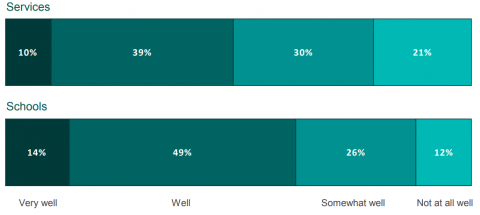
The difference between schools and services was tested using a Chi-Square test (p<0.05) and the difference was not statistically significant. Numbers in this graph do not add to 100 due to rounding.
The next section provides detail about our findings across three areas:
- providing planned opportunities for science, and acting on incidental learning opportunities
- using scientific language
- planning, assessing, evaluating, and reporting progress in science.
Providing planned opportunities for science, and acting on incidental learning opportunities
About a third of the services and schools in our sample deliberately planned for learning in science. A subset of these planned specifically for extending children’s working theories, developing their learning dispositions, or for learning in the Nature of Science or Science Capabilities. In our sample, we found teachers were generally confident to create the context for learning in science. This involved setting out resources and provocations. Teachers commonly used resource kits, and the Living World was the most common context for science learning. Kaiako/teachers in around half the services and schools endeavoured to foster children’s understanding in science in some way. Many kaiako/teachers provided children with ‘discovery’ or ‘inquiry’ learning opportunities and assumed these covered science. It was not always clear, though, whether these opportunities included science learning or not. Kaiako/teachers took advantage of incidental science learning opportunities in some services/schools.
For the system, this indicates children are being provided with opportunities to discover and inquire in a variety of ways. The extent to which this leads to science learning is dependent on the purposeful conversations at the time.
Using scientific language
Kaiako/teachers in approximately half the services/schools in our sample used scientific language with children. Language was most commonly related to the Living World, such as naming plants and body parts, and less likely to cover scientific concepts or the Nature of Science, for example observing and classifying. Kaiako/teachers in a few services and schools made children’s learning in science visible, for example, through recording children’s science-related working theories and explanations.
For the system, this indicates many children lack the opportunity to gain the language needed to describe their thinking. Kaiako and teachers could strengthen children’s understanding that they are ‘doing science’ by helping children articulate the concepts they are exploring.
Assessing and reporting progress in science
Most services and schools that planned for learning also assessed children’s learning, but few used rubrics or established tools to guide their assessment, and assessment rarely showed children’s progress over time. When kaiako and teachers reported to parents, it was usually about children’s participation in science-related learning, as opposed to their actual learning and progress.
For the system, this indicates we cannot be confident that all teachers have a clear understanding of what is meant by working theories, dispositions, Key Competencies, or Science Capabilities. This limits some teachers’ ability to assess children’s progress. Those services and schools that are not assessing for children’s learning are unable to know what children know, and what they are learning. This means these teachers will be less able to provide children with appropriate learning opportunities in science. Children are less likely to experience a coherent pathway, due to the lack of planning for children’s learning and consideration for children’s progress. They are more likely to experience a variety of discrete learning opportunities in science.
Opportunities to strengthen the intentional inclusion of science in the curriculum
We identified opportunities to strengthen science in the curriculum at the service and school level, through leaders asking questions such as:
- How can we support kaiako/teachers to move beyond providing the resources and context for science to ensuring children are building their scientific working theories, developing their learning dispositions, and exploring the Nature of Science?
- How can we make sure science is included in children’s discovery/inquiry activities?
- Are science resource kits appropriate and helpful in our context? Are kaiako/teachers able to adapt them to fit all children’s learning needs?
- What support do kaiako/teachers need so they can plan for children’s learning, assess it, and evaluate the impact of their teaching and children’s learning?
- What is needed to support kaiako/teachers to report on children’s learning and progress in science, rather than just on participation and engagement in science-related activities?
- How can we include mātauranga Māori in our science inquiries?
To strengthen science in the curriculum at a system level, agencies could consider:
- how to share good practice in planning, assessing learning, and understanding progress
- supporting kaiako and teachers with clear guidance about identifying and recording children’s developing working theories and understanding in science, so they can better plan for and assess progress.
4c. How well do kaiako/teachers include science in a responsive curriculum?
When evaluating how well science featured in the curriculum, we used the following rubric:
How well do kaiako/teachers include science in a responsive curriculum?
Very well (almost all) and Well (mixed, but more from this column)
- Exploring and developing scientific understanding of the world comes from a place of curiosity, awe, and wonder. Children are encouraged to explore, question, and investigate.
- Kaiako/teachers recognise when children are learning in science.
- The learning programme is responsive to the strengths, interests, and needs of priority learners, ensuring equitable access to teaching and learning in science.
- Kaiako/teachers plan a bicultural teaching and learning programme that reflects te ao Māori.
- The languages, cultures, and identities of children attending the service/school are visible in teaching and learning in science.
- Kaiako/teachers recognise, value, and draw on children’s/whānau contexts.
- Kaiako/teachers recognise, value, and draw on children’s prior knowledge and working theories.
- Kaiako/teachers use a variety of equipment and resources to support hands-on science learning.
Somewhat well (mixed, but more from this column) and Not at all well (almost all)
- There is no deliberate teaching of science. Children have limited opportunities to explore and investigate and children’s science learning goes unrecognised.
- No consideration is given for priority learners’ strengths, interests, and needs.
- There is no acknowledgement of te ao Māori in science teaching and learning.
- Science teaching and learning does not consider, or draw on, the languages, cultures, and identities of the children attending the service/school.
- Kaiako/teachers do not make links between science and children/whānau contexts.
- Kaiako/teachers do not make links between science and children’s prior knowledge and working theories.
- Kaiako/teachers do not have, or do not use, appropriate equipment or resources.
Summary
Sixty percent of services and 67 percent of schools were judged as doing ‘well’ or ‘very well’ at including science learning. There was a dominant focus on the natural world, the environment, and sustainability.
Teachers in schools were more likely than kaiako in services to plan science learning opportunities responsive to their learners’ strengths, interests, and needs
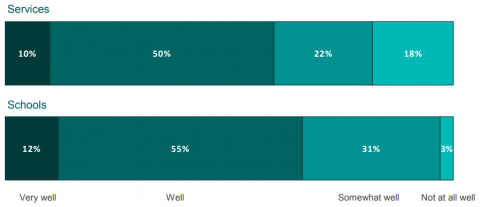
The difference between schools and services was tested using a Chi-Square test (p<0.05) and the difference was statistically significant.
The next section provides further detail about our findings for science teaching and learning across the following six areas:
- recognising when children are learning in science
- providing a bicultural curriculum that reflects te ao Māori
- recognising children’s/whānau contexts, languages, cultures, and identities
- drawing on children’s prior knowledge and working theories
- responsiveness to priority learners (Priority learners in this report refers to children two years old or younger; Māori children; Pacific children; and children with additional needs.)
- using equipment and resources for science learning.
Recognising when children are learning in science
In the services and schools in our sample, we found kaiako/teachers often assumed that providing activities related to environmental and sustainability contexts meant they were teaching science, without necessarily using these contexts to deepen children’s scientific knowledge or thinking. Many kaiako/teachers planned and focused on activities for science, rather than children’s learning in science.
For the system, these findings indicate kaiako/teachers may not be teaching as much science as they think. While environmental and sustainable practices can provide a context for learning in science, opportunities for learning the science involved may be missed, and children may not see science as an everyday thing.
Providing a bicultural curriculum that reflects te ao Māori
In our sample, we found te ao Māori was a superficial aspect of most services’/schools’ science provision. Kaiako/teachers believed that sustainability practices were equivalent to kaitiakitanga. Children learnt some terms in te reo Māori, and many had some learning around Matariki, although again the science was not usually explicit in this. Very few considered how mātauranga Māori could inform and deepen their learning opportunities.
For the system, this suggests many children are not experiencing genuine bicultural teaching and learning in science. It also suggests there may not be a clear and well understood model of how to provide a bicultural curriculum that reflects te ao Māori.
Recognising children’s/whānau contexts, languages, cultures, and identities
Most services/schools in our sample made links to children/whānau contexts, usually through reciprocal information sharing with parents/whānau. Kaiako/teachers in most services and schools used what they knew about children’s interests and experiences at home to inform their choices around activities and resources. Kaiako/teachers were less likely to integrate aspects of children’s language, culture, and identity in science learning. Kaiako/teachers in some services/schools used the expertise in their community to support children’s learning - often by inviting parents who were scientists to share their knowledge with children. While many services and schools took children to local places, few used these as potential contexts for learning in science.
For the system, this indicates the resources and activities kaiako/teachers provide to children are likely to be interesting, relevant, and engaging. However, many kaiako/teachers need increased awareness of how to recognise and build on children's language, culture, and identity in science learning. Kaiako/teachers in many services and schools could better use their familiarity with their local places as the basis for meaningful learning in science.
Drawing on children’s prior knowledge and working theories
Kaiako/teachers at the schools and services in our sample were much more likely to consider children’s prior knowledge than their working theories.
For the system, this indicates many kaiako/teachers need to more deliberately extend children’s working theories and their understanding about how the world works. When finding out what children already know, kaiako/teachers could also explore what the children think about how and why things are that way, and use that as their starting point to develop children’s working theories.
Responsiveness to priority learners
In our sample, we found very little specific consideration of science for priority learners, such as Māori, Pacific, children with additional learning needs, and children under two years.
For the system, this indicates many kaiako/teachers need to be more deliberate about ensuring children’s equitable access to teaching and learning in science. We are unsure how well services and schools are providing science opportunities for priority learners. This may be because kaiako/teachers are unsure of what science might look like for these groups and are, therefore, also unsure how to differentiate learning opportunities for these children.
Using equipment and resources for science learning
Resources provided opportunities for children to participate in activities that could relate to science in most services/schools. However, fewer than half the services and schools deliberately used the resources to support children’s science learning. Kaiako and teachers believed that ‘science is everywhere’, but they did not always use the resources to extend children’s understanding or experience of science.
For the system, this indicates many children could benefit if more services and schools deliberately used their available resources to more purposefully support science learning.
Opportunities to strengthen the science focus in a responsive curriculum
We identified opportunities to strengthen science focus in a responsive curriculum at the service and school level, through leaders asking questions such as:
- How can we make sure kaiako/teachers understand the difference between providing the context and opportunity for science learning, and making the science learning explicit within those contexts and opportunities?
- What does science look like in a bicultural curriculum?
- How can we implement this in a genuine way, without treating te ao Māori as an ‘add on’?
- How well does it support Māori children to access and build on their funds of knowledge?
- What support do kaiako/teachers need to help them recognise and build on incidental opportunities for science learning?
To strengthen science focus in a responsive curriculum at a system level, agencies could consider:
- provision of PLD to increase kaiako and teachers’ understanding of science, with a particular focus on:
- consideration of te ao Māori in science programmes
- provision for priority learners.
4a. How well was science led in the early years?
When evaluating leadership for science teaching and learning, we used the following rubric:
How well is science led in the service/school?
Very well (almost all) and Well (mixed, but more from this column)
- There is a knowledgeable, passionate leader of science, who drives and supports ongoing improvements in science.
- Documentation shows that science is valued in the service/school.
- Leaders and kaiako use the experts, interest groups, and resources in their community to support children’s learning in science.
- Kaiako/teachers have PLD opportunities that build their knowledge and confidence to add complexity to children’s learning in science.
- Kaiako/teachers are able to implement changes based on their learning.
- Internal evaluation has usefully identified the strengths and areas of opportunity in the service/school’s provision of science.
Somewhat well (mixed, but more from this column) and Not at all well (almost all)
- There is nobody responsible for leading science teaching and learning, or they have no influence on teaching and learning.
- Science does not feature in the service/school’s documentation.
- The service/school does not consider children’s, whānau or community aspirations when determining priorities for children’s science learning.
- The service/school is unaware of the community/experts’ strengths to support science learning.
- Kaiako/teachers have not had the opportunity to build their knowledge around science or implement changes based on their learning.
- Internal evaluation has not considered science teaching and learning, or links to science (e.g. the Exploration strand in Te Whāriki).
Summary
Forty-three percent of services and 56 percent of schools we visited were judged as leading science ‘well’ or ‘very well’.
Schools were more likely to demonstrate deliberate leadership for science teaching and learning than services. Teachers in schools had better access to internal and external PLD opportunities than their colleagues in early childhood. Schools were also more likely to have considered science, or science-related concepts, in their documentation and internal evaluation.
Schools tended to demonstrate more deliberate leadership for science teaching and learning than services
The difference between schools and services was tested using a Chi-Square test (p<0.05) and the difference was statistically significant.
The next section provides further detail of our findings across four aspects of leadership:
- documentation showing the value of science
- knowledgeable and enthusiastic science leaders
- PLD opportunities
- internal evaluation.
Documentation showing the value of science
Most services and schools in our sample, did not refer to science in documents such as their annual or strategic plans, philosophy, or statement of valued outcomes. Where they did, science was most commonly referred to in curriculum documents, and this was only sometimes unpacked in a way that usefully guided teachers’ decision making. Services were more likely to refer to science-related dispositions such as curiosity, than science explicitly.
For the system, this indicates the importance of science (and in schools, the requirement to provide for learning in science) may not be sufficiently explicit, and kaiako and teachers may not understand what is expected in relation to science in their service or school.
Knowledgeable and enthusiastic science leaders
The majority of services and schools in our sample had someone who took an interest in science in their service or school. For some, this was a shared or informal leadership role. The science leader might be the service or school leader, a curriculum leader or age-group leader, or a separate informal role. In the services or schools where the role was formalised, the leader or leaders tended to have a qualification or specific interest in science. Science leaders were usually responsible for budgeting, resourcing, and developing curriculum materials or guidance for science teaching and learning. A few schools used their science leaders to support internal PLD - they shared information, modelled lessons and mentored less confident teachers. Science leaders were not always given a role to drive improvement.
For the system, this suggests the majority of services and schools have someone to draw on who could support them with science teaching and learning. They could strengthen their provision by supporting the science leader to drive improvement.
PLD opportunities
In our sample, we found kaiako and teachers in most services and schools had limited opportunities to increase their knowledge and confidence to add complexity to children’s learning in science. Teachers in schools had more opportunities to develop their knowledge and confidence than kaiako in services.
Both schools and services identified barriers to accessing science-related PLD. School leaders told us the barrier to accessing science PLD was generally because they were accessing PLD through their Community of Learning | Kāhui Ako where science was not a priority. In services, leaders reported the barriers were financial constraints and a lack of availability of science‑focused PLD. Very few schools and services who accessed science-related PLD identified the impacts of that PLD. ERO did not evaluate the PLD programmes, or kaiako/teachers’ implementation of what they learned.
For the system, this suggests there is an opportunity to improve science teaching and learning through supporting kaiako and teachers’ access to PLD. A scan of the PLD advertised in New Zealand, and feedback from leaders and kaiako/teachers, indicates much of the PLD and resources to support science teaching is focused at teachers of older learners than those considered in this report.
Internal evaluation
Internal evaluation in this context means reviewing practice, and how well it meets learner needs, and identifying areas for improvement. In our sample, it was rare for service/school leaders to formally evaluate their provision of science. When they did, they considered things such as the coverage of different areas of science in their curriculum; teachers’ confidence and knowledge in science; and learners’ engagement and enjoyment of science learning, rather than how effectively they promoted children’s learning in science.
For the system, this indicates that supporting services and schools to evaluate their science provision could lead to improvements in children’s science learning opportunities. This would help leaders in services and schools to identify ways to improve science teaching and learning in their service or school.
Opportunities to strengthen leadership for science teaching and learning
We identified opportunities to strengthen leadership at the service and school level, through leaders asking questions such as:
- Do we have adequate guidance, expectations, and support to ensure an effective science curriculum?
- Do we have strong partnerships with local iwi that enable us to collaborate in providing a science focus that is inclusive of Māori knowledge?
- If not, how can we start building that partnership?
- Is there someone, with particular strengths or interest in science, who could lead science in our service/school?
- what should their role look like to best support science here?
- Do kaiako/teachers have a clear understanding of what science is, how it relates to other curriculum areas, and what it might look like in their context? What support:
- do they need, so they can enhance children’s learning in science?
- is available and how will we know it helped?
- How well are we doing at providing for children’s development of the foundations for ongoing learning in science? Consider:
- where in our curriculum (and to what extent) is science included?
- what works, and does not work, for children’s learning in science?
- are we providing a coherent pathway of learning, building on what children already know?
- how do we know how well we are doing?
To strengthen leadership for science teaching and learning at a system level, agencies could consider:
- increasing signalling the importance of science teaching and learning, for example by providing guidance about the ongoing impact of science learning for children and providing suitable resources
- thinking innovatively about how to increase access to, and the impact of, PLD. For example, by considering ways to merge community expertise with appropriate pedagogical content knowledge, to develop learning opportunities for children
- increasing support for schools and services to evaluate their own provision of science. ERO can help with this.
4b. How well is science woven through the curriculum?
Weaving science into the curriculum is about kaiako/teachers following children’s interests and play while, at the same time, extending children’s science learning. It is about integrating science into the curriculum children experience. When evaluating how well science was woven through curriculum contexts, we considered good practice using the following rubric:
How well is the Nature of Science deliberately woven through contexts (in schools); are children’s science‑related working theories deliberately extended and refined (in early childhood services)?
Very well (almost all) and Well (mixed, but more from this column)
- Kaiako/teachers plan opportunities to develop children’s understanding of science and scientific thinking. They recognise and act on further opportunities as they arise.
- Kaiako/teachers understand science-related dispositions, working theories/ capabilities and competencies. They plan for, assess and evaluate children’s progress related to these.
- Kaiako/teachers deliberately use scientific language to help children develop their own scientific language, and children’s understanding that they are learning scientific concepts.
- Kaiako/teachers act on their knowledge and confidence to recognise ways of including science in children’s play and incidental learning opportunities.
- Kaiako/teachers act on their knowledge and confidence to recognise ways of including science in children’s inquiries.
- Kaiako/teachers identify children’s learning and progress in science. They record this and report it to whānau and other interested people (e.g. school Board).
Somewhat well (mixed, but more from this column) and Not at all well (almost all)
- Kaiako/teachers do not recognise children’s scientific thinking or growing understanding of science.
- Kaiako/teachers do not consider children’s science-related dispositions, working theories, capabilities or competencies in assessment, planning or evaluation.
- Kaiako/teachers make little or no use of scientific language and do not support children to understand they are learning scientific concepts.
- Kaiako/teachers do not understand how to include science in children’s play or lack the confidence to do so.
- Kaiako/teachers do not understand how science contributes positively to children’s inquiries or lack the confidence to include it.
- There is no identification or reporting of children’s learning and progress in science.
Summary
Forty-nine percent of services and 63 percent of schools were judged as doing ‘well’ or ‘very well’ at weaving science through teaching and learning. Despite the differences in leadership for science, there were no significant differences between services and schools around their focus on including science across the learning programme.
Services and schools were about equally likely to show good practice with including science
The difference between schools and services was tested using a Chi-Square test (p<0.05) and the difference was not statistically significant. Numbers in this graph do not add to 100 due to rounding.
The next section provides detail about our findings across three areas:
- providing planned opportunities for science, and acting on incidental learning opportunities
- using scientific language
- planning, assessing, evaluating, and reporting progress in science.
Providing planned opportunities for science, and acting on incidental learning opportunities
About a third of the services and schools in our sample deliberately planned for learning in science. A subset of these planned specifically for extending children’s working theories, developing their learning dispositions, or for learning in the Nature of Science or Science Capabilities. In our sample, we found teachers were generally confident to create the context for learning in science. This involved setting out resources and provocations. Teachers commonly used resource kits, and the Living World was the most common context for science learning. Kaiako/teachers in around half the services and schools endeavoured to foster children’s understanding in science in some way. Many kaiako/teachers provided children with ‘discovery’ or ‘inquiry’ learning opportunities and assumed these covered science. It was not always clear, though, whether these opportunities included science learning or not. Kaiako/teachers took advantage of incidental science learning opportunities in some services/schools.
For the system, this indicates children are being provided with opportunities to discover and inquire in a variety of ways. The extent to which this leads to science learning is dependent on the purposeful conversations at the time.
Using scientific language
Kaiako/teachers in approximately half the services/schools in our sample used scientific language with children. Language was most commonly related to the Living World, such as naming plants and body parts, and less likely to cover scientific concepts or the Nature of Science, for example observing and classifying. Kaiako/teachers in a few services and schools made children’s learning in science visible, for example, through recording children’s science-related working theories and explanations.
For the system, this indicates many children lack the opportunity to gain the language needed to describe their thinking. Kaiako and teachers could strengthen children’s understanding that they are ‘doing science’ by helping children articulate the concepts they are exploring.
Assessing and reporting progress in science
Most services and schools that planned for learning also assessed children’s learning, but few used rubrics or established tools to guide their assessment, and assessment rarely showed children’s progress over time. When kaiako and teachers reported to parents, it was usually about children’s participation in science-related learning, as opposed to their actual learning and progress.
For the system, this indicates we cannot be confident that all teachers have a clear understanding of what is meant by working theories, dispositions, Key Competencies, or Science Capabilities. This limits some teachers’ ability to assess children’s progress. Those services and schools that are not assessing for children’s learning are unable to know what children know, and what they are learning. This means these teachers will be less able to provide children with appropriate learning opportunities in science. Children are less likely to experience a coherent pathway, due to the lack of planning for children’s learning and consideration for children’s progress. They are more likely to experience a variety of discrete learning opportunities in science.
Opportunities to strengthen the intentional inclusion of science in the curriculum
We identified opportunities to strengthen science in the curriculum at the service and school level, through leaders asking questions such as:
- How can we support kaiako/teachers to move beyond providing the resources and context for science to ensuring children are building their scientific working theories, developing their learning dispositions, and exploring the Nature of Science?
- How can we make sure science is included in children’s discovery/inquiry activities?
- Are science resource kits appropriate and helpful in our context? Are kaiako/teachers able to adapt them to fit all children’s learning needs?
- What support do kaiako/teachers need so they can plan for children’s learning, assess it, and evaluate the impact of their teaching and children’s learning?
- What is needed to support kaiako/teachers to report on children’s learning and progress in science, rather than just on participation and engagement in science-related activities?
- How can we include mātauranga Māori in our science inquiries?
To strengthen science in the curriculum at a system level, agencies could consider:
- how to share good practice in planning, assessing learning, and understanding progress
- supporting kaiako and teachers with clear guidance about identifying and recording children’s developing working theories and understanding in science, so they can better plan for and assess progress.
4c. How well do kaiako/teachers include science in a responsive curriculum?
When evaluating how well science featured in the curriculum, we used the following rubric:
How well do kaiako/teachers include science in a responsive curriculum?
Very well (almost all) and Well (mixed, but more from this column)
- Exploring and developing scientific understanding of the world comes from a place of curiosity, awe, and wonder. Children are encouraged to explore, question, and investigate.
- Kaiako/teachers recognise when children are learning in science.
- The learning programme is responsive to the strengths, interests, and needs of priority learners, ensuring equitable access to teaching and learning in science.
- Kaiako/teachers plan a bicultural teaching and learning programme that reflects te ao Māori.
- The languages, cultures, and identities of children attending the service/school are visible in teaching and learning in science.
- Kaiako/teachers recognise, value, and draw on children’s/whānau contexts.
- Kaiako/teachers recognise, value, and draw on children’s prior knowledge and working theories.
- Kaiako/teachers use a variety of equipment and resources to support hands-on science learning.
Somewhat well (mixed, but more from this column) and Not at all well (almost all)
- There is no deliberate teaching of science. Children have limited opportunities to explore and investigate and children’s science learning goes unrecognised.
- No consideration is given for priority learners’ strengths, interests, and needs.
- There is no acknowledgement of te ao Māori in science teaching and learning.
- Science teaching and learning does not consider, or draw on, the languages, cultures, and identities of the children attending the service/school.
- Kaiako/teachers do not make links between science and children/whānau contexts.
- Kaiako/teachers do not make links between science and children’s prior knowledge and working theories.
- Kaiako/teachers do not have, or do not use, appropriate equipment or resources.
Summary
Sixty percent of services and 67 percent of schools were judged as doing ‘well’ or ‘very well’ at including science learning. There was a dominant focus on the natural world, the environment, and sustainability.
Teachers in schools were more likely than kaiako in services to plan science learning opportunities responsive to their learners’ strengths, interests, and needs
The difference between schools and services was tested using a Chi-Square test (p<0.05) and the difference was statistically significant.
The next section provides further detail about our findings for science teaching and learning across the following six areas:
- recognising when children are learning in science
- providing a bicultural curriculum that reflects te ao Māori
- recognising children’s/whānau contexts, languages, cultures, and identities
- drawing on children’s prior knowledge and working theories
- responsiveness to priority learners (Priority learners in this report refers to children two years old or younger; Māori children; Pacific children; and children with additional needs.)
- using equipment and resources for science learning.
Recognising when children are learning in science
In the services and schools in our sample, we found kaiako/teachers often assumed that providing activities related to environmental and sustainability contexts meant they were teaching science, without necessarily using these contexts to deepen children’s scientific knowledge or thinking. Many kaiako/teachers planned and focused on activities for science, rather than children’s learning in science.
For the system, these findings indicate kaiako/teachers may not be teaching as much science as they think. While environmental and sustainable practices can provide a context for learning in science, opportunities for learning the science involved may be missed, and children may not see science as an everyday thing.
Providing a bicultural curriculum that reflects te ao Māori
In our sample, we found te ao Māori was a superficial aspect of most services’/schools’ science provision. Kaiako/teachers believed that sustainability practices were equivalent to kaitiakitanga. Children learnt some terms in te reo Māori, and many had some learning around Matariki, although again the science was not usually explicit in this. Very few considered how mātauranga Māori could inform and deepen their learning opportunities.
For the system, this suggests many children are not experiencing genuine bicultural teaching and learning in science. It also suggests there may not be a clear and well understood model of how to provide a bicultural curriculum that reflects te ao Māori.
Recognising children’s/whānau contexts, languages, cultures, and identities
Most services/schools in our sample made links to children/whānau contexts, usually through reciprocal information sharing with parents/whānau. Kaiako/teachers in most services and schools used what they knew about children’s interests and experiences at home to inform their choices around activities and resources. Kaiako/teachers were less likely to integrate aspects of children’s language, culture, and identity in science learning. Kaiako/teachers in some services/schools used the expertise in their community to support children’s learning - often by inviting parents who were scientists to share their knowledge with children. While many services and schools took children to local places, few used these as potential contexts for learning in science.
For the system, this indicates the resources and activities kaiako/teachers provide to children are likely to be interesting, relevant, and engaging. However, many kaiako/teachers need increased awareness of how to recognise and build on children's language, culture, and identity in science learning. Kaiako/teachers in many services and schools could better use their familiarity with their local places as the basis for meaningful learning in science.
Drawing on children’s prior knowledge and working theories
Kaiako/teachers at the schools and services in our sample were much more likely to consider children’s prior knowledge than their working theories.
For the system, this indicates many kaiako/teachers need to more deliberately extend children’s working theories and their understanding about how the world works. When finding out what children already know, kaiako/teachers could also explore what the children think about how and why things are that way, and use that as their starting point to develop children’s working theories.
Responsiveness to priority learners
In our sample, we found very little specific consideration of science for priority learners, such as Māori, Pacific, children with additional learning needs, and children under two years.
For the system, this indicates many kaiako/teachers need to be more deliberate about ensuring children’s equitable access to teaching and learning in science. We are unsure how well services and schools are providing science opportunities for priority learners. This may be because kaiako/teachers are unsure of what science might look like for these groups and are, therefore, also unsure how to differentiate learning opportunities for these children.
Using equipment and resources for science learning
Resources provided opportunities for children to participate in activities that could relate to science in most services/schools. However, fewer than half the services and schools deliberately used the resources to support children’s science learning. Kaiako and teachers believed that ‘science is everywhere’, but they did not always use the resources to extend children’s understanding or experience of science.
For the system, this indicates many children could benefit if more services and schools deliberately used their available resources to more purposefully support science learning.
Opportunities to strengthen the science focus in a responsive curriculum
We identified opportunities to strengthen science focus in a responsive curriculum at the service and school level, through leaders asking questions such as:
- How can we make sure kaiako/teachers understand the difference between providing the context and opportunity for science learning, and making the science learning explicit within those contexts and opportunities?
- What does science look like in a bicultural curriculum?
- How can we implement this in a genuine way, without treating te ao Māori as an ‘add on’?
- How well does it support Māori children to access and build on their funds of knowledge?
- What support do kaiako/teachers need to help them recognise and build on incidental opportunities for science learning?
To strengthen science focus in a responsive curriculum at a system level, agencies could consider:
- provision of PLD to increase kaiako and teachers’ understanding of science, with a particular focus on:
- consideration of te ao Māori in science programmes
- provision for priority learners.
5. Discussion
While Year 4 students are achieving well in science as measured by NMSSA, given the importance of the early years as a foundation, we were interested in how to further improve children’s opportunities for science learning. Previous ERO evaluations found variability in the quality of science teaching and learning, and opportunities to strengthen the provision of science. We considered how well services and schools were providing for science across three areas: leadership, curriculum, and teaching and learning.
We found many examples of positive practices that support science teaching and learning in the services and schools we visited. Across these services and schools, we found strengths in leadership and resourcing for science; providing children with rich and interesting environments to explore; and making them relevant to children.
In the best services and schools, children were able to extend their understanding and thinking about the world in ways that were interesting, engaging, and relevant to them. Their learning was recognised, and progress was planned for and shared. They were developing the knowledge, skills, and thinking that constitute scientific literacy.
We also found several areas that could be strengthened in order to improve children’s opportunities to learn science in the early years. Leadership for science did not consistently translate into stronger teaching and learning. Common areas for improvement included: the setting of expectations for science teaching and learning, provision of professional learning and development for teachers, and evaluating and reporting on science practices in services and schools.
Kaiako/teachers tended to plan for science activities, rather than focusing on extending children’s learning of the concepts and content of science. While these activities may interest and entertain children, if they are not part of a coherent plan for children’s learning, they are unlikely to support children’s progress in science.
Kaiako/teachers also often focused on highlighting children’s participation and engagement in the activities, rather than assessing children’s learning in science or making that learning visible. For many services and schools, there was a lack of continuity and coherence in science programmes, which also made it difficult for kaiako/teachers to determine and share children’s progress over time.
These areas to improve are similar to those we found in our earlier evaluation of science in primary schools, where less effective schools had challenges with science leadership; science programmes lacked coherence and continuity; and teachers did not have useful processes for assessing children’s achievement and progress.46 This is concerning, given ‘enhancing the role of education’ is a key action in the Nation of Curious Minds strategic plan47 and science is a national priority area for centrally‑funded PLD.
It is clear the early years are an important time for children to begin developing the foundations of scientific literacy; to help them understand how the world works and become active contributors to their communities. We need to continue to improve children’s science learning opportunities. We have identified several key opportunities to improve.
Key opportunities to strengthen science in the early years
At the service and school level, leaders and kaiako/teachers could strengthen provision of science teaching and learning by:
- Using the companion report, Shining a Light on Science: Good Practice in Early Childhood Services, along with the reflection questions in this report, to consider:
- how well they are supporting children to develop the foundations for ongoing learning in science
- to what extent children’s prior learning is being used to inform the science curriculum provided
- what they may need to do to improve their provision of science in the curriculum.
At the system level, agencies could strengthen science teaching and learning in the early years by:
- increasingly signalling the importance of science teaching and learning, for example, by providing guidance about the ongoing impact of science learning for children and providing resources
- thinking innovatively about how to increase the access to, and impact of PLD, for example, by considering ways to merge community expertise with appropriate pedagogical content knowledge to develop learning opportunities for children. Including a focus on te ao Māori and science for priority learners would further strengthen learning opportunities for children.
- sharing good practice in planning, assessing learning, and understanding progress
- supporting kaiako and teachers with clear guidance about identifying and recording children’s developing working theories and understanding in science, so they can better plan for and assess progress
- increasing support for services and schools to evaluate their provision of science.
While Year 4 students are achieving well in science as measured by NMSSA, given the importance of the early years as a foundation, we were interested in how to further improve children’s opportunities for science learning. Previous ERO evaluations found variability in the quality of science teaching and learning, and opportunities to strengthen the provision of science. We considered how well services and schools were providing for science across three areas: leadership, curriculum, and teaching and learning.
We found many examples of positive practices that support science teaching and learning in the services and schools we visited. Across these services and schools, we found strengths in leadership and resourcing for science; providing children with rich and interesting environments to explore; and making them relevant to children.
In the best services and schools, children were able to extend their understanding and thinking about the world in ways that were interesting, engaging, and relevant to them. Their learning was recognised, and progress was planned for and shared. They were developing the knowledge, skills, and thinking that constitute scientific literacy.
We also found several areas that could be strengthened in order to improve children’s opportunities to learn science in the early years. Leadership for science did not consistently translate into stronger teaching and learning. Common areas for improvement included: the setting of expectations for science teaching and learning, provision of professional learning and development for teachers, and evaluating and reporting on science practices in services and schools.
Kaiako/teachers tended to plan for science activities, rather than focusing on extending children’s learning of the concepts and content of science. While these activities may interest and entertain children, if they are not part of a coherent plan for children’s learning, they are unlikely to support children’s progress in science.
Kaiako/teachers also often focused on highlighting children’s participation and engagement in the activities, rather than assessing children’s learning in science or making that learning visible. For many services and schools, there was a lack of continuity and coherence in science programmes, which also made it difficult for kaiako/teachers to determine and share children’s progress over time.
These areas to improve are similar to those we found in our earlier evaluation of science in primary schools, where less effective schools had challenges with science leadership; science programmes lacked coherence and continuity; and teachers did not have useful processes for assessing children’s achievement and progress.46 This is concerning, given ‘enhancing the role of education’ is a key action in the Nation of Curious Minds strategic plan47 and science is a national priority area for centrally‑funded PLD.
It is clear the early years are an important time for children to begin developing the foundations of scientific literacy; to help them understand how the world works and become active contributors to their communities. We need to continue to improve children’s science learning opportunities. We have identified several key opportunities to improve.
Key opportunities to strengthen science in the early years
At the service and school level, leaders and kaiako/teachers could strengthen provision of science teaching and learning by:
- Using the companion report, Shining a Light on Science: Good Practice in Early Childhood Services, along with the reflection questions in this report, to consider:
- how well they are supporting children to develop the foundations for ongoing learning in science
- to what extent children’s prior learning is being used to inform the science curriculum provided
- what they may need to do to improve their provision of science in the curriculum.
At the system level, agencies could strengthen science teaching and learning in the early years by:
- increasingly signalling the importance of science teaching and learning, for example, by providing guidance about the ongoing impact of science learning for children and providing resources
- thinking innovatively about how to increase the access to, and impact of PLD, for example, by considering ways to merge community expertise with appropriate pedagogical content knowledge to develop learning opportunities for children. Including a focus on te ao Māori and science for priority learners would further strengthen learning opportunities for children.
- sharing good practice in planning, assessing learning, and understanding progress
- supporting kaiako and teachers with clear guidance about identifying and recording children’s developing working theories and understanding in science, so they can better plan for and assess progress
- increasing support for services and schools to evaluate their provision of science.
6. Conclusion
It is exciting to see the enthusiasm many children, kaiako, and teachers have for exploring in science. We appreciate the work of all those who supported this evaluation, particularly the children, leaders, and teachers who shared with us about science teaching and learning in their service or school. We look forward to working with agencies, service and school leaders, and others to support ongoing improvements in science learning for children.
It is exciting to see the enthusiasm many children, kaiako, and teachers have for exploring in science. We appreciate the work of all those who supported this evaluation, particularly the children, leaders, and teachers who shared with us about science teaching and learning in their service or school. We look forward to working with agencies, service and school leaders, and others to support ongoing improvements in science learning for children.
Appendix 1: Services and schools in this evaluation
There were more kindergartens and fewer education and care services than expected if the sample was representative of the national picture.
The schools in this evaluation were representative of the national picture.
Note: The differences between observed and expected values in Tables 1 to 5 were tested using a Chi square test. The level of statistical significance for all statistical tests in this report was p<0.05.
Table 1: Service Type
| Service Type | Number of services in sample | Percentage of services in sample | National percentage of services |
|---|---|---|---|
| Education and Care | 77 | 52 | 64 |
| Kindergarten | 47 | 32 | 15 |
| Home-based Network | 14 | 10 | 10 |
| Hospital-based | 2 | 1 | 1 |
| Playcentre | 7 | 5 | 10 |
| Total | 147 | 100 | 100 |
Table 2: School Type
| School Type | Number of schools in sample | Percentage of schools in sample | National percentage of schools |
|---|---|---|---|
| Composite | 5 | 7 | 5 |
| Contributing (Years - 1-6) | 33 | 42 | 40 |
| Full Primary (Years 1-8) | 39 | 50 | 53 |
| Special School | 1 | 1 | 2 |
| Total | 78 | 100 | 100 |
Table 3: Decile
| Decile Group | Number of schools in sample | Percentage of schools in sample | National percentage of schools |
|---|---|---|---|
| Low decile | 17 | 22 | 30 |
| Medium decile | 29 | 37 | 39 |
| High decile | 32 | 41 | 31 |
| Total | 78 | 100 | 100 |
Deciles 1-3 are low decile schools; deciles 4-7 are medium decile schools; deciles 8-10 are high decile schools.
Table 4: Location
| Urban/rural area | Number of schools in sample | Percentage of schools in sample | National percentage of schools |
|---|---|---|---|
| Main urban area | 41 | 52 | 51 |
| Secondary urban area | 3 | 4 | 5 |
| Minor urban area | 7 | 9 | 11 |
| Rural area | 27 | 35 | 33 |
| Total | 78 | 100 | 100 |
Main urban areas have a population greater than 30,000; secondary urban areas have a population between 10,000 and 29,999; minor urban areas have a population between 1000 and 9,999; and rural areas have a population less than 1000.
Table 5: School size
| School roll | Number of schools in sample | Percentage of schools in sample | National percentage of schools |
|---|---|---|---|
| Very small | 5 | 6 | 8 |
| Small | 13 | 17 | 23 |
| Medium | 34 | 44 | 38 |
| Large | 19 | 24 | 19 |
| Very large | 7 | 9 | 12 |
| Total | 78 | 100 | 100 |
Roll sizes for primary schools are: very small (1-30); small (31-100); medium (101-300); large (301-500) and very large (more than 500).
There were more kindergartens and fewer education and care services than expected if the sample was representative of the national picture.
The schools in this evaluation were representative of the national picture.
Note: The differences between observed and expected values in Tables 1 to 5 were tested using a Chi square test. The level of statistical significance for all statistical tests in this report was p<0.05.
Table 1: Service Type
| Service Type | Number of services in sample | Percentage of services in sample | National percentage of services |
|---|---|---|---|
| Education and Care | 77 | 52 | 64 |
| Kindergarten | 47 | 32 | 15 |
| Home-based Network | 14 | 10 | 10 |
| Hospital-based | 2 | 1 | 1 |
| Playcentre | 7 | 5 | 10 |
| Total | 147 | 100 | 100 |
Table 2: School Type
| School Type | Number of schools in sample | Percentage of schools in sample | National percentage of schools |
|---|---|---|---|
| Composite | 5 | 7 | 5 |
| Contributing (Years - 1-6) | 33 | 42 | 40 |
| Full Primary (Years 1-8) | 39 | 50 | 53 |
| Special School | 1 | 1 | 2 |
| Total | 78 | 100 | 100 |
Table 3: Decile
| Decile Group | Number of schools in sample | Percentage of schools in sample | National percentage of schools |
|---|---|---|---|
| Low decile | 17 | 22 | 30 |
| Medium decile | 29 | 37 | 39 |
| High decile | 32 | 41 | 31 |
| Total | 78 | 100 | 100 |
Deciles 1-3 are low decile schools; deciles 4-7 are medium decile schools; deciles 8-10 are high decile schools.
Table 4: Location
| Urban/rural area | Number of schools in sample | Percentage of schools in sample | National percentage of schools |
|---|---|---|---|
| Main urban area | 41 | 52 | 51 |
| Secondary urban area | 3 | 4 | 5 |
| Minor urban area | 7 | 9 | 11 |
| Rural area | 27 | 35 | 33 |
| Total | 78 | 100 | 100 |
Main urban areas have a population greater than 30,000; secondary urban areas have a population between 10,000 and 29,999; minor urban areas have a population between 1000 and 9,999; and rural areas have a population less than 1000.
Table 5: School size
| School roll | Number of schools in sample | Percentage of schools in sample | National percentage of schools |
|---|---|---|---|
| Very small | 5 | 6 | 8 |
| Small | 13 | 17 | 23 |
| Medium | 34 | 44 | 38 |
| Large | 19 | 24 | 19 |
| Very large | 7 | 9 | 12 |
| Total | 78 | 100 | 100 |
Roll sizes for primary schools are: very small (1-30); small (31-100); medium (101-300); large (301-500) and very large (more than 500).
Appendix 2: Questions we asked and how we arrived at judgments
The focus of this evaluation was on the foundations for ongoing science learning, rather than specific science-related content knowledge. We were interested in how teachers and kaiako supported children to develop the competencies, capabilities, dispositions, and working theories that will allow and encourage them to engage with science in an ongoing way.
Descriptive responses informed our understanding of what supported or hindered services/schools’ promotion of children’s learning and development in science
In every early learning service, or school with students in Years 1-4, Review Officers and Science Champions considered documentation such as the school/service’s written curriculum, teachers’ planning, and children’s learning stories or other assessment when answering the questions. They had conversations with the school/service leader, teachers with responsibility for leading science learning, and other teachers. Some spoke to children about their learning in and around science.
Science Champions were Review Officers with expertise and knowledge in science. They were attached to some regular school reviews with additional time to explore the science provision in those schools.
Review Officers provided a descriptive response and a judgment (supported by the rubrics below) for each of the following questions:
- How is science led in the service/school?
When evaluating a service or school’s leadership for science, we considered things such as:
- Does the service/school have someone responsible for leading science teaching and learning?
- What has been their influence on teaching and learning?
- Does science feature in the service/school's documents? e.g. philosophy, vision, valued outcomes, local curriculum, annual or strategic plans
- How does the service/school determine priorities for children's learning? (including community, whānau, and children's aspirations and interests)
- What supports kaiako/teachers' knowledge of science?
- How do kaiako/teachers know how to add complexity to children's learning?
- What science PLD have kaiako/teachers had? What changes have been made as a result of PLD?
- What use is made of the community or experts to support science learning, including providing authentic contexts?
- What has been the outcome of internal evaluation (if any) on science teaching and learning in the service/ school?
- How is the Nature of Science deliberately woven through contexts (in schools); are children’s science-related working theories deliberately extended and refined (in early childhood services)?
When evaluating a service or school’s intentional teaching of a science learning programme, we considered things such as:
- How do kaiako/teachers deliberately foster and make visible children's understanding of science and scientific thinking?
- How are children's science-related dispositions, working theories, capabilities or competencies reflected in assessment, planning, and evaluation?
- How do kaiako/teachers build scientific language to support children's understanding that they are learning scientific concepts?
- How confident and knowledgeable are kaiako/teachers to identify ways of including science in children's play and inquiries?
- How is children's science learning and progress identified, recorded, and reported?
- How do kaiako/teachers include science in a responsive curriculum?
When evaluating how well science was included in a responsive curriculum, we investigated things such as:
- What does science look like here?
- What does it look like for priority learners (including infants and toddlers, Māori, Pacific, students with special needs)
- How is te ao Māori reflected in science teaching and learning?
- How is science woven to reflect the languages, cultures, and identities of the children attending?
- How does science learning link to the contexts of the children and their whānau?
- How does science teaching and learning link with children's prior knowledge and working theories?
- Do kaiako/teachers use the equipment and resources they have?
We used the rubrics below to judge which category each early childhood service or school fell into. Judgments were moderated by the evaluation team to ensure consistency. The judgments are shown in the distribution graphs in the findings section of the report.
- How well is science led in the service/school?
Very well (almost all) and Well (mixed, but more from this column)
- There is a knowledgeable, passionate leader of science, who drives and supports ongoing improvements in science.
- Documentation shows that science is valued in the service/school.
- Leaders and kaiako use the experts, interest groups and resources in their community to support children’s learning in science.
- Kaiako/teachers have PLD opportunities that build their knowledge and confidence to add complexity to children’s learning in science.
- Kaiako/teachers are able to implement changes based on their learning.
- Internal evaluation has usefully identified the strengths and areas of opportunity in the service/school’s provision of science.
Somewhat well (mixed, but more from this column) and Not at all well (almost all)
- There is nobody responsible for leading science teaching and learning, or they have no influence on teaching and learning.
- Science does not feature in the service/school’s documentation.
- The service/school does not consider children’s, whānau, or community aspirations when determining priorities for children’s science learning.
- The service/school is unaware of the community/experts’ strengths to support science learning.
- Kaiako/teachers have not had the opportunity to build their knowledge around science or implement changes based on their learning.
- Internal evaluation has not considered science teaching and learning, or links to science (e.g. the Exploration strand in Te Whāriki).
- How well is the Nature of Science deliberately woven through contexts (in schools), or children’s science-related working theories deliberately extended and refined (in early learning services)?
Very well (almost all) and Well (mixed, but more from this column)
- Kaiako/teachers plan opportunities to develop children’s understanding of science and scientific thinking. They recognise and act on further opportunities as they arise.
- Kaiako/teachers understand science-related dispositions, working theories/ capabilities and competencies. They plan for, assess, and evaluate children’s progress related to these.
- Kaiako/teachers deliberately use scientific language to help children develop their own scientific language, and children’s understanding that they are learning scientific concepts.
- Kaiako/teachers act on their knowledge and confidence to recognise ways of including science in children’s play and incidental learning opportunities.
- Kaiako/teachers act on their knowledge and confidence to recognise ways of including science in children’s inquiries.
- Kaiako/teachers identify children’s learning and progress in science. They record this and report it to whānau and other interested people (e.g. school Board).
Somewhat well (mixed, but more from this column) and Not at all well (almost all)
- Kaiako/teachers do not recognise children’s scientific thinking or growing understanding of science.
- Kaiako/teachers do not consider children’s science-related dispositions, working theories, capabilities, or competencies in assessment, planning, or evaluation.
- Kaiako/teachers make little or no use of scientific language and do not support children to understand they are learning scientific concepts.
- Kaiako/teachers do not understand how to include science in children’s play, or lack the confidence to do so.
- Kaiako/teachers do not understand how science contributes positively to children’s inquiries, or lack the confidence to include it.
- There is no identification or reporting of children’s learning and progress in science.
- How well do kaiako/teachers include science in a responsive curriculum?
Very well (almost all) and Well (mixed, but more from this column)
- Exploring and developing scientific understanding of the world comes from a place of curiosity, awe and wonder. Children are encouraged to explore, question, and investigate.
- Kaiako/teachers recognise when children are learning in science.
- The learning programme is responsive to the strengths, interests, and needs of priority learners, ensuring equitable access to teaching and learning in science.
- Kaiako/teachers plan a bicultural teaching and learning programme that reflects te ao Māori.
- The languages, cultures, and identities of children attending the service/school are visible in teaching and learning in science.
- Kaiako/teachers recognise, value, and draw on children’s/whānau context.
- Kaiako/teachers recognise, value, and draw on children’s prior knowledge and working theories.
- Kaiako/teachers use a variety of equipment and resources to support hands-on science learning.
Somewhat well (mixed, but more from this column) and Not at all well (almost all)
- There is no deliberate teaching of science. Children have limited opportunities to explore and investigate and children’s science learning goes unrecognised.
- No consideration is given for priority learners’ strengths, interests, and needs.
- There is no acknowledgement of te ao Māori in science teaching and learning.
- Science teaching and learning does not consider or draw on the languages, cultures, and identities of the children attending the service/school.
- Kaiako/teachers do not make links between science and children/whānau contexts.
- Kaiako/teachers do not make links between science and children’s prior knowledge and working theories.
- Kaiako/teachers do not have or use appropriate equipment or resources.
Science Champions, with particular subject expertise in science, answered an additional three questions when they reviewed schools with students in Years 1-4.
- How well does the school’s local curriculum support children to develop their capability as science learners?
- How well do school conditions for learning impact on positive student outcomes?
- How effectively does leadership and internal evaluation improve student outcomes?
The focus of this evaluation was on the foundations for ongoing science learning, rather than specific science-related content knowledge. We were interested in how teachers and kaiako supported children to develop the competencies, capabilities, dispositions, and working theories that will allow and encourage them to engage with science in an ongoing way.
Descriptive responses informed our understanding of what supported or hindered services/schools’ promotion of children’s learning and development in science
In every early learning service, or school with students in Years 1-4, Review Officers and Science Champions considered documentation such as the school/service’s written curriculum, teachers’ planning, and children’s learning stories or other assessment when answering the questions. They had conversations with the school/service leader, teachers with responsibility for leading science learning, and other teachers. Some spoke to children about their learning in and around science.
Science Champions were Review Officers with expertise and knowledge in science. They were attached to some regular school reviews with additional time to explore the science provision in those schools.
Review Officers provided a descriptive response and a judgment (supported by the rubrics below) for each of the following questions:
- How is science led in the service/school?
When evaluating a service or school’s leadership for science, we considered things such as:
- Does the service/school have someone responsible for leading science teaching and learning?
- What has been their influence on teaching and learning?
- Does science feature in the service/school's documents? e.g. philosophy, vision, valued outcomes, local curriculum, annual or strategic plans
- How does the service/school determine priorities for children's learning? (including community, whānau, and children's aspirations and interests)
- What supports kaiako/teachers' knowledge of science?
- How do kaiako/teachers know how to add complexity to children's learning?
- What science PLD have kaiako/teachers had? What changes have been made as a result of PLD?
- What use is made of the community or experts to support science learning, including providing authentic contexts?
- What has been the outcome of internal evaluation (if any) on science teaching and learning in the service/ school?
- How is the Nature of Science deliberately woven through contexts (in schools); are children’s science-related working theories deliberately extended and refined (in early childhood services)?
When evaluating a service or school’s intentional teaching of a science learning programme, we considered things such as:
- How do kaiako/teachers deliberately foster and make visible children's understanding of science and scientific thinking?
- How are children's science-related dispositions, working theories, capabilities or competencies reflected in assessment, planning, and evaluation?
- How do kaiako/teachers build scientific language to support children's understanding that they are learning scientific concepts?
- How confident and knowledgeable are kaiako/teachers to identify ways of including science in children's play and inquiries?
- How is children's science learning and progress identified, recorded, and reported?
- How do kaiako/teachers include science in a responsive curriculum?
When evaluating how well science was included in a responsive curriculum, we investigated things such as:
- What does science look like here?
- What does it look like for priority learners (including infants and toddlers, Māori, Pacific, students with special needs)
- How is te ao Māori reflected in science teaching and learning?
- How is science woven to reflect the languages, cultures, and identities of the children attending?
- How does science learning link to the contexts of the children and their whānau?
- How does science teaching and learning link with children's prior knowledge and working theories?
- Do kaiako/teachers use the equipment and resources they have?
We used the rubrics below to judge which category each early childhood service or school fell into. Judgments were moderated by the evaluation team to ensure consistency. The judgments are shown in the distribution graphs in the findings section of the report.
- How well is science led in the service/school?
Very well (almost all) and Well (mixed, but more from this column)
- There is a knowledgeable, passionate leader of science, who drives and supports ongoing improvements in science.
- Documentation shows that science is valued in the service/school.
- Leaders and kaiako use the experts, interest groups and resources in their community to support children’s learning in science.
- Kaiako/teachers have PLD opportunities that build their knowledge and confidence to add complexity to children’s learning in science.
- Kaiako/teachers are able to implement changes based on their learning.
- Internal evaluation has usefully identified the strengths and areas of opportunity in the service/school’s provision of science.
Somewhat well (mixed, but more from this column) and Not at all well (almost all)
- There is nobody responsible for leading science teaching and learning, or they have no influence on teaching and learning.
- Science does not feature in the service/school’s documentation.
- The service/school does not consider children’s, whānau, or community aspirations when determining priorities for children’s science learning.
- The service/school is unaware of the community/experts’ strengths to support science learning.
- Kaiako/teachers have not had the opportunity to build their knowledge around science or implement changes based on their learning.
- Internal evaluation has not considered science teaching and learning, or links to science (e.g. the Exploration strand in Te Whāriki).
- How well is the Nature of Science deliberately woven through contexts (in schools), or children’s science-related working theories deliberately extended and refined (in early learning services)?
Very well (almost all) and Well (mixed, but more from this column)
- Kaiako/teachers plan opportunities to develop children’s understanding of science and scientific thinking. They recognise and act on further opportunities as they arise.
- Kaiako/teachers understand science-related dispositions, working theories/ capabilities and competencies. They plan for, assess, and evaluate children’s progress related to these.
- Kaiako/teachers deliberately use scientific language to help children develop their own scientific language, and children’s understanding that they are learning scientific concepts.
- Kaiako/teachers act on their knowledge and confidence to recognise ways of including science in children’s play and incidental learning opportunities.
- Kaiako/teachers act on their knowledge and confidence to recognise ways of including science in children’s inquiries.
- Kaiako/teachers identify children’s learning and progress in science. They record this and report it to whānau and other interested people (e.g. school Board).
Somewhat well (mixed, but more from this column) and Not at all well (almost all)
- Kaiako/teachers do not recognise children’s scientific thinking or growing understanding of science.
- Kaiako/teachers do not consider children’s science-related dispositions, working theories, capabilities, or competencies in assessment, planning, or evaluation.
- Kaiako/teachers make little or no use of scientific language and do not support children to understand they are learning scientific concepts.
- Kaiako/teachers do not understand how to include science in children’s play, or lack the confidence to do so.
- Kaiako/teachers do not understand how science contributes positively to children’s inquiries, or lack the confidence to include it.
- There is no identification or reporting of children’s learning and progress in science.
- How well do kaiako/teachers include science in a responsive curriculum?
Very well (almost all) and Well (mixed, but more from this column)
- Exploring and developing scientific understanding of the world comes from a place of curiosity, awe and wonder. Children are encouraged to explore, question, and investigate.
- Kaiako/teachers recognise when children are learning in science.
- The learning programme is responsive to the strengths, interests, and needs of priority learners, ensuring equitable access to teaching and learning in science.
- Kaiako/teachers plan a bicultural teaching and learning programme that reflects te ao Māori.
- The languages, cultures, and identities of children attending the service/school are visible in teaching and learning in science.
- Kaiako/teachers recognise, value, and draw on children’s/whānau context.
- Kaiako/teachers recognise, value, and draw on children’s prior knowledge and working theories.
- Kaiako/teachers use a variety of equipment and resources to support hands-on science learning.
Somewhat well (mixed, but more from this column) and Not at all well (almost all)
- There is no deliberate teaching of science. Children have limited opportunities to explore and investigate and children’s science learning goes unrecognised.
- No consideration is given for priority learners’ strengths, interests, and needs.
- There is no acknowledgement of te ao Māori in science teaching and learning.
- Science teaching and learning does not consider or draw on the languages, cultures, and identities of the children attending the service/school.
- Kaiako/teachers do not make links between science and children/whānau contexts.
- Kaiako/teachers do not make links between science and children’s prior knowledge and working theories.
- Kaiako/teachers do not have or use appropriate equipment or resources.
Science Champions, with particular subject expertise in science, answered an additional three questions when they reviewed schools with students in Years 1-4.
- How well does the school’s local curriculum support children to develop their capability as science learners?
- How well do school conditions for learning impact on positive student outcomes?
- How effectively does leadership and internal evaluation improve student outcomes?
Appendix 3: Examples of good practice
Early childhood education
We provide examples of good practice for science in early childhood education in our companion report; Shining a Light on Science: Good Practice in Early Childhood Services. These examples are listed below.
Leadership
- Case study 1: Strategic leadership.
- Case study 2: Leadership focused on teaching and learning.
- Improving practice through internal evaluation provides a theoretical example of internal evaluation for leaders.
Intentional teaching
- Case study 3: Exploring speed, force, and motion.
- Case study 4: Exploring floating, sinking, density, and weight.
- Case study 5: Exploring velocity and friction.
- Case study 6: Exploring surface tension and capillary action.
- Case study 7: Plant anatomy and basic requirements for life.
- Case study 8: Thinking like a scientist.
- Case study 9: Condensation and precipitation.
- Case study 10: Exploring force, motion, and trajectory.
Responsive curriculum
- Case study 11: Exploring energy.
- Case study 12: Sustainability and understanding the interconnectedness of systems and natural processes.
- Case study 13: Learning about space and its connectedness to earth.
- Case study 14: Environmental sustainability.
- Case study 15: Understanding the process of life and appreciating the diversity of living things.
- Case study 16: Learning partnerships.
- Case study 17: Developing an ecological mindset.
- Case study 18: Thinking like a scientist.
Years 1 to 4
Leading learning – Case study 1: Pedagogical leadership
In this medium decile contributing primary school, teachers’ knowledge of science was supported by the across-school leader, who supported the within-school leader of the Kāhui Ako. Support was provided at different levels. These included:
- the school’s science leader participating in external PLD focusing on the Nature of Science and sharing the content of this PLD with all staff
- surveying teachers to understand their satisfaction with teaching science and to identify areas for improvement
- a reorganisation of the science resources
- identifying what science resources were required to support teachers to effectively teach science
- member schools of the Kāhui Ako sharing scientific resources to build teachers’ capability
- science leaders put together a science team, to lead initiatives in the junior school.
This focus led to more targeted support for teachers, supporting them to develop a greater level of confidence to weave the Nature of Science through lessons and incorporate science vocabulary, knowledge, skills, and concepts into planning.
The junior school benefited from templates developed by the science team, which helped them improve students’ observation skills and move students towards developing their own predictions and investigations. Students had begun to present their investigations to the whole class.
Teachers identified they were finding science teaching easier because of their developing confidence, and the ease of being able to locate resources meant they were able to offer richer experiences.
What do we value here?
This example shows how school leaders identified an agreed focus of improving science teaching and learning. Teachers’ were well supported to further develop their confidence and competence in promoting positive learning outcomes for students in science.
Assessment of learning – Case study 2: Assessing children’s learning in science
Children’s science learning at this large contributing primary school was identified through teachers’ observations and assessing children’s written work. Teachers used assessment matrices to support overall teacher judgements about students’ growing science knowledge and capabilities.
The school used a science engagement survey48 and thinking with evidence assessment (for children in Year 4)49 to help them consider children’s attitudes to science, and learning in science. Teachers informed parents about children’s science activities and learning through an online portal.
They linked these assessments to the Science Capabilities and The NZC curriculum levels. Teachers were beginning to use this information to analyse children’s progress in science, and evaluate the sufficiency of their science provision.
What do we value here?
In this example, teachers have surveyed children to deepen their understanding of their attitudes and used this information to inform how science is offered in the curriculum. Teachers have drawn on a range of resources to guide effective assessment and analyse progress.
Resourcing – Case study 3: Science resources
The board and the community of this high decile urban contributing primary school highly valued science learning. The board funded a separate classroom designated as a science lab where all students had equal access to a wide range of specialised equipment for hands-on experiences. The equipment in the science lab included things like a computerised magnifier that students were able to explore with. The board funded a science technician who oversaw and managed the wide variety of equipment.
All students had regular access to the science lab to extend on classroom learning. They actively engaged in science, technology, engineering, and mathematics activities for one whole day per week. This science environment gave children the opportunity to extend their learning and develop independent inquiries in relation to topics of focus.
Students took their learning from the lab, and applied it in practical ways, meaningful to them. After a unit on the Living World, Year 2 students developed a Skink Garden to support skinks with a habitat at the school. Following a study of electricity and circuits, a Year 4 student wired a dolls’ house. Parents also had many opportunities to engage with their children's learning and participate in activities.
What do we value here?
Valuing science teaching and learning highly in this school has led to a well-resourced curriculum. Students have many opportunities to apply their new learning to practice. Learning partnerships are actively promoted with parents.
Early childhood education
We provide examples of good practice for science in early childhood education in our companion report; Shining a Light on Science: Good Practice in Early Childhood Services. These examples are listed below.
Leadership
- Case study 1: Strategic leadership.
- Case study 2: Leadership focused on teaching and learning.
- Improving practice through internal evaluation provides a theoretical example of internal evaluation for leaders.
Intentional teaching
- Case study 3: Exploring speed, force, and motion.
- Case study 4: Exploring floating, sinking, density, and weight.
- Case study 5: Exploring velocity and friction.
- Case study 6: Exploring surface tension and capillary action.
- Case study 7: Plant anatomy and basic requirements for life.
- Case study 8: Thinking like a scientist.
- Case study 9: Condensation and precipitation.
- Case study 10: Exploring force, motion, and trajectory.
Responsive curriculum
- Case study 11: Exploring energy.
- Case study 12: Sustainability and understanding the interconnectedness of systems and natural processes.
- Case study 13: Learning about space and its connectedness to earth.
- Case study 14: Environmental sustainability.
- Case study 15: Understanding the process of life and appreciating the diversity of living things.
- Case study 16: Learning partnerships.
- Case study 17: Developing an ecological mindset.
- Case study 18: Thinking like a scientist.
Years 1 to 4
Leading learning – Case study 1: Pedagogical leadership
In this medium decile contributing primary school, teachers’ knowledge of science was supported by the across-school leader, who supported the within-school leader of the Kāhui Ako. Support was provided at different levels. These included:
- the school’s science leader participating in external PLD focusing on the Nature of Science and sharing the content of this PLD with all staff
- surveying teachers to understand their satisfaction with teaching science and to identify areas for improvement
- a reorganisation of the science resources
- identifying what science resources were required to support teachers to effectively teach science
- member schools of the Kāhui Ako sharing scientific resources to build teachers’ capability
- science leaders put together a science team, to lead initiatives in the junior school.
This focus led to more targeted support for teachers, supporting them to develop a greater level of confidence to weave the Nature of Science through lessons and incorporate science vocabulary, knowledge, skills, and concepts into planning.
The junior school benefited from templates developed by the science team, which helped them improve students’ observation skills and move students towards developing their own predictions and investigations. Students had begun to present their investigations to the whole class.
Teachers identified they were finding science teaching easier because of their developing confidence, and the ease of being able to locate resources meant they were able to offer richer experiences.
What do we value here?
This example shows how school leaders identified an agreed focus of improving science teaching and learning. Teachers’ were well supported to further develop their confidence and competence in promoting positive learning outcomes for students in science.
Assessment of learning – Case study 2: Assessing children’s learning in science
Children’s science learning at this large contributing primary school was identified through teachers’ observations and assessing children’s written work. Teachers used assessment matrices to support overall teacher judgements about students’ growing science knowledge and capabilities.
The school used a science engagement survey48 and thinking with evidence assessment (for children in Year 4)49 to help them consider children’s attitudes to science, and learning in science. Teachers informed parents about children’s science activities and learning through an online portal.
They linked these assessments to the Science Capabilities and The NZC curriculum levels. Teachers were beginning to use this information to analyse children’s progress in science, and evaluate the sufficiency of their science provision.
What do we value here?
In this example, teachers have surveyed children to deepen their understanding of their attitudes and used this information to inform how science is offered in the curriculum. Teachers have drawn on a range of resources to guide effective assessment and analyse progress.
Resourcing – Case study 3: Science resources
The board and the community of this high decile urban contributing primary school highly valued science learning. The board funded a separate classroom designated as a science lab where all students had equal access to a wide range of specialised equipment for hands-on experiences. The equipment in the science lab included things like a computerised magnifier that students were able to explore with. The board funded a science technician who oversaw and managed the wide variety of equipment.
All students had regular access to the science lab to extend on classroom learning. They actively engaged in science, technology, engineering, and mathematics activities for one whole day per week. This science environment gave children the opportunity to extend their learning and develop independent inquiries in relation to topics of focus.
Students took their learning from the lab, and applied it in practical ways, meaningful to them. After a unit on the Living World, Year 2 students developed a Skink Garden to support skinks with a habitat at the school. Following a study of electricity and circuits, a Year 4 student wired a dolls’ house. Parents also had many opportunities to engage with their children's learning and participate in activities.
What do we value here?
Valuing science teaching and learning highly in this school has led to a well-resourced curriculum. Students have many opportunities to apply their new learning to practice. Learning partnerships are actively promoted with parents.
References
1 Science Education Committee of the Royal Society of New Zealand. (2012). The future of science education in New Zealand. Wellington: Royal Society Te Apārangi. p.14.
2 Ministry of Business, Innovation & Employment; Ministry of Education; The Office of The Prime Minister’s Chief Science Advisor. (2014). A Nation of Curious Minds - He Whenua Hihiri I Te Mahara: A national strategic plan for science in society. Wellington: Author.
3 Ministry of Education (2017a). Te Whāriki: He Whāriki mātauranga mō ngā mokopuna o Aotearoa- The early childhood curriculum. Wellington: Author. p. 5.
4 Ministry of Education. (2007). The New Zealand Curriculum. Wellington: Learning Media. p. 8.
5 Cowie, B. and Otrel-Cass, K. (2011). Exploring the value of ‘horizontal’ learning in early years science classrooms. Early Years, 31, (3). pp. 285-295.
Trundle, K. C. (2010). Teaching science during the early childhood years. National Geographic Learning. Retrieved from http://ngspscience.com/profdev/Monographs/SCL22-0429A_SCI_AM_Trundle_lores.pdf
6 Eshach, H. and Fried, M. N. (2005). Should science be taught in early childhood? Journal of Science Education and Technology, 14, (3). pp. 315- 336.
Sikder, S. and Fleer, M. (2015). Small science: Infants and toddlers experiencing science in everyday family life. Research in Science Education, 45. pp 445-464.
7 Leibham, M. B., Alexander, J. M., Johnson, K. E. (2013). Science interests in preschool boys and girls: Relations to later self-concept and science achievement. Science Education, 97 (4). pp. 574-593.
8 Leibham, M. B., Alexander, J. M., Johnson, K. E. (2013). Science interests in preschool boys and girls: Relations to later self-concept and science achievement. Science Education, 97 (4). pp. 574-593.
9 Brenneman, K. (2011). Assessment for preschool science learning and learning environments. Presented at the STEM in Early Education and Development Conference, May 2010.
10 Ministry of Education (2017a). Te Whāriki: He Whāriki mātauranga mō ngā mokopuna o Aotearoa- The early childhood curriculum. Wellington: Author.
11 Ibid. p. 23
12 Ibid. p. 59
13 Ministry of Education (2017). Te Whāriki: He whāriki mātauranga mō ngā mokopuna o Aotearoa. Wellington: Author.
14 Hedges, H. and Jones, S. (2012). Children’s working theories: The neglected sibling of Te Whāriki’s learning outcomes. Early Childhood Folio, 16, (1). pp 34- 39.
15 Hipkins, R. (2014). Unlocking the idea of ‘capabilities’ in science. New Zealand Science Teacher. Retrieved from http://www.nzscienceteacher.co.nz/curriculum-literacy/key-competencies-capabilities/unlocking-the-idea-of-capabilities-in-science/#.XugPdmfiuUm
16 Ministry of Education. (2007). The New Zealand Curriculum. Wellington: Learning Media. p. 17.
17 Ministry of Business, Innovation & Employment; Ministry of Education; The Office of The Prime Minister’s Chief Science Advisor. (2014). A Nation of Curious Minds - He Whenua Hihiri I Te Mahara: A national strategic plan for science in society. Wellington: Author. p. 7
18 Ibid. p. 23.
19 Ministry of Education (2019). Implementing the new PLD priorities, online system and other PLD improvements. Retrieved from https://capability.education.govt.nz/latest-news/implementing-the-new-pld-priorities-online-system-and-other-pld-improvements/
20 Education Review Office. (2012). Science in the New Zealand Curriculum: Years 5 to 8. Wellington: Author.
21 Education Review Office (2015). Infants and toddlers: Competent and confident communicators and explorers. Wellington: Author.
22 Ministry of Education (1996). Kei Tua o Te Pae | Assessment for Learning: Early Childhood Exemplars. Wellington: Learning Media.
23 NZCER (n.d.) Assessment Resource Banks. Retrieved from https://arbs.nzcer.org.nz/
24 NMSSA (n.d.). National Monitoring Study of Student Achievement. Retrieved from https://nmssa.otago.ac.nz/
25 Education Assessment Research Unit and New Zealand Council for Educational Research (2017). National Monitoring Study of Student Achievement: Science 2017- Key Findings. Retrieved from https://nmssa.otago.ac.nz/reports/2017/2017_NMSSA_SCIENCE.pdf
26 Darr, C. (2017). The National Monitoring Study of Student Achievement | Wānangatia te putanga tauira. Set, 2. pp. 57-60. Retrieved from https://www.nzcer.org.nz/system/files/journals/set/downloads/set2017_2_057.pdf
27 Education Assessment Research Unit and New Zealand Council for Educational Research (2017). National Monitoring Study of Student Achievement: Science 2017- Key Findings. Retrieved from https://nmssa.otago.ac.nz/reports/2017/2017_NMSSA_SCIENCE.pdf
28 Robinson, V. (2014). Evaluation indicators for school reviews: A theory for improving and revising the leading and managing indicators. Available from https://www.ero.govt.nz/assets/Indicators-supporting-reports/Robinson-paper-approved-180816.pdf
29 Ibid.
30 Thornton, K. (2018). A review of ECE evaluation indicators: A leadership focus. Available from https://www.ero.govt.nz/publications/te-ara-poutama-indicators-of-quality-for-early-childhood-education-what-matters-most/
31 Ibid.
32 Hedges, H. (2003). Avoiding “magical” thinking in children: The case for teachers’ science subject knowledge. Early Childhood Folio, 7. pages 2-7.
33 Hedges, H. and Jones, S. (2012). Children’s working theories: The neglected sibling of Te Whāriki’s learning outcomes. Early Childhood Folio, 16, (1). pp 34- 39.
34 Ibid.
35 Hedges, H. (2003). Avoiding “magical” thinking in children: The case for teachers’ science subject knowledge. Early Childhood Folio, 7. pages 2-7.
36 Ibid.; Edwards, K. and Loveridge, J. (2011). The inside story: Looking into early childhood teachers’ support of children’s scientific learning. Australasian Journal of Early Childhood, 36, (2). pp. 28- 35.
37 Hedges, H. (2003). Avoiding “magical” thinking in children: The case for teachers’ science subject knowledge. Early Childhood Folio, 7. pages 2-7.
38 Office of the Prime Minister’s Science Advisory Committee (2011). Looking ahead: Science education for the twenty-first century. Wellington, NZ.
39 Gelman, R. and Brenneman, K. (2004). Science learning pathways for young children. Early Childhood Research Quarterly, 19. pp. 150-158.
40 Ministry of Education (2017). Te Whāriki: He whāriki mātauranga mō ngā mokopuna o Aotearoa. Wellington: Author.
41 Ministry of Education (n.d.). Teaching strategies and resources: Science. Retrieved from https://tewhariki.tki.org.nz/en/teaching-strategies-and-resources/science/
42 Kumar, K. and Whyte, M. (2018). Interactive science in a sociocultural environment in early childhood. He Kupu | The Word, 5, (3). pp. 20-27.
43 Fleer, M. (2009). Understanding the dialectical relations between everyday concepts and scientific concepts within play-based programs. Research in Science Education, 39. pp 281-306.
44 Hedges, H. (2003). Avoiding “magical” thinking in children: The case for teachers’ science subject knowledge. Early Childhood Folio, 7. pages 2-7.
45 Garbett, D. (2003). Science education in early childhood teacher education: Putting forward a case to enhance student teachers’ confidence and competence. Research in science education, 33. pp. 476-481.
46 Education Review Office. (2012). Science in the New Zealand Curriculum: Years 5 to 8. Wellington: Author.
47 Ministry of Business, Innovation & Employment; Ministry of Education; The Office of The Prime Minister’s Chief Science Advisor. (2014). A Nation of Curious Minds - He Whenua Hihiri I Te Mahara: A national strategic plan for science in society. Wellington: Author.
48 NZCER. (n.d.) Science engagement survey. Available from https://www.nzcer.org.nz/tests/science-engagement-survey
49 NZCER. (n.d.) Junior Science: Thinking with evidence. Available from https://www.nzcer.org.nz/tests/junior-science-thinking-evidence
1 Science Education Committee of the Royal Society of New Zealand. (2012). The future of science education in New Zealand. Wellington: Royal Society Te Apārangi. p.14.
2 Ministry of Business, Innovation & Employment; Ministry of Education; The Office of The Prime Minister’s Chief Science Advisor. (2014). A Nation of Curious Minds - He Whenua Hihiri I Te Mahara: A national strategic plan for science in society. Wellington: Author.
3 Ministry of Education (2017a). Te Whāriki: He Whāriki mātauranga mō ngā mokopuna o Aotearoa- The early childhood curriculum. Wellington: Author. p. 5.
4 Ministry of Education. (2007). The New Zealand Curriculum. Wellington: Learning Media. p. 8.
5 Cowie, B. and Otrel-Cass, K. (2011). Exploring the value of ‘horizontal’ learning in early years science classrooms. Early Years, 31, (3). pp. 285-295.
Trundle, K. C. (2010). Teaching science during the early childhood years. National Geographic Learning. Retrieved from http://ngspscience.com/profdev/Monographs/SCL22-0429A_SCI_AM_Trundle_lores.pdf
6 Eshach, H. and Fried, M. N. (2005). Should science be taught in early childhood? Journal of Science Education and Technology, 14, (3). pp. 315- 336.
Sikder, S. and Fleer, M. (2015). Small science: Infants and toddlers experiencing science in everyday family life. Research in Science Education, 45. pp 445-464.
7 Leibham, M. B., Alexander, J. M., Johnson, K. E. (2013). Science interests in preschool boys and girls: Relations to later self-concept and science achievement. Science Education, 97 (4). pp. 574-593.
8 Leibham, M. B., Alexander, J. M., Johnson, K. E. (2013). Science interests in preschool boys and girls: Relations to later self-concept and science achievement. Science Education, 97 (4). pp. 574-593.
9 Brenneman, K. (2011). Assessment for preschool science learning and learning environments. Presented at the STEM in Early Education and Development Conference, May 2010.
10 Ministry of Education (2017a). Te Whāriki: He Whāriki mātauranga mō ngā mokopuna o Aotearoa- The early childhood curriculum. Wellington: Author.
11 Ibid. p. 23
12 Ibid. p. 59
13 Ministry of Education (2017). Te Whāriki: He whāriki mātauranga mō ngā mokopuna o Aotearoa. Wellington: Author.
14 Hedges, H. and Jones, S. (2012). Children’s working theories: The neglected sibling of Te Whāriki’s learning outcomes. Early Childhood Folio, 16, (1). pp 34- 39.
15 Hipkins, R. (2014). Unlocking the idea of ‘capabilities’ in science. New Zealand Science Teacher. Retrieved from http://www.nzscienceteacher.co.nz/curriculum-literacy/key-competencies-capabilities/unlocking-the-idea-of-capabilities-in-science/#.XugPdmfiuUm
16 Ministry of Education. (2007). The New Zealand Curriculum. Wellington: Learning Media. p. 17.
17 Ministry of Business, Innovation & Employment; Ministry of Education; The Office of The Prime Minister’s Chief Science Advisor. (2014). A Nation of Curious Minds - He Whenua Hihiri I Te Mahara: A national strategic plan for science in society. Wellington: Author. p. 7
18 Ibid. p. 23.
19 Ministry of Education (2019). Implementing the new PLD priorities, online system and other PLD improvements. Retrieved from https://capability.education.govt.nz/latest-news/implementing-the-new-pld-priorities-online-system-and-other-pld-improvements/
20 Education Review Office. (2012). Science in the New Zealand Curriculum: Years 5 to 8. Wellington: Author.
21 Education Review Office (2015). Infants and toddlers: Competent and confident communicators and explorers. Wellington: Author.
22 Ministry of Education (1996). Kei Tua o Te Pae | Assessment for Learning: Early Childhood Exemplars. Wellington: Learning Media.
23 NZCER (n.d.) Assessment Resource Banks. Retrieved from https://arbs.nzcer.org.nz/
24 NMSSA (n.d.). National Monitoring Study of Student Achievement. Retrieved from https://nmssa.otago.ac.nz/
25 Education Assessment Research Unit and New Zealand Council for Educational Research (2017). National Monitoring Study of Student Achievement: Science 2017- Key Findings. Retrieved from https://nmssa.otago.ac.nz/reports/2017/2017_NMSSA_SCIENCE.pdf
26 Darr, C. (2017). The National Monitoring Study of Student Achievement | Wānangatia te putanga tauira. Set, 2. pp. 57-60. Retrieved from https://www.nzcer.org.nz/system/files/journals/set/downloads/set2017_2_057.pdf
27 Education Assessment Research Unit and New Zealand Council for Educational Research (2017). National Monitoring Study of Student Achievement: Science 2017- Key Findings. Retrieved from https://nmssa.otago.ac.nz/reports/2017/2017_NMSSA_SCIENCE.pdf
28 Robinson, V. (2014). Evaluation indicators for school reviews: A theory for improving and revising the leading and managing indicators. Available from https://www.ero.govt.nz/assets/Indicators-supporting-reports/Robinson-paper-approved-180816.pdf
29 Ibid.
30 Thornton, K. (2018). A review of ECE evaluation indicators: A leadership focus. Available from https://www.ero.govt.nz/publications/te-ara-poutama-indicators-of-quality-for-early-childhood-education-what-matters-most/
31 Ibid.
32 Hedges, H. (2003). Avoiding “magical” thinking in children: The case for teachers’ science subject knowledge. Early Childhood Folio, 7. pages 2-7.
33 Hedges, H. and Jones, S. (2012). Children’s working theories: The neglected sibling of Te Whāriki’s learning outcomes. Early Childhood Folio, 16, (1). pp 34- 39.
34 Ibid.
35 Hedges, H. (2003). Avoiding “magical” thinking in children: The case for teachers’ science subject knowledge. Early Childhood Folio, 7. pages 2-7.
36 Ibid.; Edwards, K. and Loveridge, J. (2011). The inside story: Looking into early childhood teachers’ support of children’s scientific learning. Australasian Journal of Early Childhood, 36, (2). pp. 28- 35.
37 Hedges, H. (2003). Avoiding “magical” thinking in children: The case for teachers’ science subject knowledge. Early Childhood Folio, 7. pages 2-7.
38 Office of the Prime Minister’s Science Advisory Committee (2011). Looking ahead: Science education for the twenty-first century. Wellington, NZ.
39 Gelman, R. and Brenneman, K. (2004). Science learning pathways for young children. Early Childhood Research Quarterly, 19. pp. 150-158.
40 Ministry of Education (2017). Te Whāriki: He whāriki mātauranga mō ngā mokopuna o Aotearoa. Wellington: Author.
41 Ministry of Education (n.d.). Teaching strategies and resources: Science. Retrieved from https://tewhariki.tki.org.nz/en/teaching-strategies-and-resources/science/
42 Kumar, K. and Whyte, M. (2018). Interactive science in a sociocultural environment in early childhood. He Kupu | The Word, 5, (3). pp. 20-27.
43 Fleer, M. (2009). Understanding the dialectical relations between everyday concepts and scientific concepts within play-based programs. Research in Science Education, 39. pp 281-306.
44 Hedges, H. (2003). Avoiding “magical” thinking in children: The case for teachers’ science subject knowledge. Early Childhood Folio, 7. pages 2-7.
45 Garbett, D. (2003). Science education in early childhood teacher education: Putting forward a case to enhance student teachers’ confidence and competence. Research in science education, 33. pp. 476-481.
46 Education Review Office. (2012). Science in the New Zealand Curriculum: Years 5 to 8. Wellington: Author.
47 Ministry of Business, Innovation & Employment; Ministry of Education; The Office of The Prime Minister’s Chief Science Advisor. (2014). A Nation of Curious Minds - He Whenua Hihiri I Te Mahara: A national strategic plan for science in society. Wellington: Author.
48 NZCER. (n.d.) Science engagement survey. Available from https://www.nzcer.org.nz/tests/science-engagement-survey
49 NZCER. (n.d.) Junior Science: Thinking with evidence. Available from https://www.nzcer.org.nz/tests/junior-science-thinking-evidence
Publication Information and Copyright
Science in the Early Years
Published 2021
© Crown Copyright
Digital: 978-1-99-000251-9
Print: 978-1-99-000252-6
Except for the Education Review Office’s logo used throughout this report, this copyright work is licensed under Creative Commons Attribution 3.0 New Zealand licence. In essence, you are free to copy, distribute and adapt the work, as long as you attribute the work to the Education Review Office and abide by the other licence terms. In your attribution, use the wording ‘Education Review Office’, not the Education Review Office logo or the New Zealand Government logo.
Science in the Early Years
Published 2021
© Crown Copyright
Digital: 978-1-99-000251-9
Print: 978-1-99-000252-6
Except for the Education Review Office’s logo used throughout this report, this copyright work is licensed under Creative Commons Attribution 3.0 New Zealand licence. In essence, you are free to copy, distribute and adapt the work, as long as you attribute the work to the Education Review Office and abide by the other licence terms. In your attribution, use the wording ‘Education Review Office’, not the Education Review Office logo or the New Zealand Government logo.