
Insights for Teachers and School Leaders: Teaching Histories
About this resource:
In 2023, teaching Aotearoa New Zealand’s Histories (ANZ Histories) became compulsory for Years 1-10. ERO partnered with the Ministry of Education to find out about how the implementation is going in schools. This guide shares what we found about the changes and the impacts for students, teachers, and parents and whānau. It also offers some reflective questions for teachers and leaders to support their practice.
Related insights
Explore related documents that you might be interested in.
-
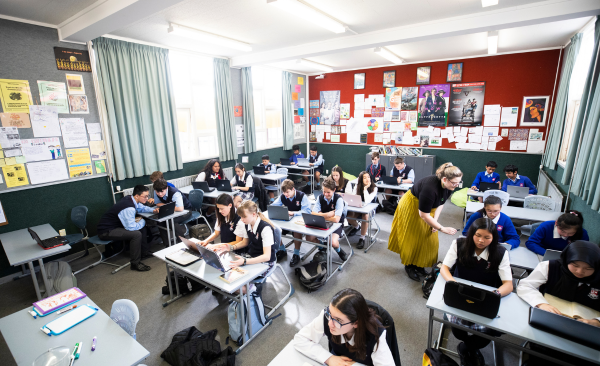 Research report | 60 min read
Teaching Histories - Implementation of Aotearoa New Zealand’s Histories and the refreshed Social Sciences learning area
04 April 2024 -
 Research summary | 10 min read
Teaching Histories: Implementation of Aotearoa New Zealand’s Histories and the refreshed Social Sciences learning area - Summary
04 April 2024
Read Online
What ERO looked at
In 2023, teaching Aotearoa New Zealand’s Histories (ANZ Histories) became compulsory for Years 1-10. ERO partnered with the Ministry of Education to find out about how the implementation is going in schools.
This guide shares what we found about the changes and the impacts for students, teachers, and parents and whānau. It also offers some reflective questions for teachers and leaders to support their practice.
ERO looked at the implementation of ANZ Histories and the refreshed Social Sciences for students in Years 1-10, focusing on its impacts and the lessons to inform the ongoing Curriculum Refresh.
The evaluation was carried out in Term 3 and 4 of 2023. It draws on surveys of teachers and school leaders, students, and parents and whānau. ERO also visited 11 schools and undertook in-depth interviews with teachers and school leaders, students, parents and whānau, experts in curriculum and other relevant subject matter, and a kaumatua of a hapū.
In 2023, teaching Aotearoa New Zealand’s Histories (ANZ Histories) became compulsory for Years 1-10. ERO partnered with the Ministry of Education to find out about how the implementation is going in schools.
This guide shares what we found about the changes and the impacts for students, teachers, and parents and whānau. It also offers some reflective questions for teachers and leaders to support their practice.
ERO looked at the implementation of ANZ Histories and the refreshed Social Sciences for students in Years 1-10, focusing on its impacts and the lessons to inform the ongoing Curriculum Refresh.
The evaluation was carried out in Term 3 and 4 of 2023. It draws on surveys of teachers and school leaders, students, and parents and whānau. ERO also visited 11 schools and undertook in-depth interviews with teachers and school leaders, students, parents and whānau, experts in curriculum and other relevant subject matter, and a kaumatua of a hapū.
What ERO found out
What is being taught?
ERO found that ANZ Histories is being taught in all schools but, so far, not for all year levels. Schools are prioritising local and Māori histories and teaching less about national and global contexts. Schools also have a stronger focus on teaching about culture and identity, and place and environment, than about government and organisation, and economic activity. Schools are also prioritising ANZ Histories over the wider Social Sciences. At the time of our evaluation, the refreshed content for the wider Social Sciences learning area was available to schools but not required.
What is the impact on students?
Half of students enjoy learning about ANZ Histories. Students enjoy ANZ Histories more when it includes global contexts and when they are learning about people similar to them. The focus on Māori and Pacific history means Māori and Pacific students are enjoying ANZ Histories more than NZ European, Asian, and MELAA (Middle Eastern, Latin American and African) students. It is too early to measure student progress in ANZ Histories, but nearly two in five students either aren’t sure or don’t think they are making progress. Some teachers are unclear on how to track progress.
What is the impact on teachers and school leaders?
Teachers enjoy teaching ANZ Histories but are overwhelmed by the scale of change. Teachers are still growing their own knowledge of local histories, and don’t always have the skills or time needed to develop a local curriculum. Teachers want to work with local hapū and iwi to develop their knowledge of local histories, but these relationships take time to build and require a level of cultural capability that not all teachers have. Teachers have found teacher-only days, in-person support from the Ministry of Education Curriculum Leads, and collaboration with other schools the most helpful for implementation.
What is the impact on parents and whānau?
Parents and whānau want their children to learn ANZ Histories. It fits their expectations for what school should offer, but they also want learning to include national and global contexts. They also tell us that histories need to be taught sensitively to avoid disengaging students. Many parents and whānau are unaware of the changes to the curriculum, and most have not been told about, or involved in, the changes at their child’s school.
What is being taught?
ERO found that ANZ Histories is being taught in all schools but, so far, not for all year levels. Schools are prioritising local and Māori histories and teaching less about national and global contexts. Schools also have a stronger focus on teaching about culture and identity, and place and environment, than about government and organisation, and economic activity. Schools are also prioritising ANZ Histories over the wider Social Sciences. At the time of our evaluation, the refreshed content for the wider Social Sciences learning area was available to schools but not required.
What is the impact on students?
Half of students enjoy learning about ANZ Histories. Students enjoy ANZ Histories more when it includes global contexts and when they are learning about people similar to them. The focus on Māori and Pacific history means Māori and Pacific students are enjoying ANZ Histories more than NZ European, Asian, and MELAA (Middle Eastern, Latin American and African) students. It is too early to measure student progress in ANZ Histories, but nearly two in five students either aren’t sure or don’t think they are making progress. Some teachers are unclear on how to track progress.
What is the impact on teachers and school leaders?
Teachers enjoy teaching ANZ Histories but are overwhelmed by the scale of change. Teachers are still growing their own knowledge of local histories, and don’t always have the skills or time needed to develop a local curriculum. Teachers want to work with local hapū and iwi to develop their knowledge of local histories, but these relationships take time to build and require a level of cultural capability that not all teachers have. Teachers have found teacher-only days, in-person support from the Ministry of Education Curriculum Leads, and collaboration with other schools the most helpful for implementation.
What is the impact on parents and whānau?
Parents and whānau want their children to learn ANZ Histories. It fits their expectations for what school should offer, but they also want learning to include national and global contexts. They also tell us that histories need to be taught sensitively to avoid disengaging students. Many parents and whānau are unaware of the changes to the curriculum, and most have not been told about, or involved in, the changes at their child’s school.
How can this information help your school?
ERO’s evaluation highlighted some key challenges and lessons from the curriculum refresh so far. These reflective questions are designed to support teachers and leaders in their roles, by drawing on what we heard from schools across Aotearoa New Zealand.
Reflective questions for teachers
How can I help all students engage with ANZ Histories learning?
- Students respond better when they can see themselves in their learning. It works well when teachers consider how content for ANZ Histories can be shaped around the students in their classroom. For example, referring to colonisation in other parts of the globe can help migrant students connect to the big idea that ‘colonisation and settlement have been central to Aotearoa New Zealand’s histories for the past 200 years.’
“Our child… was born here… but she is … well aware about our heritage … I have shared with her a little bit of history about [my country]. How we had colonisation by two or three countries….and that's why we speak French as a second language, and Spanish as well in some parts... So, when she started learning about Māori land and their progress through the history, she can feel related.” (African parent)
Am I teaching all the content, across Know, Understand, and Do?
- We heard that teachers are focusing on the Know part of the Understand, Know, Do framework because this is the biggest shift in the refreshed curriculum, and less the Do because these aspects are more challenging to understand.
“[We’re] sort of thinking that it's not such a big shift from what we do anyway, but the Know part is. The Know part is going to require a bit more strategy. … That's where we need to probably do the most work in making sure that we have a good scope and sequence.” (School leader)
Am I teaching all the content, across the big ideas and contexts?
- Schools are teaching some big ideas and contexts more than others. This makes sense, as we heard that many schools are starting their implementation of ANZ Histories by engaging with hapū and iwi to build their knowledge of local histories, and this knowledge connects more easily with big ideas about Māori history and the context of culture and identity. However, some teachers are finding ways to teach across a range of big ideas and contexts. For example, when teaching about colonisation, by weaving topics together.
Am I finding a good balance of histories and other areas of the Social Sciences?
- We heard that ANZ Histories is crowding out the broader Social Sciences learning area.
- Some teachers choose topics that weave together different areas of the Social Sciences. For example, the topic of migration can draw on geography, economics, sociology, and history. The topic of migration can also cover global, national, and local histories, as migrant journeys are explored across time and space.
“It [ANZ Histories] currently takes up a lot of the Social Studies curriculum. There needs to be a bit more balance, as Social Studies is not just junior history, but also economics, geography, tourism, current events, etc.” (School leader)
Am I finding ways to involve parents and whānau?
- We found that parents and whānau are interested in ANZ Histories and want to be involved. Parents and whānau see the relevance of ANZ Histories and some want to share their stories and also to help their children develop their critical thinking abilities.
“I don't come with letters after my name and I can only tell you the stories that I know, but I'm happy to share what I know ... we were a brave people and I don't want that to be forgotten. But yeah, the likelihood that someone's gonna ask us for help, I think, is quite slim. I'm ready to help.” (Parent)
- However, we heard that many parents and whānau are unaware of the curriculum changes or unaware of what their child has covered in class for ANZ Histories and the Social Sciences. Increasing parent and whānau awareness can happen in a range of ways, for example, through explicit signposting of the curriculum changes in routine newsletters and emails, and by sharing with parents and whānau what their children is learning directly and through homework and projects.
“I don't think that their communication is lacking … I love seeing my kids work come up on the app and them showing us at school, but [I want to know] from the teacher's point of view what they're actually teaching.” (Parent)
Am I accessing all the available supports and resources?
- We found that almost one in five teachers and teachers are unaware of the teaching guidance on the ANZ Histories website. This matters because schools that have accessed this teaching guidance are typically further ahead with their implementation. See the links at the end of this guide for some key resources and supports. They may have been updated since you last looked.
Reflective questions for school leaders
Does my teaching team have a shared understanding of the content?
- The ANZ Histories content is entirely new for some teachers, and they need to grow their own knowledge and cultural capabilities before they can be confident to teach it, especially Māori histories. Teachers are aware that some histories are particularly sensitive, and they spend time thinking about the ‘right way’ to teach them. Taking a whole-school approach offers both a practical way to share tasks and can help bring all teachers along the implementation journey together.
“Things like colonisation and [other] concepts [for] Years 7 and 8, that’s some quite grunty stuff. We want to be really sure that we don't just go flying in with this new curriculum and end up with unintended consequences through ignorance. So, there's a whole lot of work going on behind that.” (Primary school leader)
How can we work with other schools in the area?
- We heard it takes time to build the school’s knowledge of local histories, which are part of the ANZ Histories content. Collaborating with other schools can share the load of unpacking the refreshed content, can widen access to curriculum experts and subject specialists, and make it easier for local hapū and iwi to engage with all the schools in their rohe. We heard that primary schools especially gain from working with secondary schools, which gives them access to history and Social Science specialists.
“It's always good to be able to sit and converse with people from other schools as well to get other perspectives. And so you're not sort of carrying [it alone] you know, you're not caught too much in a bubble. I think that's really valuable.” (School leader)
Does my school have tools and resources we could share with others?
- We heard that teachers are hungry for exemplars so they can see what they are working towards. They want exemplars of student work at different levels of progression, and examples of how other schools are doing things. We also heard that working with other schools helps with implementation. If your school has developed practices or tools that you’re proud of, these might be useful to share.
How can we work with whānau, hapū, and iwi Māori?
- Leaders told us that it can take considerable time to build and maintain relationships with hapū and iwi, as it’s important to follow the processes that work for the hapū or iwi and ensure the relationship is reciprocal. We heard it works well to think about how the school can give back to the local hapū and iwi. For example, one kaumātua told us that a school principal would regularly ring him and ask, “How can we help?” We heard that students would help to collect firewood and set tables at local marae before celebration meals.
- Until schools have established relationships with the local hapū and iwi, they find it useful to search for ‘off the shelf’ resources. We heard that some hapū and iwi have already produced some resources to help schools with the implementation of ANZ Histories, which can be accessed online. While these resources may be less relevant for teaching local histories, they can be used to teach national histories.
Are we accessing other resources and supports that can help?
- A third of schools are unaware of the face-to-face (kanohi ki te kanohi) support provided by the Ministry of Education. This includes the Curriculum Leads, which schools have found particularly useful. See the information below on how to access this support.
- As well as the Ministry’s resources and supports, we heard that schools are finding a range of others helpful for developing lesson plans and content, including:
- the New Zealand History Teachers’ Association information and resources, including materials provided at the recent national conference
- the National Library and local museums
- historians or experts in the local area
- podcasts about ANZ history
- online resources such as ‘Something happened here’ and ‘Te Ara Taiao’ – see links below.
ERO’s evaluation highlighted some key challenges and lessons from the curriculum refresh so far. These reflective questions are designed to support teachers and leaders in their roles, by drawing on what we heard from schools across Aotearoa New Zealand.
Reflective questions for teachers
How can I help all students engage with ANZ Histories learning?
- Students respond better when they can see themselves in their learning. It works well when teachers consider how content for ANZ Histories can be shaped around the students in their classroom. For example, referring to colonisation in other parts of the globe can help migrant students connect to the big idea that ‘colonisation and settlement have been central to Aotearoa New Zealand’s histories for the past 200 years.’
“Our child… was born here… but she is … well aware about our heritage … I have shared with her a little bit of history about [my country]. How we had colonisation by two or three countries….and that's why we speak French as a second language, and Spanish as well in some parts... So, when she started learning about Māori land and their progress through the history, she can feel related.” (African parent)
Am I teaching all the content, across Know, Understand, and Do?
- We heard that teachers are focusing on the Know part of the Understand, Know, Do framework because this is the biggest shift in the refreshed curriculum, and less the Do because these aspects are more challenging to understand.
“[We’re] sort of thinking that it's not such a big shift from what we do anyway, but the Know part is. The Know part is going to require a bit more strategy. … That's where we need to probably do the most work in making sure that we have a good scope and sequence.” (School leader)
Am I teaching all the content, across the big ideas and contexts?
- Schools are teaching some big ideas and contexts more than others. This makes sense, as we heard that many schools are starting their implementation of ANZ Histories by engaging with hapū and iwi to build their knowledge of local histories, and this knowledge connects more easily with big ideas about Māori history and the context of culture and identity. However, some teachers are finding ways to teach across a range of big ideas and contexts. For example, when teaching about colonisation, by weaving topics together.
Am I finding a good balance of histories and other areas of the Social Sciences?
- We heard that ANZ Histories is crowding out the broader Social Sciences learning area.
- Some teachers choose topics that weave together different areas of the Social Sciences. For example, the topic of migration can draw on geography, economics, sociology, and history. The topic of migration can also cover global, national, and local histories, as migrant journeys are explored across time and space.
“It [ANZ Histories] currently takes up a lot of the Social Studies curriculum. There needs to be a bit more balance, as Social Studies is not just junior history, but also economics, geography, tourism, current events, etc.” (School leader)
Am I finding ways to involve parents and whānau?
- We found that parents and whānau are interested in ANZ Histories and want to be involved. Parents and whānau see the relevance of ANZ Histories and some want to share their stories and also to help their children develop their critical thinking abilities.
“I don't come with letters after my name and I can only tell you the stories that I know, but I'm happy to share what I know ... we were a brave people and I don't want that to be forgotten. But yeah, the likelihood that someone's gonna ask us for help, I think, is quite slim. I'm ready to help.” (Parent)
- However, we heard that many parents and whānau are unaware of the curriculum changes or unaware of what their child has covered in class for ANZ Histories and the Social Sciences. Increasing parent and whānau awareness can happen in a range of ways, for example, through explicit signposting of the curriculum changes in routine newsletters and emails, and by sharing with parents and whānau what their children is learning directly and through homework and projects.
“I don't think that their communication is lacking … I love seeing my kids work come up on the app and them showing us at school, but [I want to know] from the teacher's point of view what they're actually teaching.” (Parent)
Am I accessing all the available supports and resources?
- We found that almost one in five teachers and teachers are unaware of the teaching guidance on the ANZ Histories website. This matters because schools that have accessed this teaching guidance are typically further ahead with their implementation. See the links at the end of this guide for some key resources and supports. They may have been updated since you last looked.
Reflective questions for school leaders
Does my teaching team have a shared understanding of the content?
- The ANZ Histories content is entirely new for some teachers, and they need to grow their own knowledge and cultural capabilities before they can be confident to teach it, especially Māori histories. Teachers are aware that some histories are particularly sensitive, and they spend time thinking about the ‘right way’ to teach them. Taking a whole-school approach offers both a practical way to share tasks and can help bring all teachers along the implementation journey together.
“Things like colonisation and [other] concepts [for] Years 7 and 8, that’s some quite grunty stuff. We want to be really sure that we don't just go flying in with this new curriculum and end up with unintended consequences through ignorance. So, there's a whole lot of work going on behind that.” (Primary school leader)
How can we work with other schools in the area?
- We heard it takes time to build the school’s knowledge of local histories, which are part of the ANZ Histories content. Collaborating with other schools can share the load of unpacking the refreshed content, can widen access to curriculum experts and subject specialists, and make it easier for local hapū and iwi to engage with all the schools in their rohe. We heard that primary schools especially gain from working with secondary schools, which gives them access to history and Social Science specialists.
“It's always good to be able to sit and converse with people from other schools as well to get other perspectives. And so you're not sort of carrying [it alone] you know, you're not caught too much in a bubble. I think that's really valuable.” (School leader)
Does my school have tools and resources we could share with others?
- We heard that teachers are hungry for exemplars so they can see what they are working towards. They want exemplars of student work at different levels of progression, and examples of how other schools are doing things. We also heard that working with other schools helps with implementation. If your school has developed practices or tools that you’re proud of, these might be useful to share.
How can we work with whānau, hapū, and iwi Māori?
- Leaders told us that it can take considerable time to build and maintain relationships with hapū and iwi, as it’s important to follow the processes that work for the hapū or iwi and ensure the relationship is reciprocal. We heard it works well to think about how the school can give back to the local hapū and iwi. For example, one kaumātua told us that a school principal would regularly ring him and ask, “How can we help?” We heard that students would help to collect firewood and set tables at local marae before celebration meals.
- Until schools have established relationships with the local hapū and iwi, they find it useful to search for ‘off the shelf’ resources. We heard that some hapū and iwi have already produced some resources to help schools with the implementation of ANZ Histories, which can be accessed online. While these resources may be less relevant for teaching local histories, they can be used to teach national histories.
Are we accessing other resources and supports that can help?
- A third of schools are unaware of the face-to-face (kanohi ki te kanohi) support provided by the Ministry of Education. This includes the Curriculum Leads, which schools have found particularly useful. See the information below on how to access this support.
- As well as the Ministry’s resources and supports, we heard that schools are finding a range of others helpful for developing lesson plans and content, including:
- the New Zealand History Teachers’ Association information and resources, including materials provided at the recent national conference
- the National Library and local museums
- historians or experts in the local area
- podcasts about ANZ history
- online resources such as ‘Something happened here’ and ‘Te Ara Taiao’ – see links below.
What next?
There are a range of resources and supports available for schools. Some key resources are listed below. You can also contact your regional Ministry office to find out about supports offered in your area.
ERO’s evaluation report
- Full report Teaching Histories - Implementation of Aotearoa New Zealand’s Histories and the refreshed Social Sciences learning area: https://www.evidence.ero.govt.nz/Teaching-Histories-Implementation-of-Aotearoa-New-Zealands-Histories-and-the-refreshed-Social-Sciences-learning-area
- Summary of the report: https://www.evidence.ero.govt.nz/Teaching-Histories-Implementation-of-Aotearoa-New-Zealands-Histories-and-the-refreshed-Social-Sciences-learning-area-summary
Ministry of Education resources and supports
- ANZ Histories website by the Ministry’s Curriculum Centre (Te Poutāhū): Home Page | Aotearoa NZ's Histories (education.govt.nz)
- A two‑part guide for leading local curriculum for ANZ Histories:
- Curriculum Leads – Schools can connect with a Curriculum Lead through their regional Ministry office: Te Tāhuhu o te Mātauranga | Ministry of Education office
Networks of expertise that specifically support ANZ Histories
- New Zealand History Teachers’ Association (NZHTA)
- Aotearoa Social Studies Educators’ Network (ASSEN)
- Aotearoa New Zealand Association of Arts Educators (ANZAAE)
Other resources
- ‘Something happened here’ School Kit. Aotearoa ANZ Histories — School Kit
- Te Ara Taiao website https://www.sustainabletaranaki.org.nz/our-programmes/te-ara-taiao
There are a range of resources and supports available for schools. Some key resources are listed below. You can also contact your regional Ministry office to find out about supports offered in your area.
ERO’s evaluation report
- Full report Teaching Histories - Implementation of Aotearoa New Zealand’s Histories and the refreshed Social Sciences learning area: https://www.evidence.ero.govt.nz/Teaching-Histories-Implementation-of-Aotearoa-New-Zealands-Histories-and-the-refreshed-Social-Sciences-learning-area
- Summary of the report: https://www.evidence.ero.govt.nz/Teaching-Histories-Implementation-of-Aotearoa-New-Zealands-Histories-and-the-refreshed-Social-Sciences-learning-area-summary
Ministry of Education resources and supports
- ANZ Histories website by the Ministry’s Curriculum Centre (Te Poutāhū): Home Page | Aotearoa NZ's Histories (education.govt.nz)
- A two‑part guide for leading local curriculum for ANZ Histories:
- Curriculum Leads – Schools can connect with a Curriculum Lead through their regional Ministry office: Te Tāhuhu o te Mātauranga | Ministry of Education office
Networks of expertise that specifically support ANZ Histories
- New Zealand History Teachers’ Association (NZHTA)
- Aotearoa Social Studies Educators’ Network (ASSEN)
- Aotearoa New Zealand Association of Arts Educators (ANZAAE)
Other resources
- ‘Something happened here’ School Kit. Aotearoa ANZ Histories — School Kit
- Te Ara Taiao website https://www.sustainabletaranaki.org.nz/our-programmes/te-ara-taiao