
A guide for parents and whānau on supporting science in primary school
About this resource:
Learning science in the primary school years helps children become better problem solvers and critical thinkers. Children are curious by nature and are eager to explore, question, experiment, and learn about the world around them. Primary school teachers can use a variety of approaches when teaching science, that give children opportunities to explore, experiment, and express new ideas. This short guide for parents and whānau of children in primary school draws from ERO’s two new reports on science: Science in the Early Years: Early Childhood and Years 1-4; and Growing Curiosity: Teaching Strategies to Engage Years 5 to 11 Students in Science, and aims to help you: understand why science matters for this age group; know what you can expect for science teaching and learning for your child; think about how you can support your child’s learning journey in science.
Related insights
Explore related documents that you might be interested in.
-
 Research summary | 4 min read
Science in New Zealand schools and early childhood services - series summary
12 April 2021 -
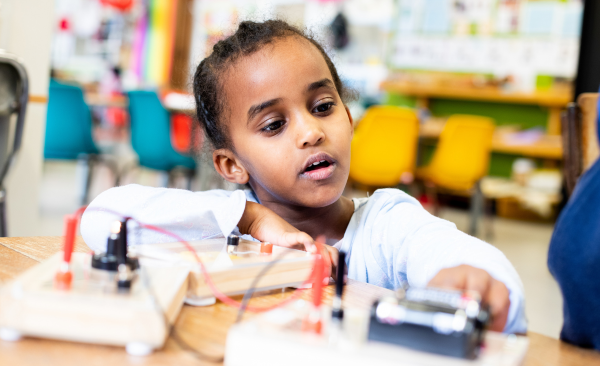 Research report | 30 min read
Science in the Early Years: Early Childhood and Years 1-4
12 April 2021 -
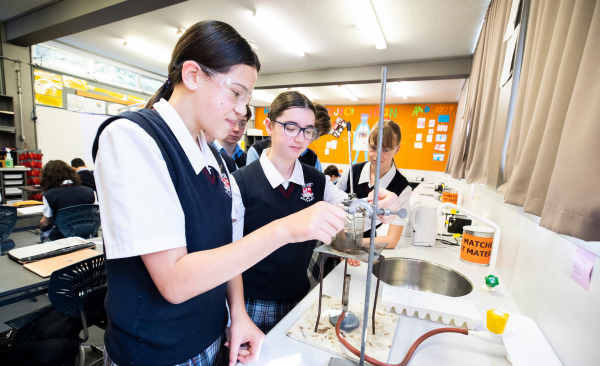 Research report | 45 min read
Growing Curiosity Teaching Strategies to Engage Years 5 to 11 Students in Science
12 April 2021 -
 Sector insights | 4 min read
Science in primary schools: a guide for teachers
19 April 2021 -
 Sector insights | 4 min read
Science in primary schools: a guide for leaders
20 April 2021
Read Online
Why science matters at this age
Science is a useful way to explore and make sense of the world at any age.
Science involves:
- systematically making and testing ideas
- collecting evidence through a variety of methods
- problem-solving
- creating new knowledge.
Teaching young children science builds on their natural curiosity, helps them learn about themselves and the world around them, and to begin to think in scientific ways. This sets them up for ongoing learning in science, as well as helping them become creative, critical thinkers; useful skills for any future pathway they choose.
Science is a useful way to explore and make sense of the world at any age.
Science involves:
- systematically making and testing ideas
- collecting evidence through a variety of methods
- problem-solving
- creating new knowledge.
Teaching young children science builds on their natural curiosity, helps them learn about themselves and the world around them, and to begin to think in scientific ways. This sets them up for ongoing learning in science, as well as helping them become creative, critical thinkers; useful skills for any future pathway they choose.
What can you expect?
Science is a compulsory learning area for primary school students in the New Zealand Curriculum. It is made up of four context strands:
- Living World
- Material World
- Physical World
- Planet Earth and Beyond.
There is also an overarching strand called the Nature of Science. The Nature of Science is about the processes and ways of thinking involved in science, and how it relates to other aspects of our lives.
Your child’s teacher should plan for them to develop their scientific thinking and knowledge across all these different contexts. They should keep track of what your child knows, how their thinking is developing, and the next stages of their learning journey in science.
There is a variety of different ways your child’s teacher can choose to assess or understand your child’s learning – ask them how they keep track of your child’s progress in science.
Science is a compulsory learning area for primary school students in the New Zealand Curriculum. It is made up of four context strands:
- Living World
- Material World
- Physical World
- Planet Earth and Beyond.
There is also an overarching strand called the Nature of Science. The Nature of Science is about the processes and ways of thinking involved in science, and how it relates to other aspects of our lives.
Your child’s teacher should plan for them to develop their scientific thinking and knowledge across all these different contexts. They should keep track of what your child knows, how their thinking is developing, and the next stages of their learning journey in science.
There is a variety of different ways your child’s teacher can choose to assess or understand your child’s learning – ask them how they keep track of your child’s progress in science.
How can you work with your child’s teacher to support their learning in science?
- Ask your child’s teacher about the science learning opportunities they will provide your child.
- Share anything you’ve been working on with your child, or science-related experiences you’ve had – their teacher might consider how to include that in the science learning opportunities they provide.
- Work with your child and their teacher to identify your child’s strengths and learning needs in science, and to set goals for their learning.
- Let your child’s teacher know about your strengths and interests relating to science, if you are willing to share that with the children and/or teachers.
- Ask your child’s teacher about your child’s learning and progress in science.
- Ask your child’s teacher for ideas to extend your child’s learning.
- Ask your child’s teacher about the science learning opportunities they will provide your child.
- Share anything you’ve been working on with your child, or science-related experiences you’ve had – their teacher might consider how to include that in the science learning opportunities they provide.
- Work with your child and their teacher to identify your child’s strengths and learning needs in science, and to set goals for their learning.
- Let your child’s teacher know about your strengths and interests relating to science, if you are willing to share that with the children and/or teachers.
- Ask your child’s teacher about your child’s learning and progress in science.
- Ask your child’s teacher for ideas to extend your child’s learning.
If you want to find out more about science teaching and learning for this age group, you can read our reports:
Science in the Early Years: Early Childhood and Years 1-4
• Growing Curiosity: Teaching Strategies to Engage Years 5 to 11 Students in Science.
We appreciate the work of all those who supported this evaluation, particularly the children, leaders, and teachers who shared with us about what science is like in their school. Their experiences and insights are at the heart of what we have learnt. You can find the full reports on science in primary schools, along with a short summary of the findings, on ERO’s website www.ero.govt.nz.
Science in the Early Years: Early Childhood and Years 1-4
• Growing Curiosity: Teaching Strategies to Engage Years 5 to 11 Students in Science.
We appreciate the work of all those who supported this evaluation, particularly the children, leaders, and teachers who shared with us about what science is like in their school. Their experiences and insights are at the heart of what we have learnt. You can find the full reports on science in primary schools, along with a short summary of the findings, on ERO’s website www.ero.govt.nz.
Publication Information and Copyright
A guide for parents and whānau on supporting science in primary school
Published April 2021
Except for the Education Review Office’s logo used throughout this report, this copyright work is licensed under Creative Commons Attribution 3.0 New Zealand licence. In essence, you are free to copy, distribute and adapt the work, as long as you attribute the work to the Education Review Office and abide by the other licence terms. In your attribution, use the wording ‘Education Review Office’, not the Education Review Office logo or the New Zealand Government logo.
A guide for parents and whānau on supporting science in primary school
Published April 2021
Except for the Education Review Office’s logo used throughout this report, this copyright work is licensed under Creative Commons Attribution 3.0 New Zealand licence. In essence, you are free to copy, distribute and adapt the work, as long as you attribute the work to the Education Review Office and abide by the other licence terms. In your attribution, use the wording ‘Education Review Office’, not the Education Review Office logo or the New Zealand Government logo.